The PM-1 Final Summary Report received via FOIA

By Dr. Nick Touran, Ph.D., P.E., 2023-09-22, Reading time: 6 minutes
I got it! The PM-1 Final Summary Report was delivered to me yesterday after I filed a FOIA request to the military library that had it cataloged (at their recommendation). This is the pure-gold lessons-learned report from operating a 1 MWe military microreactor in WY for 4 years.
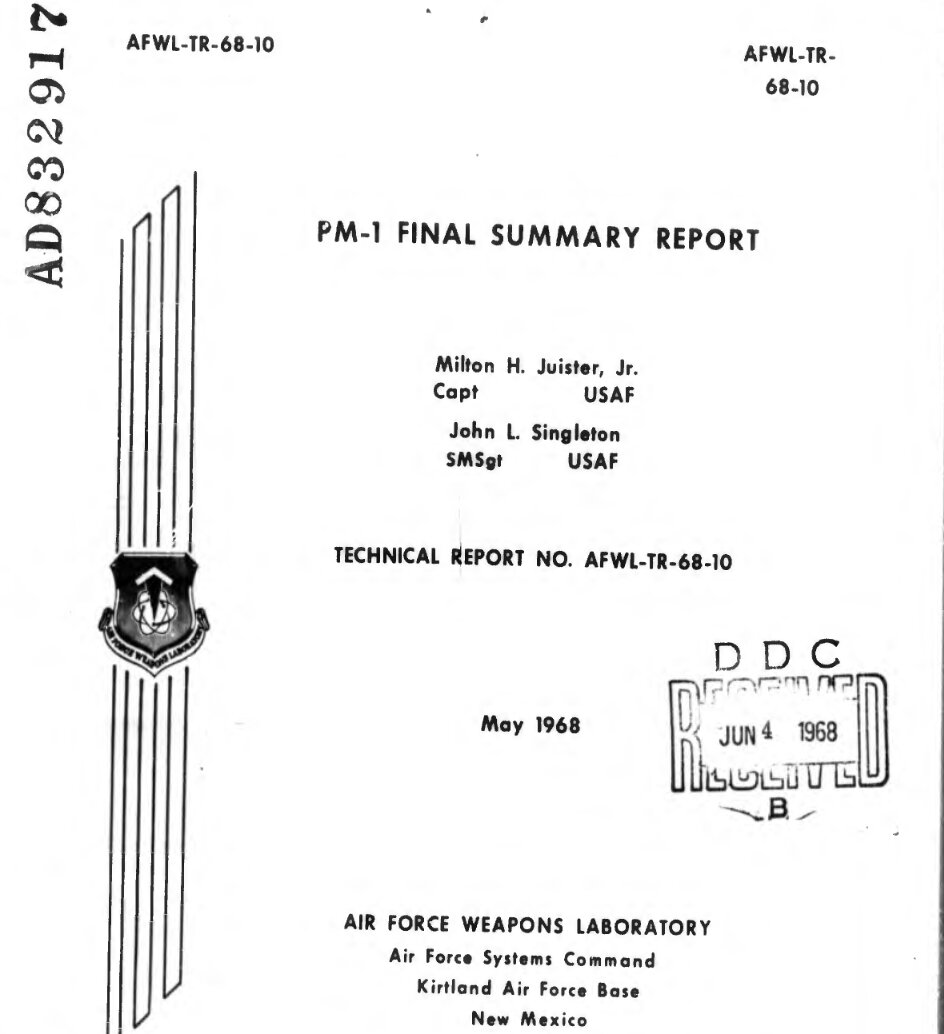
It contains cost and performance information, summarizing which systems worked well and which ones did not. This is a follow-up to some searching I did after getting this summary film digitized.
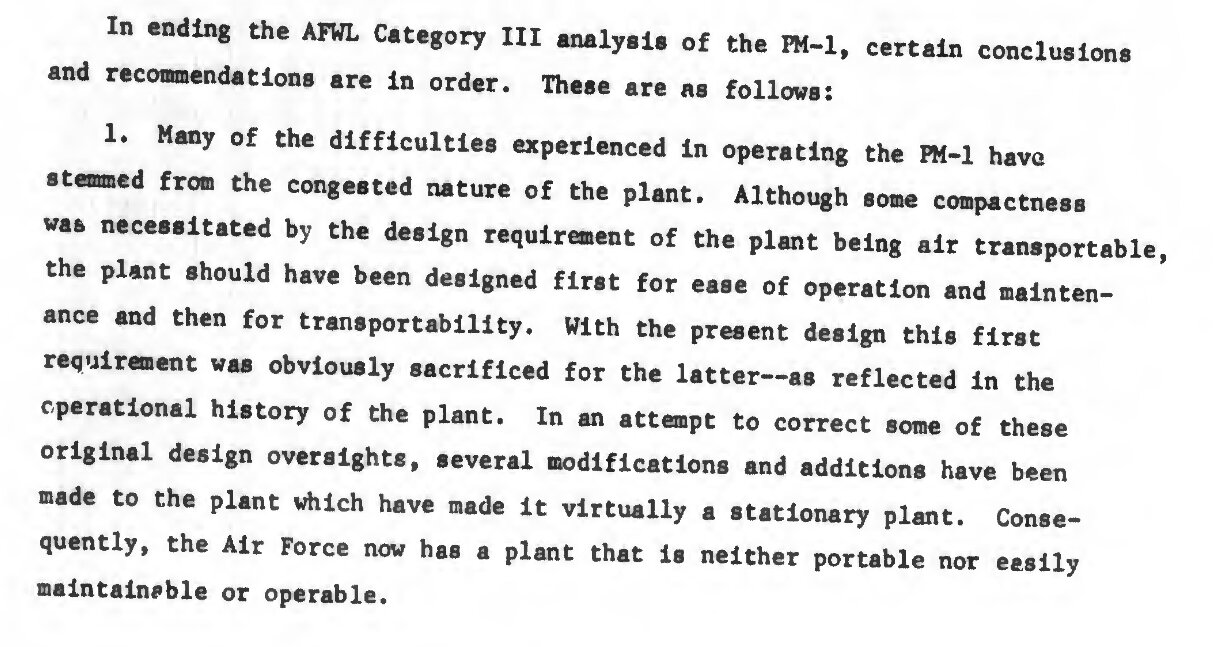
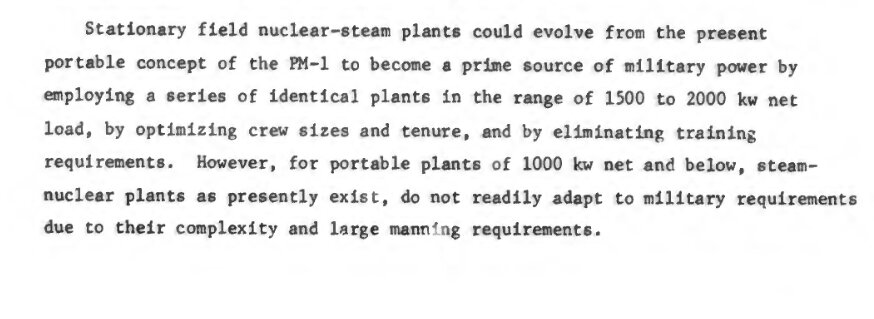
It’s highly readable. The summary says that it was a big pain to maintain b/c it was too compact. They wanted it designed for maintainability first and compactness next. “Consequently, the Air Force now has a plant that is neither portable nor easily maintainable or operable.” 👀
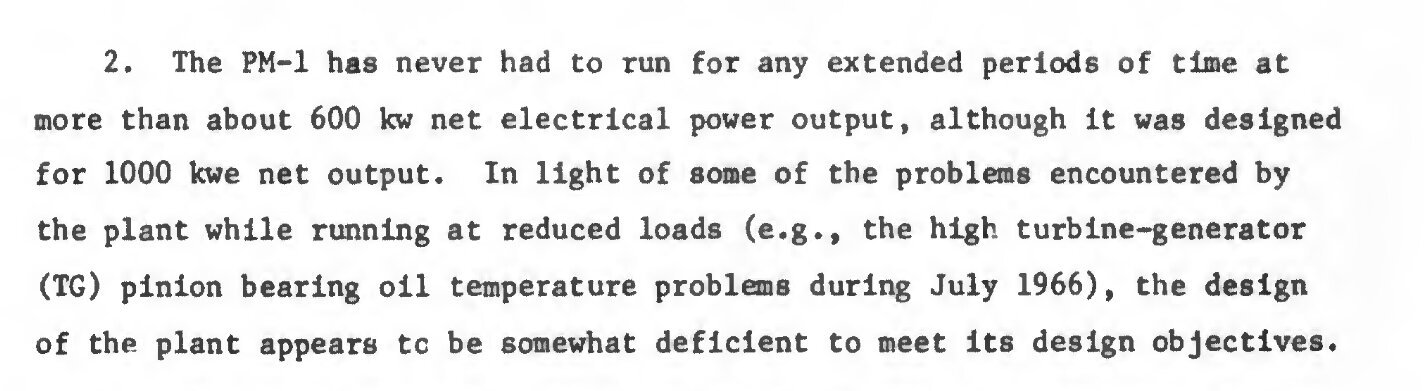
They had environmental issues. If it was hotter than 80° F outside the turbine oil overheated, but if it was cold the condenser tubes froze. Though it was a 1 MWe reactor, it hardly ever ran over 0.6 MWe.
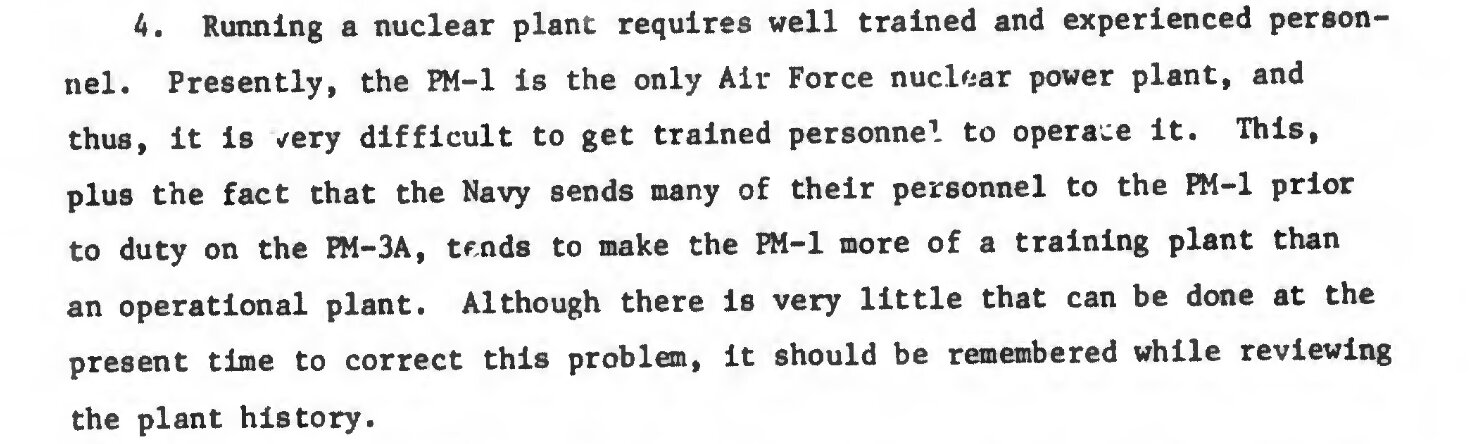
The Air Force had lots of trouble keeping qualified people around to operate PM-1. Lots of folks trained on it on their way down to Nukey Poo, the reactor powering a McMurdo station in Antarctica.
Total performance is summarized. While they weren’t thrilled with the overall performance, the reactor did have the record uptime at the time of writing: 4101 hours (171 days). This was before commercial LWRs had really been fine-tuned to run 1.5-2 years straight.
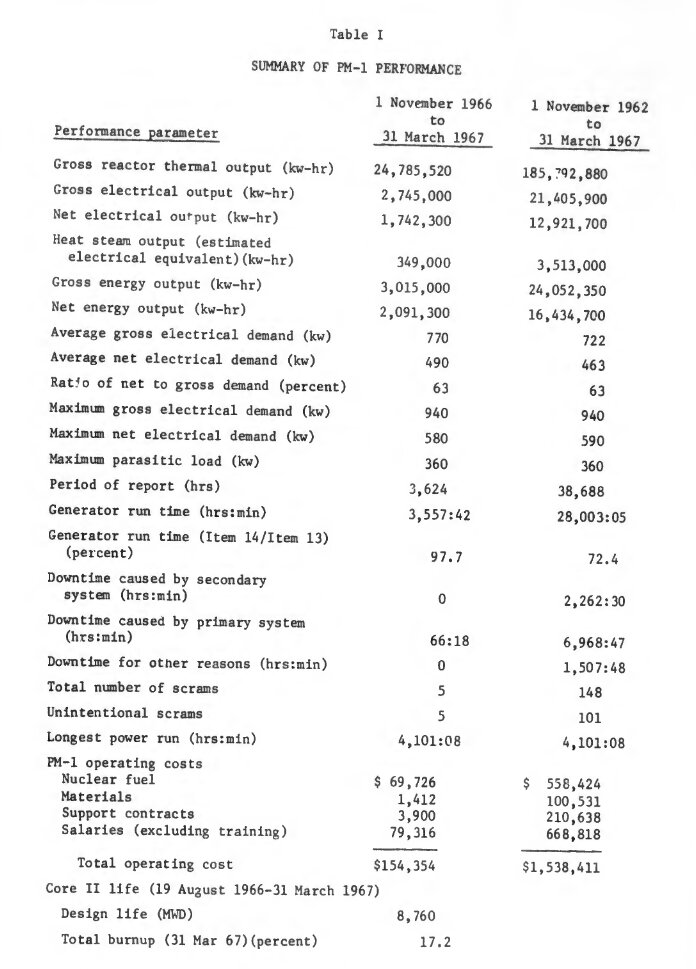
The reactor had no shortage of maintenance issues. Its failures caused 40 power outages at the radar station in its 4 years of operation. There were over 100 unplanned scrams.
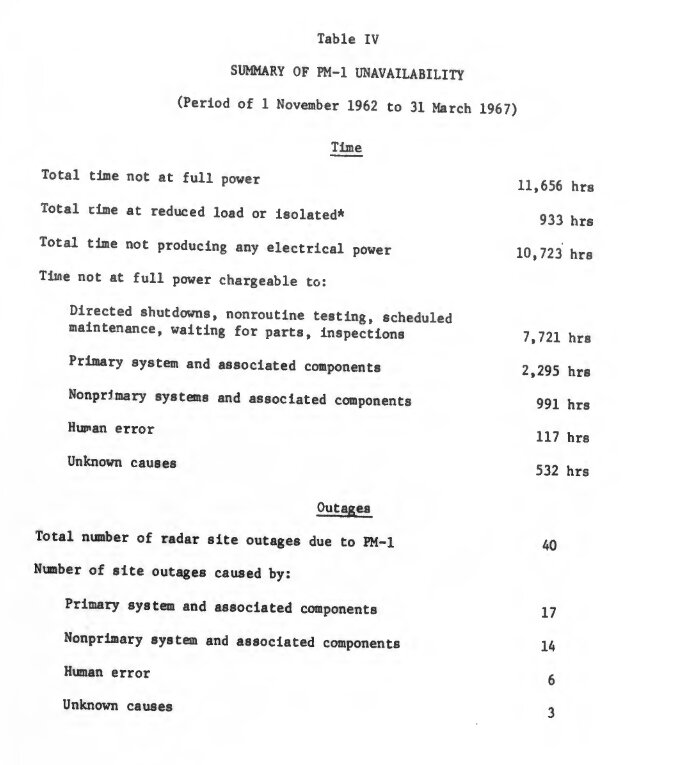
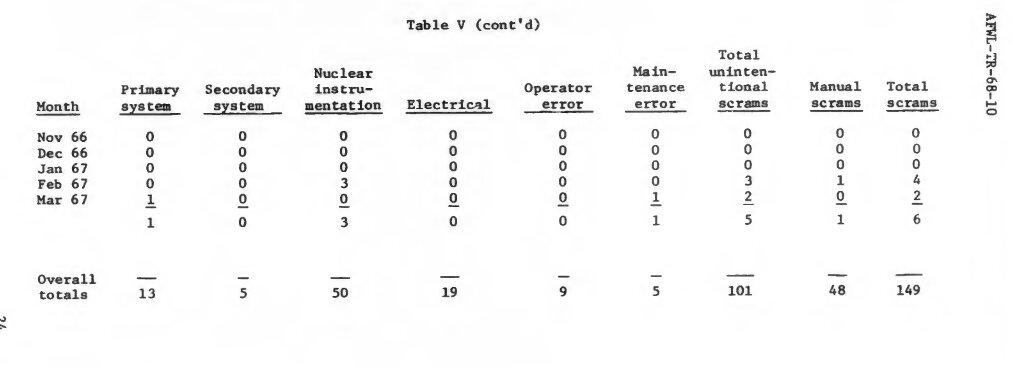
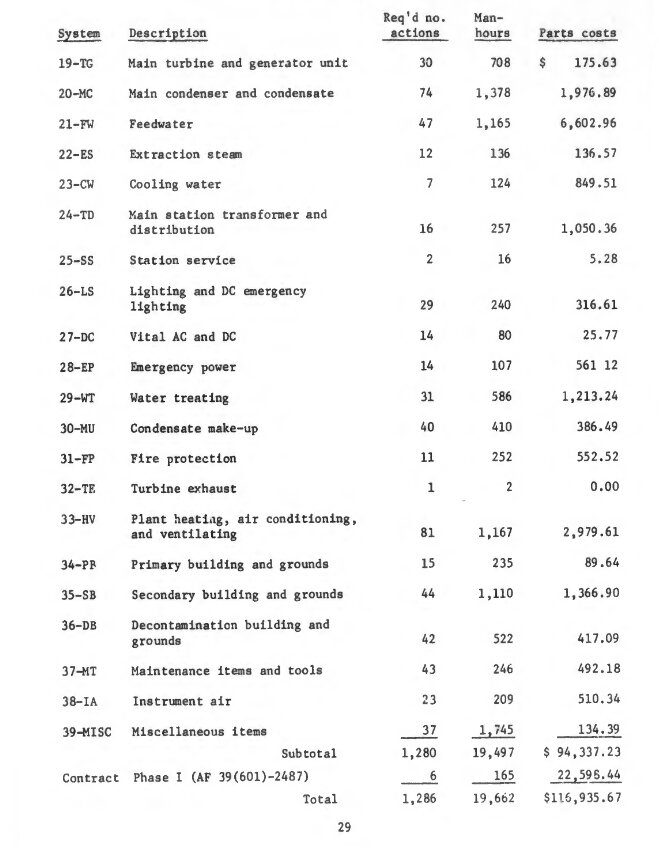
The maintenance issues are broken down by systems. Each system has a paragraph describing how well or poorly it worked, and suggestions for how to improve in the future. Current microreactor developers: this is super interesting!
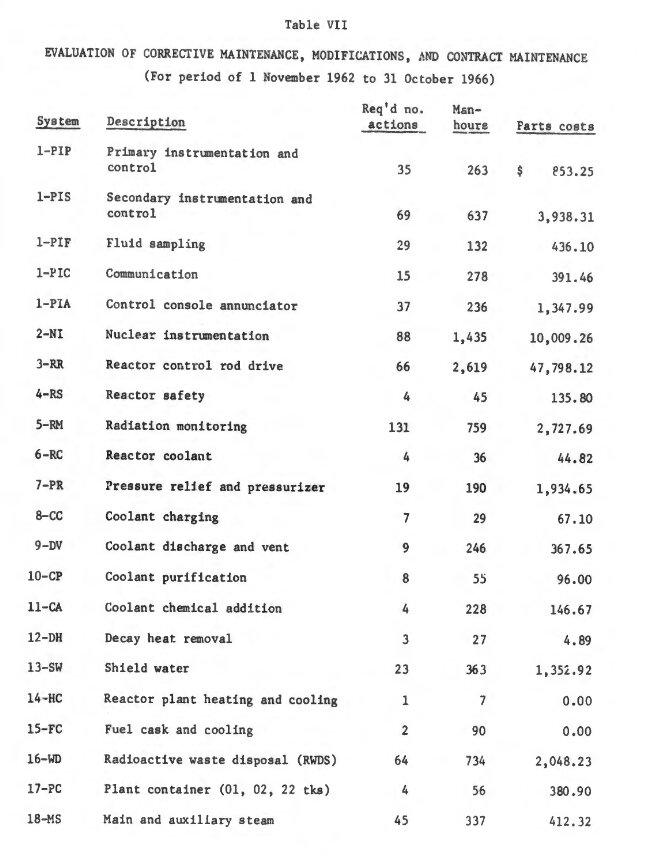
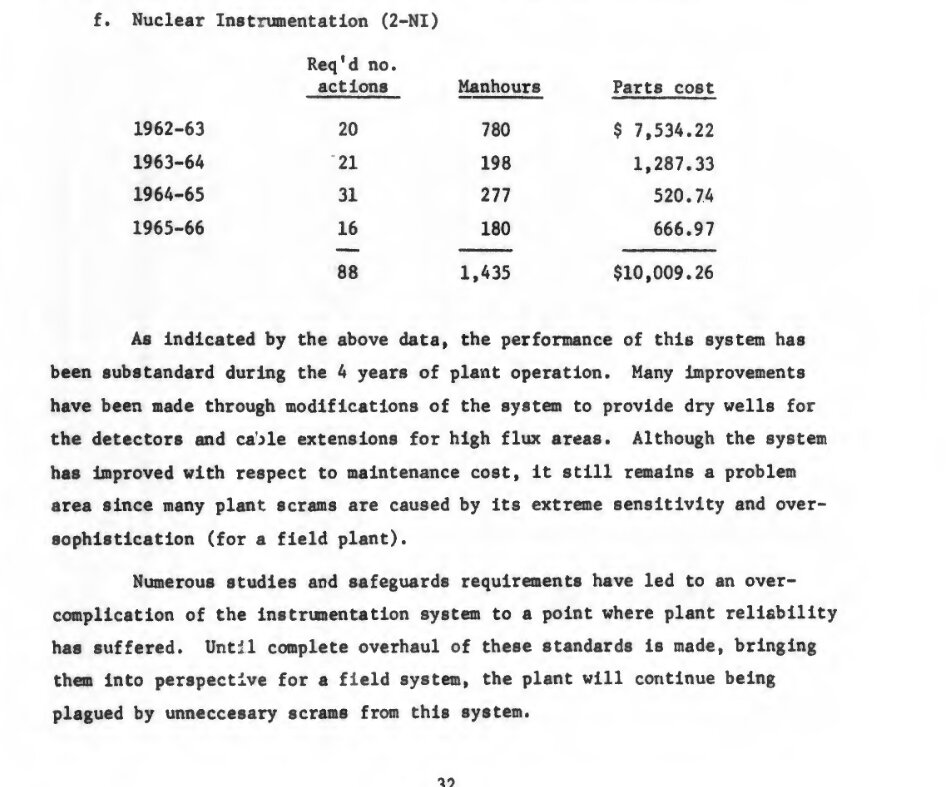
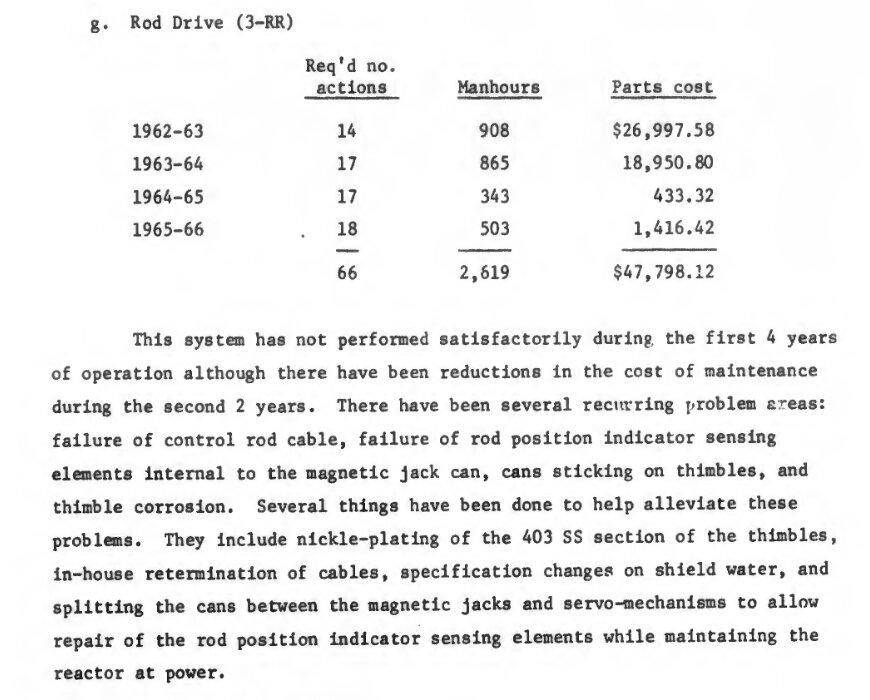
They did not like their hair-trigger nuclear instrumentation system. The control rod drives were also highly problematic.
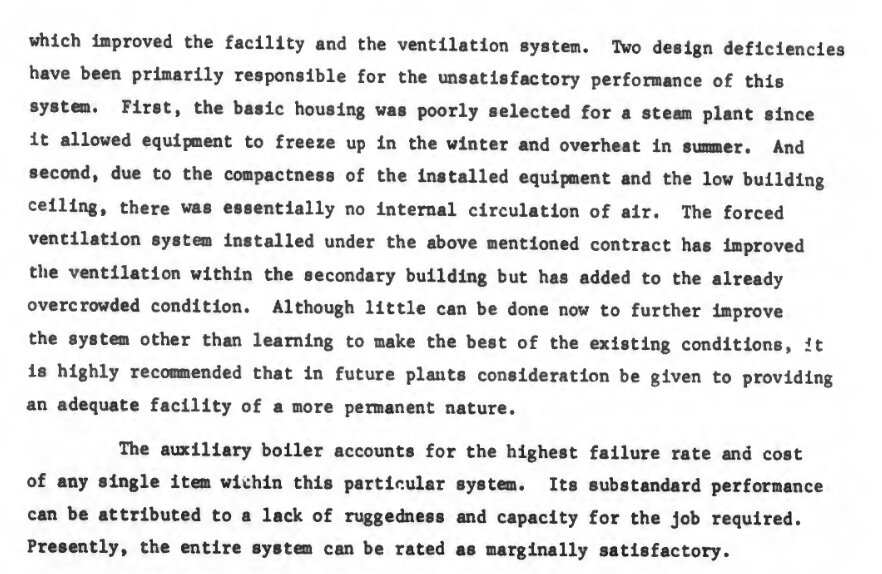
Plant HVAC was their biggest problem.
You get the idea, I won’t list all the rest of them, but it’s most stuff like this. All plant modifications are also listed out. There were a lot of them!
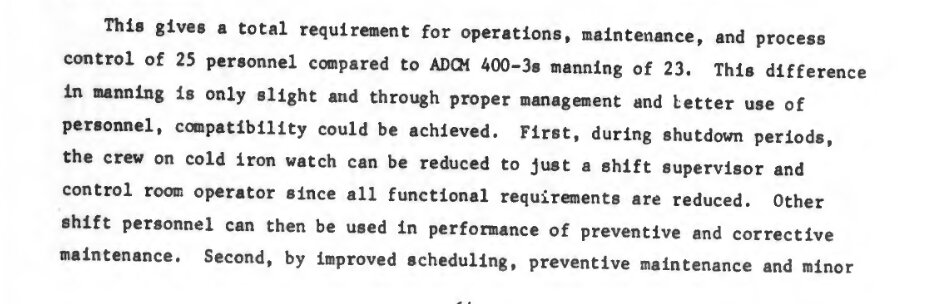
There’s a discussion of how many people would be realistically needed to operate the plant in the field. While 2 people were supposed to operate the plant, a crew of 25 is actually needed.
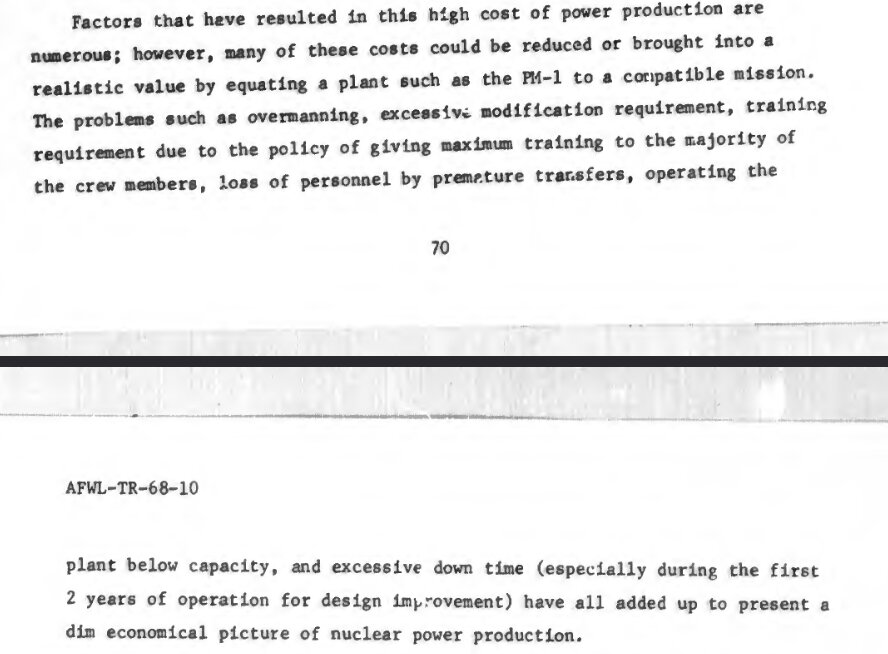
In summary, the report concludes that without major improvements, nuclear power has a dim economic outlook based on this experience.
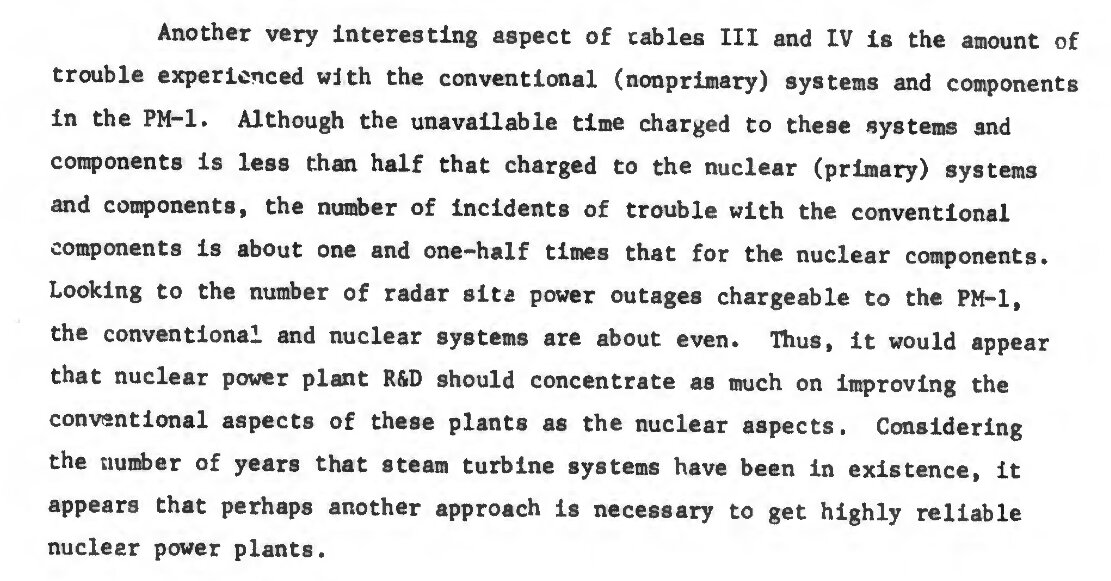
Notably, they really were not impressed with how much maintenance the conventional (non-nuclear) parts of the plant required. “Perhaps another approach is necessary”. Direct energy conversion, anyone?
Overall, a highly valuable document of high interest to any reactor designer. I uploaded it here. Enjoy!
See Also
About Dr. Nick Touran, Ph.D., P.E.
Nick Touran is a nuclear engineer with expertise in advanced nuclear reactor design, reactor development, and the history of nuclear power. After getting a Ph.D. at the University of Michigan, he spent 15 years at TerraPower in Seattle working on core design, business development, software development, and configuration management. He is now a consultant involved in advising and assisting numerous reactor development and deployment efforts. He is also a licensed professional engineer in Nuclear Engineering.
Nick has been active in public education around nuclear since 2006 as the founder of whatisnuclear.com. He has spoken at numerous institutions, schools, and public events, and was once featured on NPR’s Science Friday. Recently, he has coordinated the digitization of over 45 historical nuclear films.
Reader comments