Nuclear energy is low-carbon energy

By Dr. Nick Touran, Ph.D., P.E., 2022-12-04, Reading time: 2 minutes
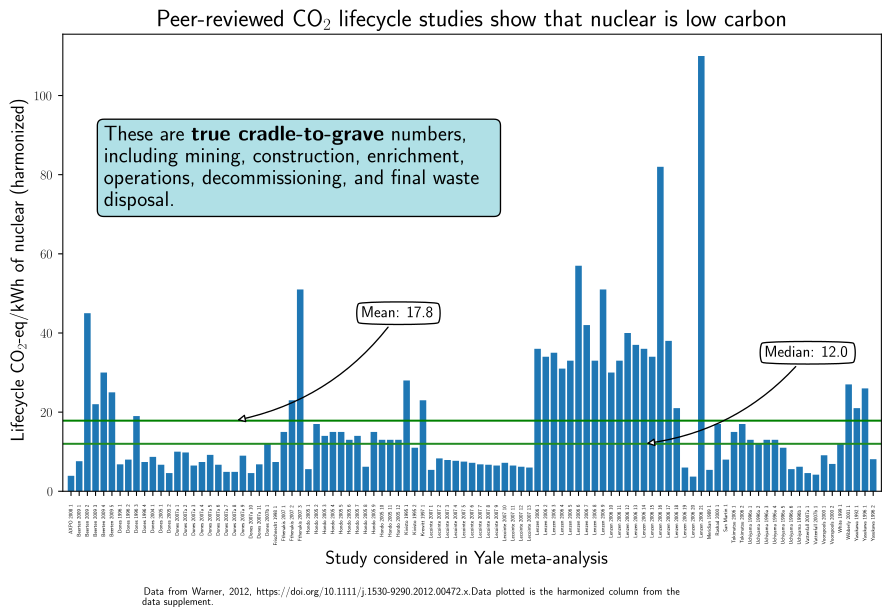
The nuclear fission reactions that underlie nuclear energy don’t create any CO₂ whatsoever. However, some is emitted during planning, mining, construction, operation, decommissioning, and waste disposal. Countless studies have analyzed this full cradle-to-grave lifecycle, establishing a powerful consensus that nuclear power is indeed low-carbon energy.
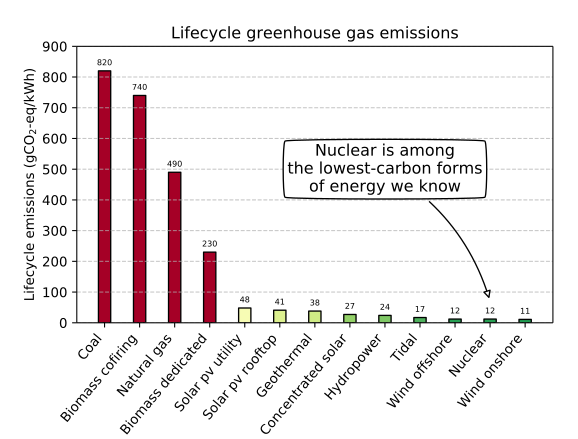
For reference, solar photovoltaic lifecycle emissions are around 40 gCO₂-eq/kWh.
Fossil fuel and biofuel energy systems work by combusting a carbon-based fuel in the presence of oxygen. A reaction between molecular electrons occurs, forming CO₂, water, and energy, among other combustion products. Excess CO₂ in the atmosphere causes excess energy from the sun to be captured, causing global warming. The basic equation for combustion is:
\[\text{Hydrocarbon} + \text{O}_2 + \text{spark} \rightarrow \text{H}_2\text{O} + \text{CO}_{2} + \text{energy}\]Nuclear energy systems work by breaking nuclear bonds in uranium via neutron-induced fission chain reactions. The basic equation is:
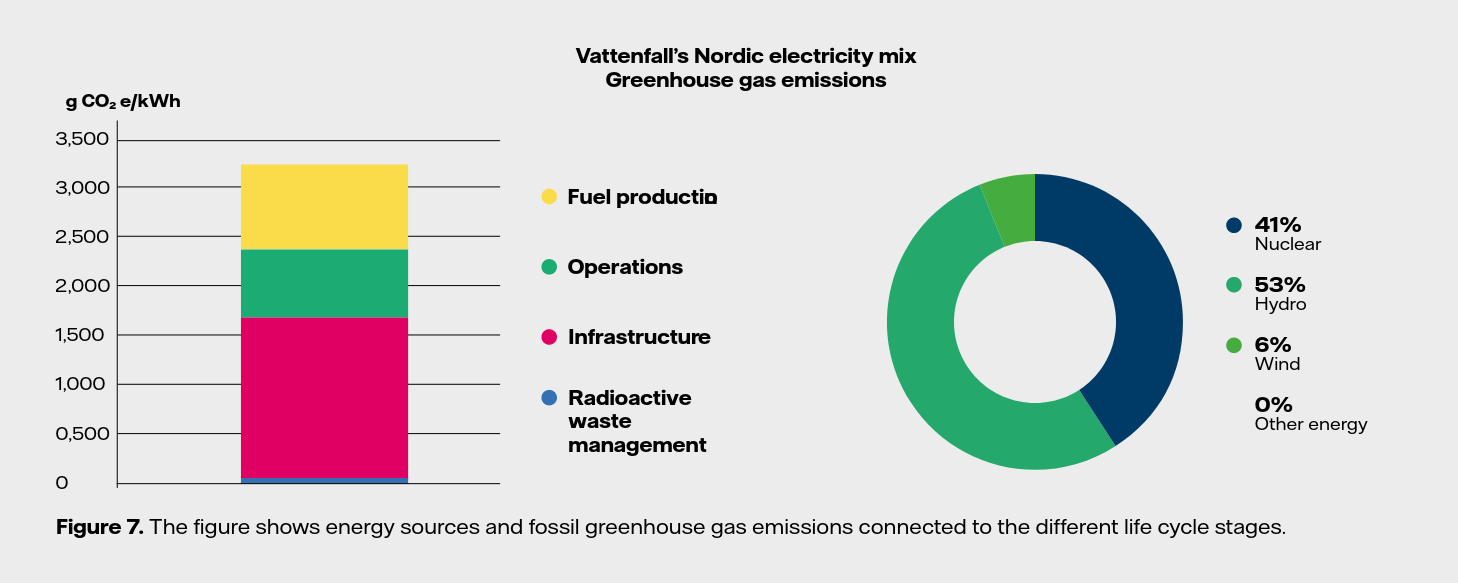
\[\text{Uranium} + \text{neutron} \rightarrow \text{2 fission products} + \text{energy}\]The small amount of carbon emissions related to nuclear then come from different aspects of the overall lifecycle. An example of where exactly the carbon emissions come from may be found in Vattenfall’s lifecycle analysis:
Zero carbon or low carbon?
It’s reasonable to claim that processes that don’t inherently require the production of CO₂ to be zero-carbon processes, including solar photovoltaic, hydropower, wind, and nuclear. As we continue decarbonizing, energy systems that use these will be increasingly closer to zero carbon systems. They’re zero carbon in the asymptote.
No energy system today is truly zero-carbon because of all the carbon-based energy we still use. It’s reasonable to call anything with under 50 g CO₂-eq/kWh a low-carbon energy source.
Heads up: Anti-nuclear institutions and groups have made several attempts to cast doubt on the low-carbon nature of nuclear power. One tried including the carbon impact of nuclear war. Several such studies have been formally retracted from their journals.
References
- Warner, Life Cycle Greenhouse Gas Emissions of Nuclear Electricity Generation, 2012
- Pehl, M., Arvesen, A., Humpenöder, F. et al. Understanding future emissions from low-carbon power systems by integration of life-cycle assessment and integrated energy modelling. Nat Energy 2, 939–945 (2017). https://doi.org/10.1038/s41560-017-0032-9
- International climate objectives will not be met if nuclear power is excluded, according to UNECE report
- Life Cycle Assessment for Vattenfall’s electricity generation