<?xml version="1.0" encoding="utf-8"?><?xml-stylesheet type="text/xml" href="https://whatisnuclear.com/feed.xslt.xml"?><feed xmlns="http://www.w3.org/2005/Atom" ><generator uri="https://jekyllrb.com/" version="4.4.1">Jekyll</generator><link href="https://whatisnuclear.com/feed.xml" rel="self" type="application/atom+xml" /><link href="https://whatisnuclear.com/" rel="alternate" type="text/html" /><updated>2026-04-15T05:34:23-07:00</updated><id>https://whatisnuclear.com/feed.xml</id><title type="html">What is Nuclear?</title><subtitle>A no-nonsense public education site on nuclear energy.</subtitle><entry><title type="html">New films digitizations: 90’s kids, rocket-powered trains, and fusion</title><link href="https://whatisnuclear.com/news/2026-01-19-90s-kids-waste-cask-and-fusion.html" rel="alternate" type="text/html" title="New films digitizations: 90’s kids, rocket-powered trains, and fusion" /><published>2026-01-19T00:00:00-08:00</published><updated>2026-01-19T00:00:00-08:00</updated><id>https://whatisnuclear.com/news/90s-kids-waste-cask-and-fusion</id><content type="html" xml:base="https://whatisnuclear.com/news/2026-01-19-90s-kids-waste-cask-and-fusion.html"><![CDATA[<div class="row">
<div class="col-md-8">

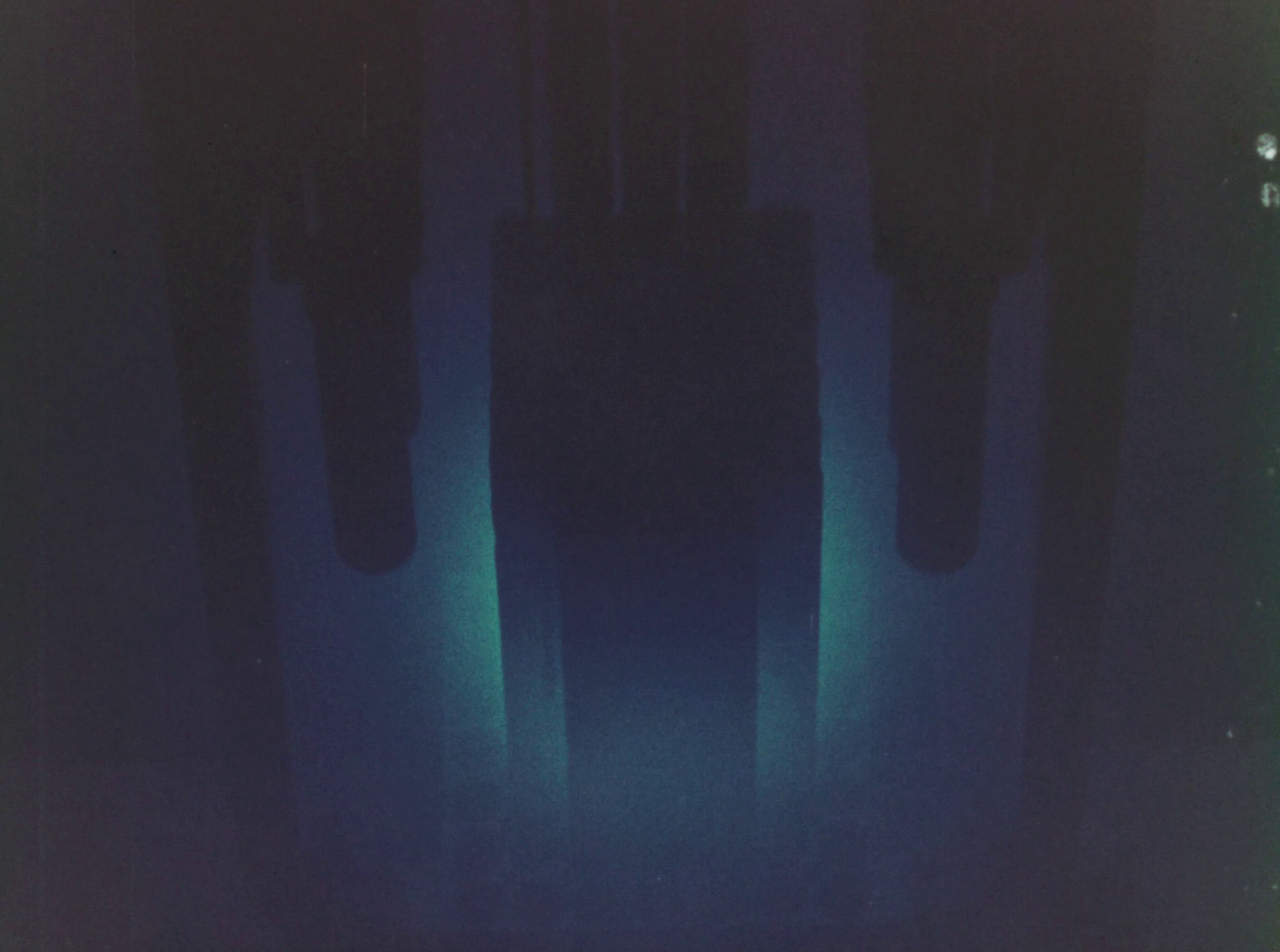
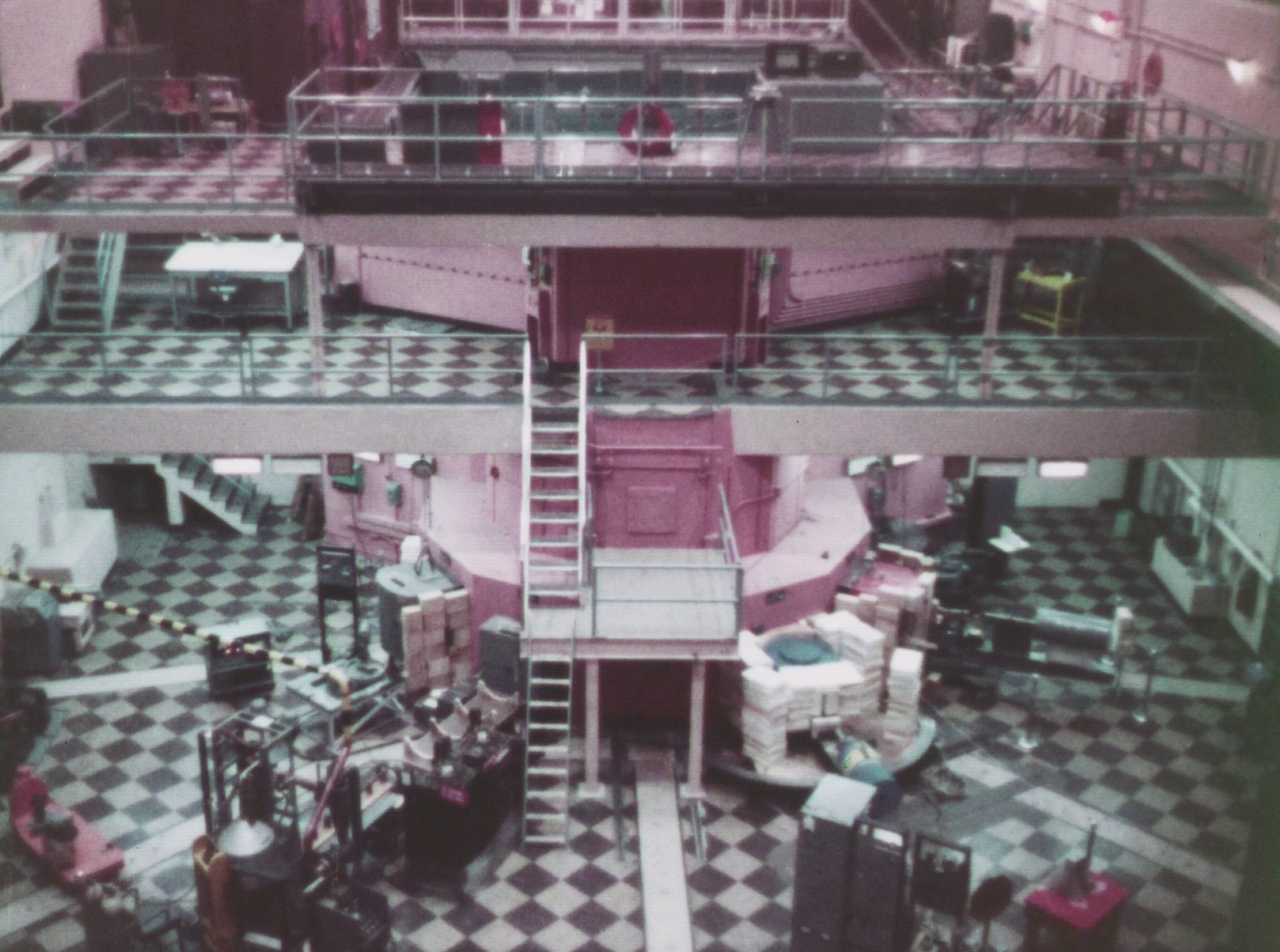
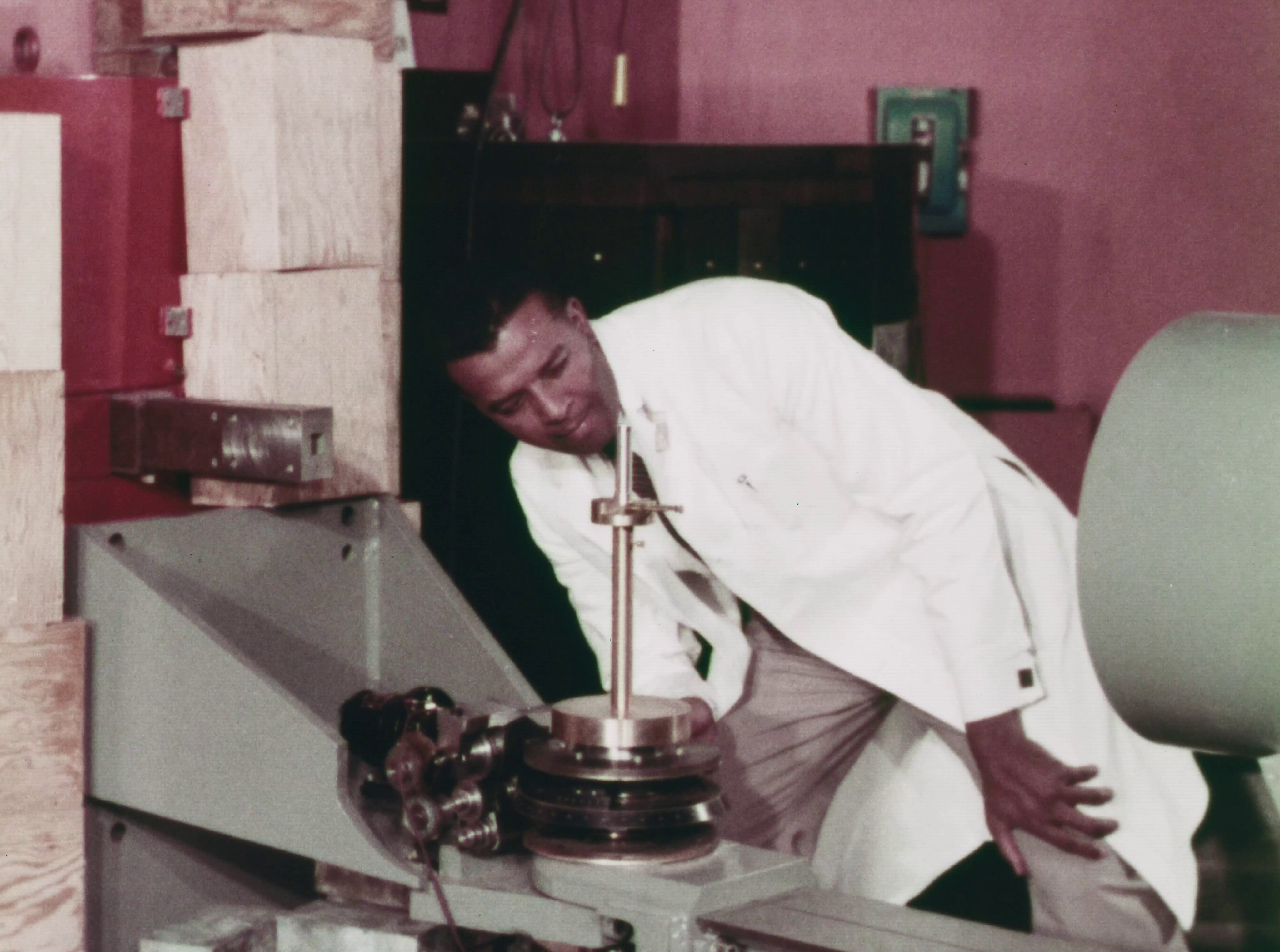
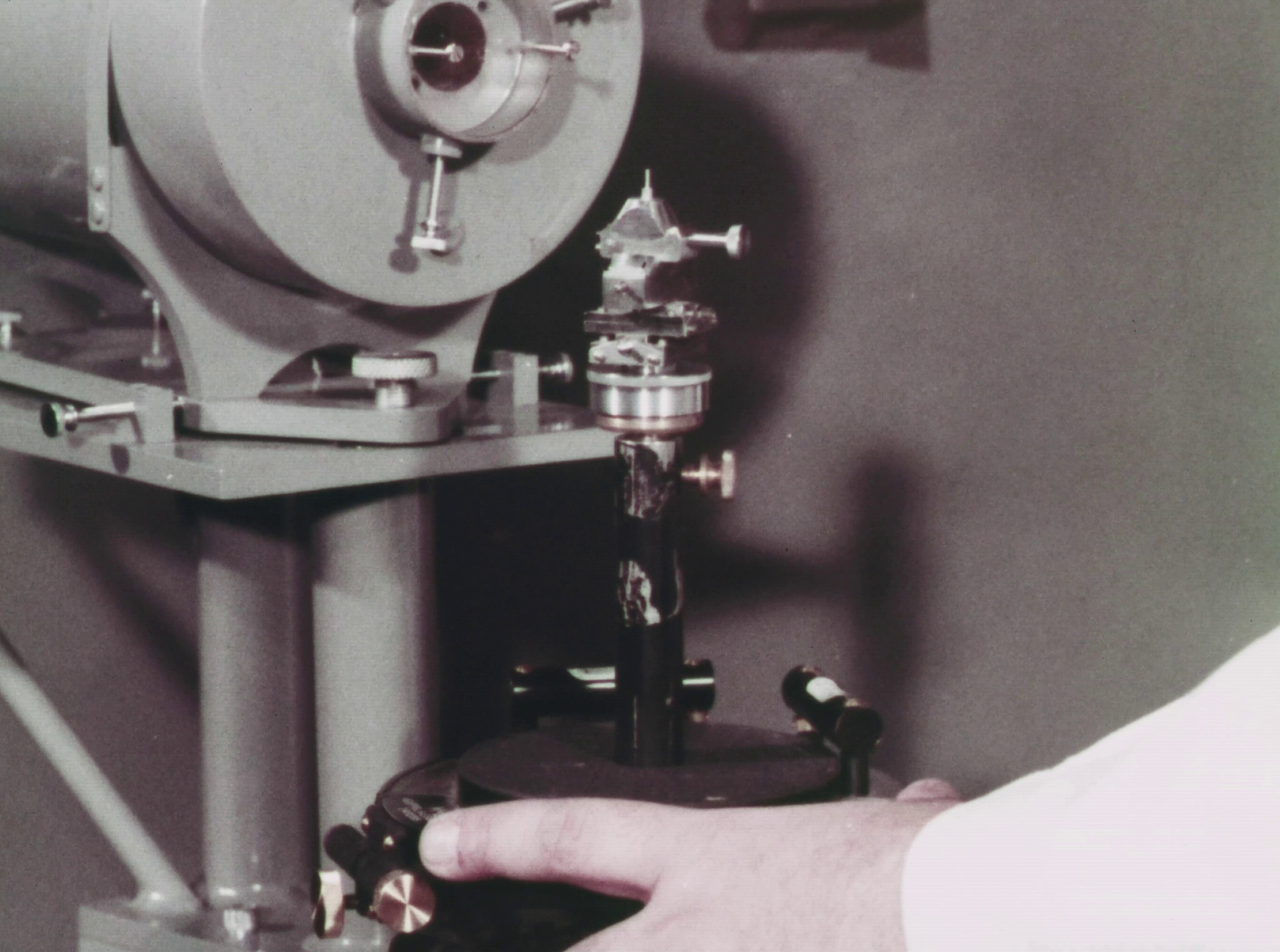
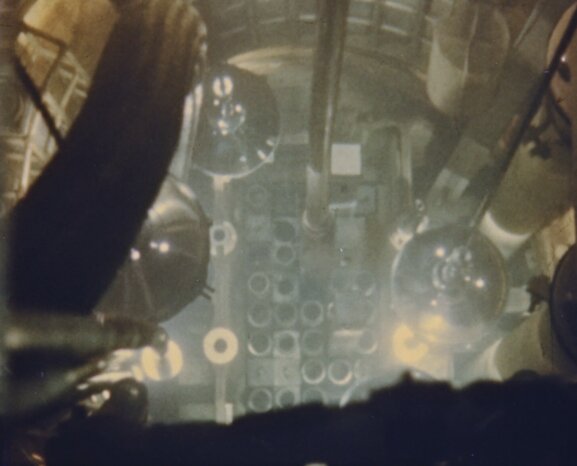
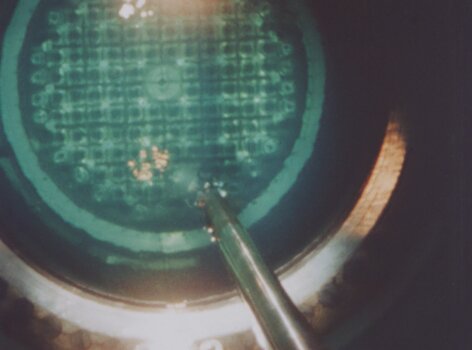
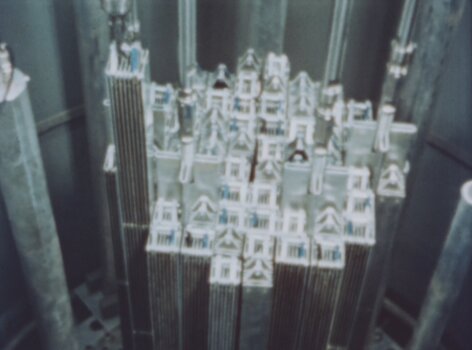
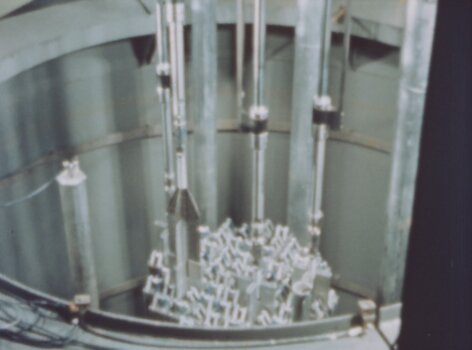
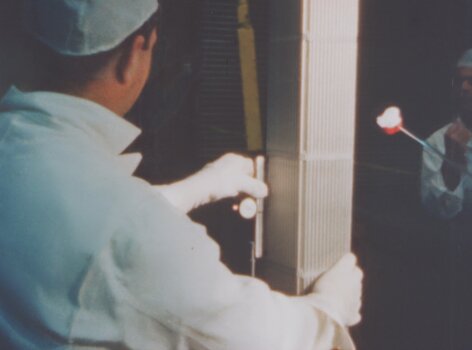
    <p>Announcing the publication of 3 nuclear films from the 1980s-90s: one with 90’s kids explaining nuclear power, one with the famous rocket-powered trucks and trains hitting test casks, and a fun one about nuclear fusion.</p>

    <p>All three of these came from Prof. Ronald Knief’s collection, which he mailed to
me and I took to the scanner.</p>

    <h1 id="splitting-atoms--an-electrifying-experience">Splitting Atoms – An Electrifying Experience</h1>

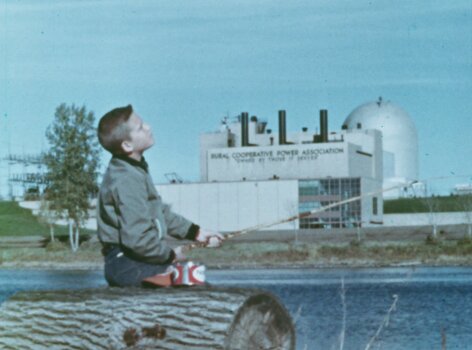
    <p>Fun one from DOE where 90’s kids explain nuclear power in simple terms. Pretty well done!</p>

    <figure>
<div class="ratio ratio-16x9"> 
<iframe src="https://www.youtube.com/embed/6Cwkk2mMM64?start=0" title="Splitting Atoms – An Electrifying Experience" srcdoc="&lt;style&gt;*{padding:0;margin:0;overflow:hidden}html,body{height:100%}img,span{position:absolute;width:100%;top:0;bottom:0;margin:auto}span{height:1.5em;text-align:center;font:48px/1.5 sans-serif;color:white;text-shadow:0 0 0.5em black}&lt;/style&gt;&lt;a href=https://www.youtube.com/embed/6Cwkk2mMM64?autoplay=1&amp;start=0&gt;&lt;img src=https://img.youtube.com/vi/6Cwkk2mMM64/hqdefault.jpg alt='Splitting Atoms – An Electrifying Experience'&gt;&lt;span&gt;▶&lt;/span&gt;&lt;/a&gt;" allow="accelerometer; autoplay; encrypted-media; gyroscope; picture-in-picture" allowfullscreen="">
</iframe>

</div>
</figure>

    <p><button class="btn btn-primary" type="button" data-bs-toggle="collapse" data-bs-target="#transcript1" aria-expanded="false" aria-controls="transcript1">
<i class="fas fa-file-alt me-2"></i> Show Transcript
</button></p>

    <div class="collapse mt-3" id="transcript1">
<div class="card card-body">

        <p>Hi, I’m Jessica. I’m Amy. I’m Ted. Here’s a riddle. There’s something you do all the time,
and you probably don’t even know it. What is it? Here’s a hint. Need a little more help? Watch this.
You know what it is?</p>

        <p>Here’s one more hint.
Yes!
Oh!
I still beat you!
Okay, time’s up.</p>

        <p>So, what’s the answer?
What do you do all the time without even knowing it?
Drive your parents crazy?
Go to school with a goofy haircut?
Make awful noises when you chew?
We all do those things, but that’s not it.
The answer is you use nuclear energy.
That’s right, nuclear energy.
But if you guessed that you use electricity, you’re right too,
because we use nuclear energy to make a lot of electricity
and we do it by splitting atoms.</p>

        <p>It’s an electrifying experience.</p>

        <p>About 1 fifth of the electricity we use comes from nuclear energy.
Does that sound like a lot? It does if you think about it like this.
In the whole country, about 1 out of every 5 houses gets its electricity from nuclear energy.
You might even use it every time you turn on a light.
But even if nuclear energy isn’t used to light your home, you still use it. How?
Because nuclear plants make the electricity that is used to make all kinds of stuff, like the clothes you wear, or a cool TV show.
Or a frozen pizza.</p>

        <p>So, why do we use all this nuclear power? Because we use a lot of electricity.
Just imagine how much electricity it would take to keep millions and millions of
people warm in a big city like New York. And just think how much electricity
they need for all these lights. Or take some place where it’s hot most of the
time, like Florida. Imagine how much electricity it takes to run all the air
conditioners in the whole state for a whole year. Wait a minute, what about
malls?</p>

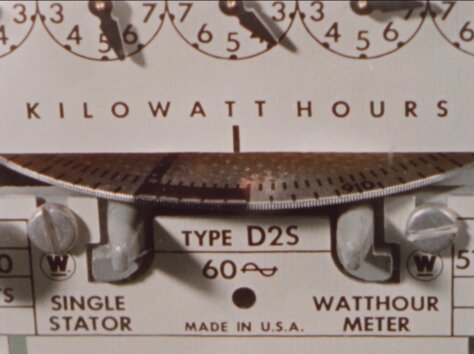
        <p>Think about how much electricity it takes to run all the malls in America. We
use a lot of electricity. Just look at New York. It uses about 87 million
kilowatt hours of electricity every day. That’s a really big number. But what
does it mean? It means you could run not just 100, not just 1,000, but 100,000
100 watt light bulbs 24 hours a day for a whole year on about the same amount of
electricity New York City uses in one day. And that’s just one city for one
day. How do we get enough electricity to run the whole country?</p>

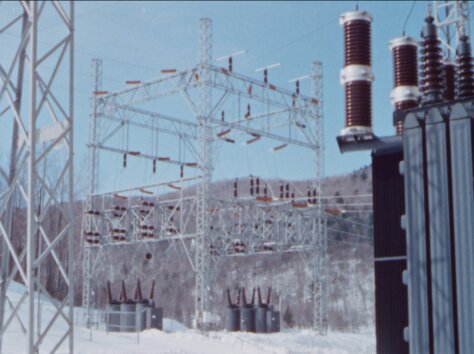
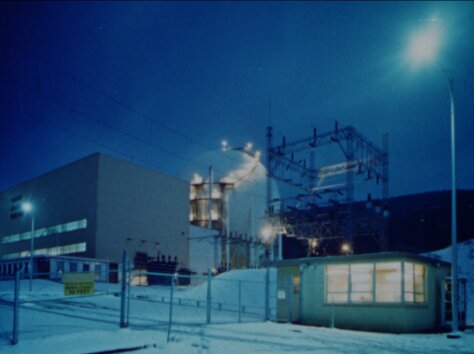
        <p>We use different kinds of power plants to get the electricity that we need.
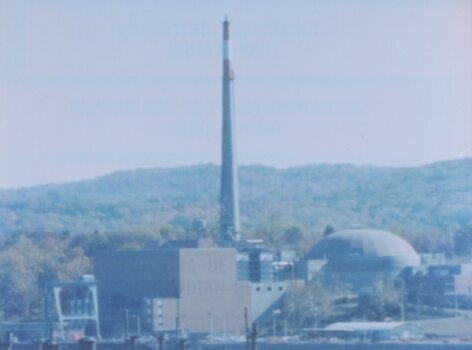
Nuclear plants like this one in New York are just one kind. The state of New
York gets almost a fourth of its electricity from nuclear plants. A lot of
other states get even more of their electricity from them. Some states get more
than half from nuclear power. Vermont gets over three-fourths of its
electricity from it. In the whole country, over 100 nuclear plants make
electricity. Now you know how much we use nuclear power.</p>

        <p>So let’s find out how it works. Let’s start with how we make electricity. To
make electricity, you need a generator. This one makes the electricity to run
the light on Jessica’s bike. As she pedals, the tire turns into generator
shots, and the generator makes electricity. But there’s a really big problem
when you make electricity like this. It’s hard work!</p>

        <p>Lucky for us, there are easier ways to turn a generator shaft, like falling water.
The water turns this pinwheel, which turns a generator shaft and makes electricity.
We use falling water to make electricity every day. It’s called hydroelectric power. The
water is collected behind dams like this one.</p>

        <p>Inside that building, falling water turns giant pinwheels called turbines. It’s
like Jessica’s pedaling. The turbines turn generator shafts that go into big
generators and they make electricity. A lot more than you can make on a bike,
but not enough for all the electricity we need. We can only get about a tenth of
our electricity from hydroelectric dams. Because you’ve already built all of the
dams in places we can put them. That’s why most power plants use something else
to turn their generator shafts. They use steam.</p>

        <p>To get enough steam to make electricity, you need to heat water with something
that gets really hot, like coal or oil or natural gas. This power plant uses
oil to make steam. Oil, natural gas, and coal are called fossil fuels. Fossil
fuel plants make most of our electricity, about two-thirds. But there’s another
way to make electricity, nuclear power.</p>

        <p>A nuclear power plant works just like a fossil fuel plant, except instead of
using coal, gas, or oil to make steam, It uses atoms of the element uranium.
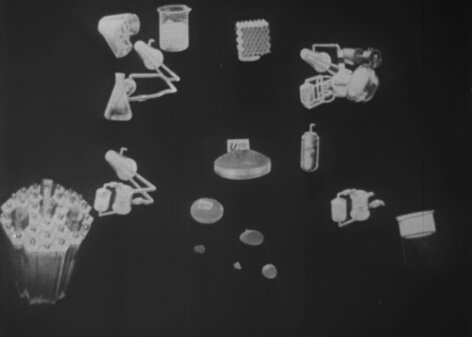
Here’s what a pellet of uranium fuel looks like. Uranium can be very powerful.
A little bit can make a lot of electricity. A pellet this size can make the
same amount of electricity as a whole ton of coal. So where does uranium fuel
get its power? From the enormous energy stored inside its atoms. Nuclear power
plants gets energy by splitting atoms apart. It’s called nuclear fission.
Here’s how it works.</p>

        <p>There are special kinds of uranium atoms that will split in two. They split
when a certain type of very small particle smashes into them. When a uranium
atom splits, it gives off a few more of these particles. It also gives off
energy in the form of heat.</p>

        <p>Each particle can go on to split another of the special uranium atoms. Every
atom that splits gives off more particles and more heat. And those particles go
on to split even more atoms, which give off even more particles and more heat.
This is called a chain reaction and it makes lots of heat, enough to turn water
into steam to make electricity. Uranium fuel comes from a natural resource,
uranium ore. It’s mined from the ground like gold.</p>

        <p>But before it can be used to make electricity, it has to be processed. That’s
because there aren’t enough special atoms in the raw uranium to make the chain
reaction work. So the atoms have to be concentrated. They’re processed called
enrichment.</p>

        <p>The amount of these atoms goes from one percent to three percent. The uranium
can then be used as fuel in a nuclear reactor. Some people think this fuel can
explode like a nuclear bomb. That’s not true. It isn’t powerful enough.
Uranium used in bombs is over 30 times more concentrated than nuclear fuel.
After it’s been concentrated, the uranium is made into pellets. The pellets are
stacked in long, hollow metal tubes and bundled together. The bundles are used
as fuel in a nuclear power plant. Now, let’s see how a nuclear plant makes
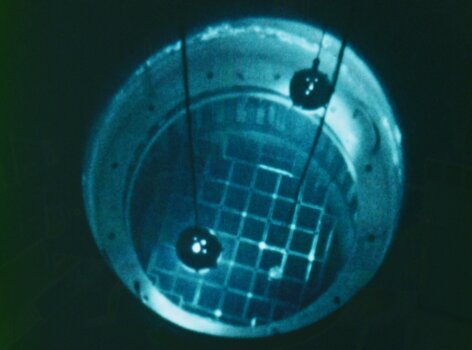
steam. The bundles of uranium fuel go into a part of a nuclear plant called the
core. Control rods are placed between the fuel bundles.</p>

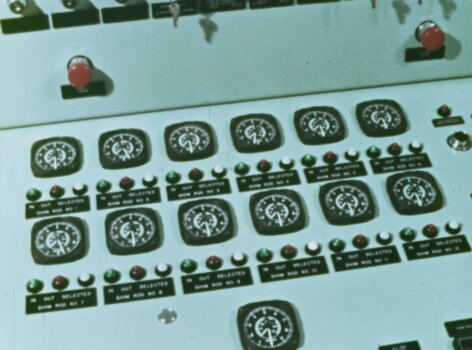
        <p>They’re made of a material that gets in the way of the chain reaction. When
they are taken away, the chain reaction starts and the core gets real hot. The
heat is used to turn water into steam and the steam is used to make electricity.
To slow down or to stop the chain reaction, the control rods are moved back
between the fuel bundles. A nuclear reaction creates a lot of heat. That’s why
it can make so much electricity. And it also makes something called radiation.
There’s some radiation around you all the time. It comes from all kinds of
things, like the sun and even your TV set.</p>

        <p>A little bit of radiation isn’t harmful, but a lot can be. So it’s important to
keep as much radiation as possible from getting into the environment. Because
of radiation, a nuclear plant has to be built safer than just about anything
else in the world.</p>

        <p>It needs special plans, people, and equipment. And it has to be made out of
special materials. Radiation and nuclear power plants to be stopped by thick
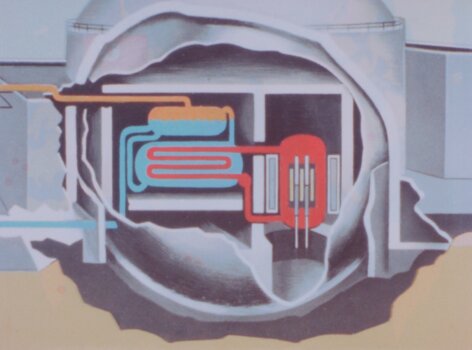
metal and concrete. To keep radiation from getting into the environment, the
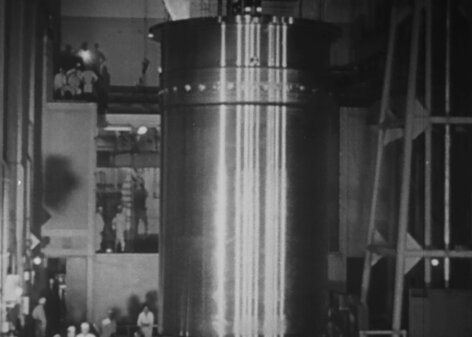
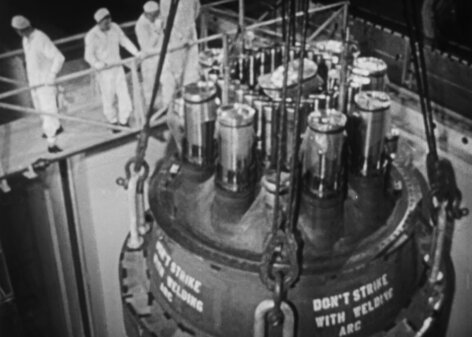
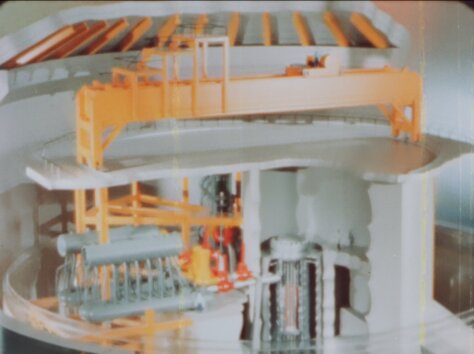
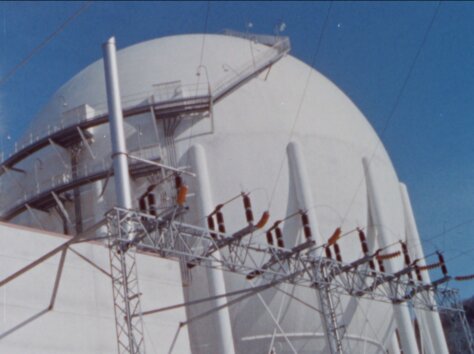
core of a nuclear plant sits inside a special metal tank. It’s made of steel
that’s nine inches thick. That’s thick enough to keep the radiation inside.
But then, to be extra sure, this tank sits inside walls made of concrete three
feet thick. The thick walls are part of that building. It’s called the
containment building because it contains the radiation in the core, and it keeps
it inside.</p>

        <p>Okay, we know a nuclear plant heats up all this water and turns it into steam to
make electricity. So what happens to the steam? The steam turns to turbines,
and it goes in the special coolers where it becomes hot water. But then it has
to cool off even more. One way nuclear plants can cool the water is to pump it

inside those weird-looking things. They’re called cooling towers. They’re full
of nothing but air. The shape of the cooling tower brings air in from the
bottom. The air cools the hot water as it falls like rain into a special pond
underneath. If you think this water might be radioactive, well, it’s not
because it never touches the radioactivity in the core. Once the water is cool
enough, it goes back into the river. The smoke you see at the top is only water
vapor. So what have we found out today? For one thing, we use a lot of
electricity. And we found out that about one-fifth of it comes from nuclear

power plants. You’re using electricity that comes from nuclear energy right
now.</p>

        <p>It was used to help make the film you’re watching.
So when you’re cold…
When you’re really hot.
When you’re having fun.
Or when you’re just goofing off.
You use nuclear energy all the time without even knowing it.
Yeah, I guess that’s it.
Yeah, hey, guys, want more soda?
All right.
I’ll try a lemon light on this time.
You always have that.
Try something different.
Orange is good.
Okay, that’s really good.
You can find out more about nuclear energy at your local library.
Or you can read the Harnessed Atom.
You can get it from the United States Department of Energy.
I’ll see you next time.</p>

      </div>
</div>

    <p>Note that at the end they point to this excellent resource: <a href="https://www.energy.gov/ne/articles/harnessed-atom-teachers-edition">The Harnessed Atom</a></p>

    <hr />

    <h1 id="accident-testing">Accident Testing</h1>

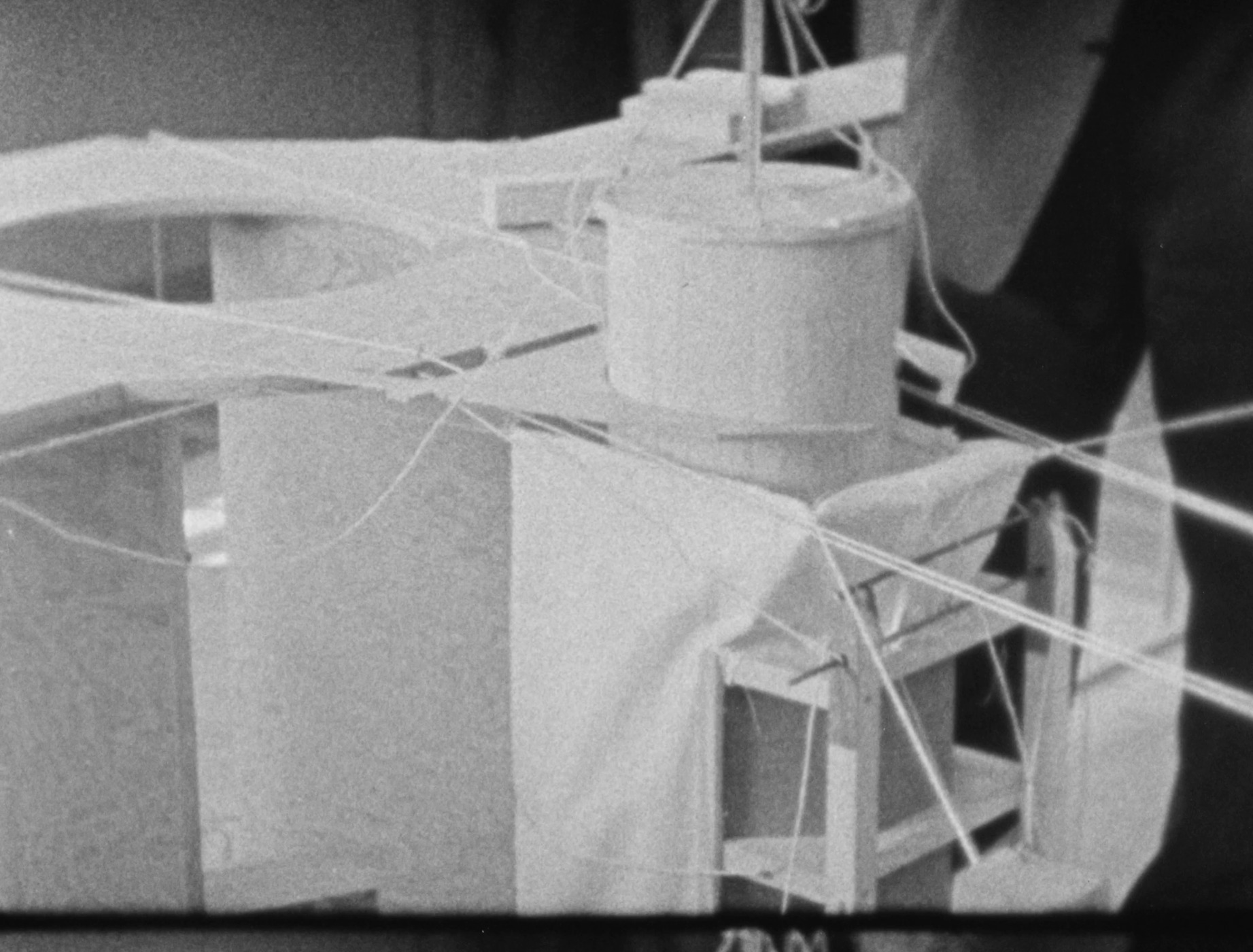
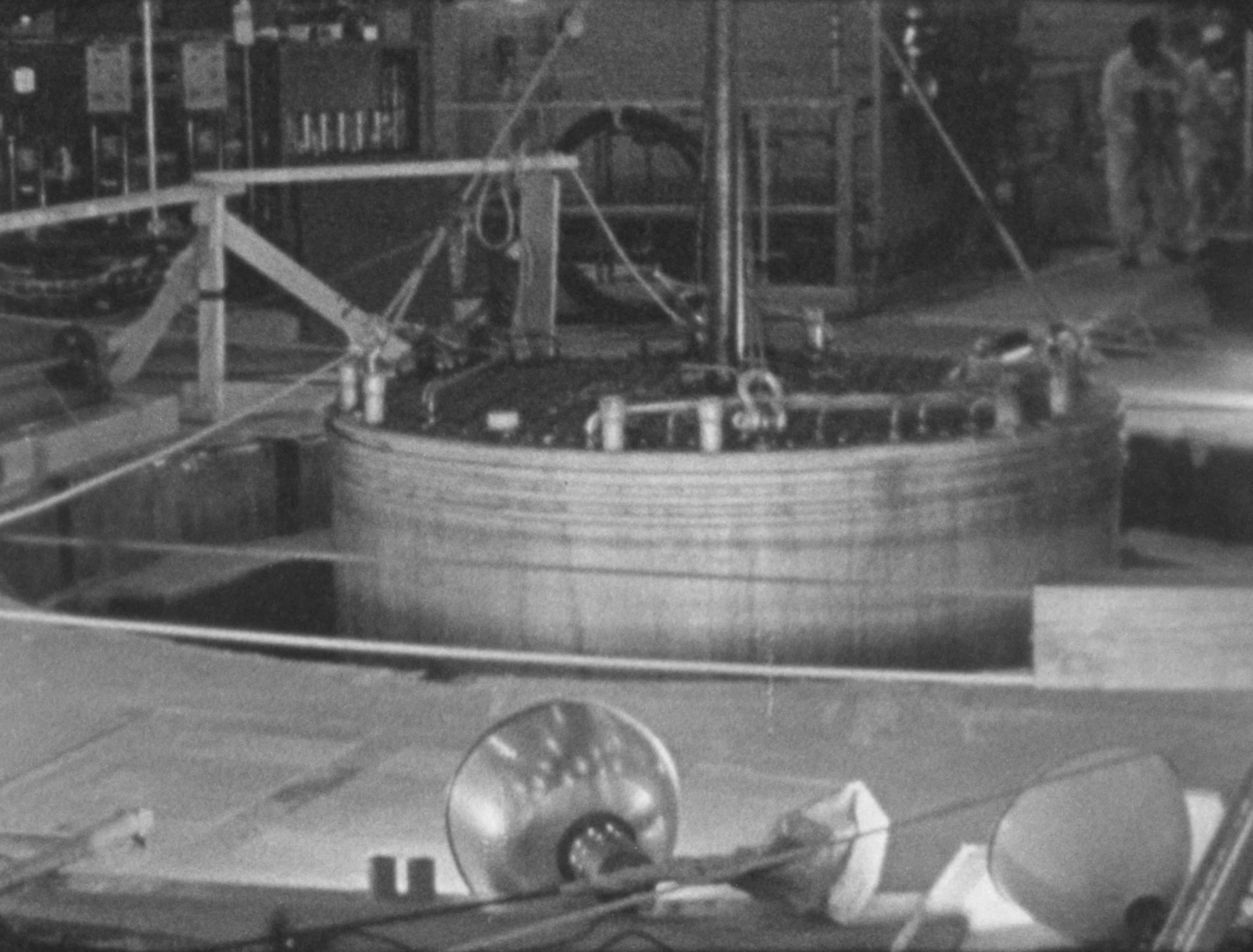
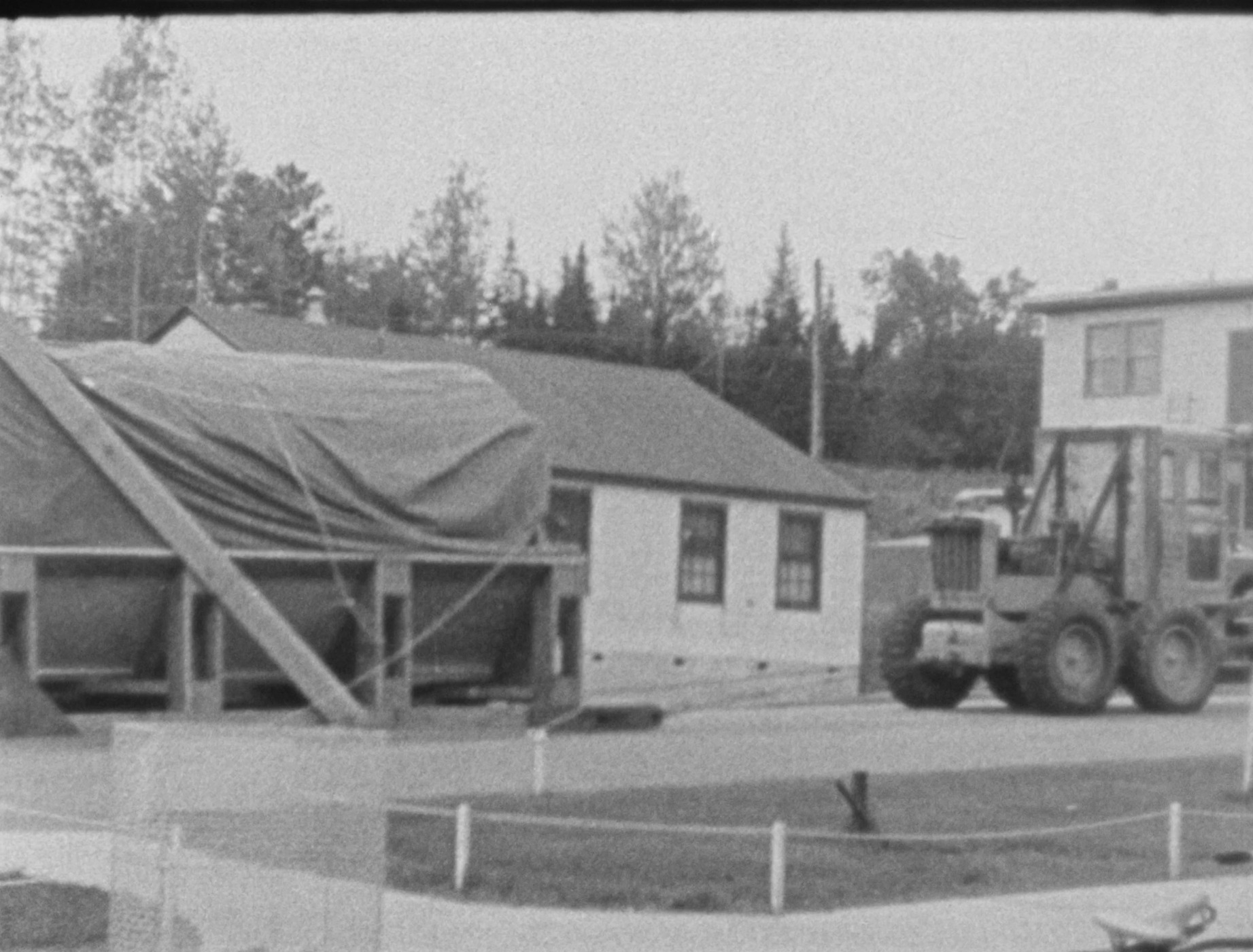
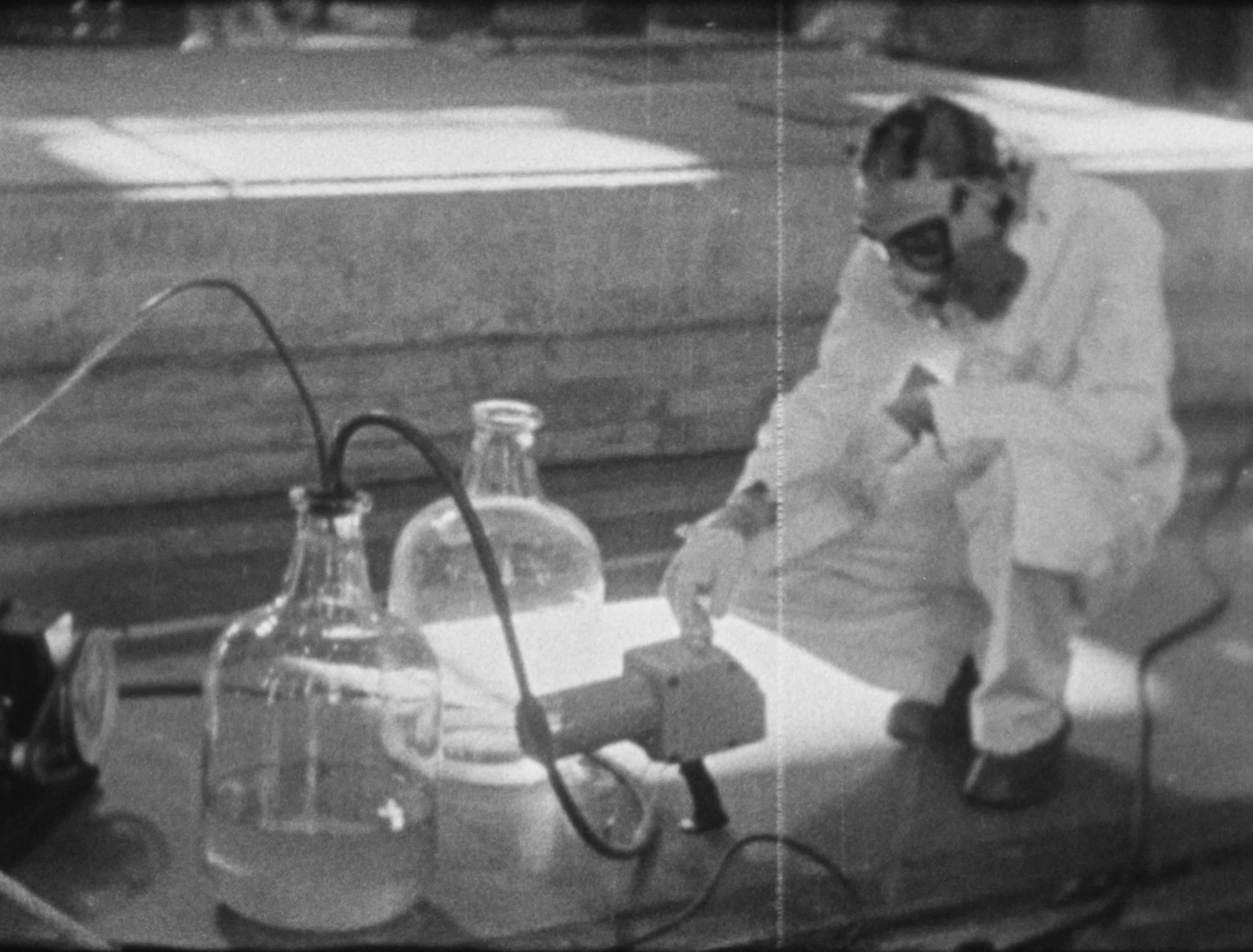
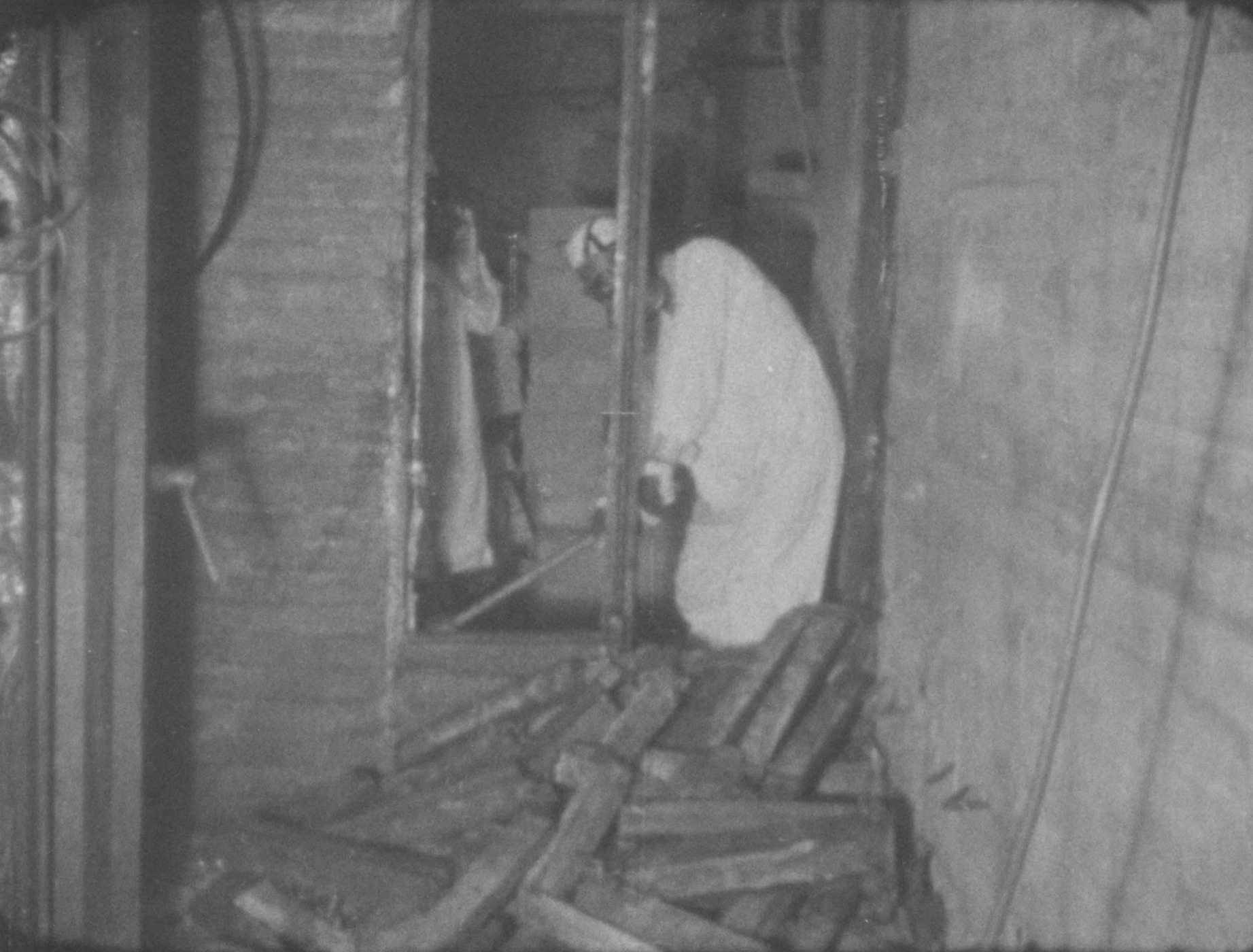
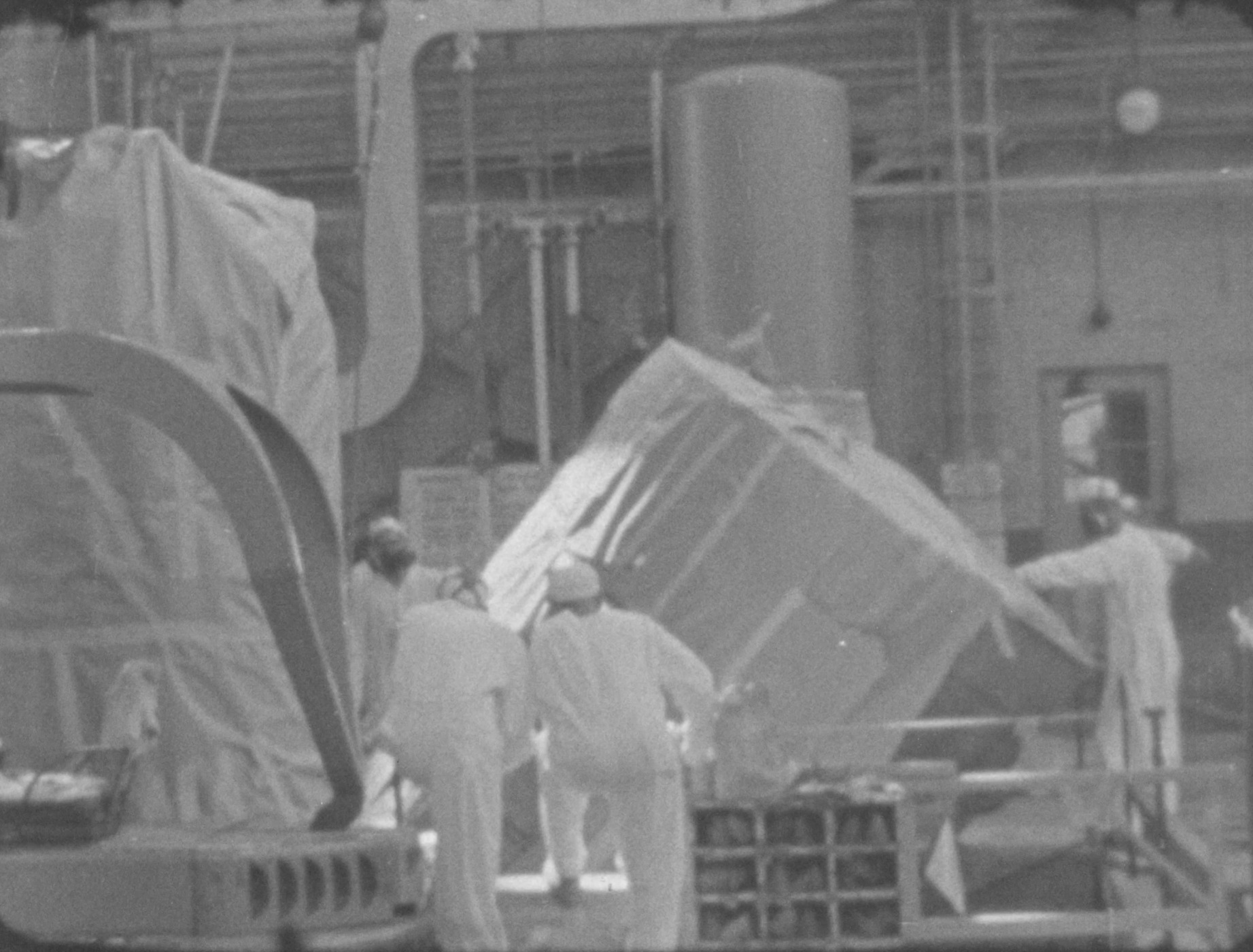
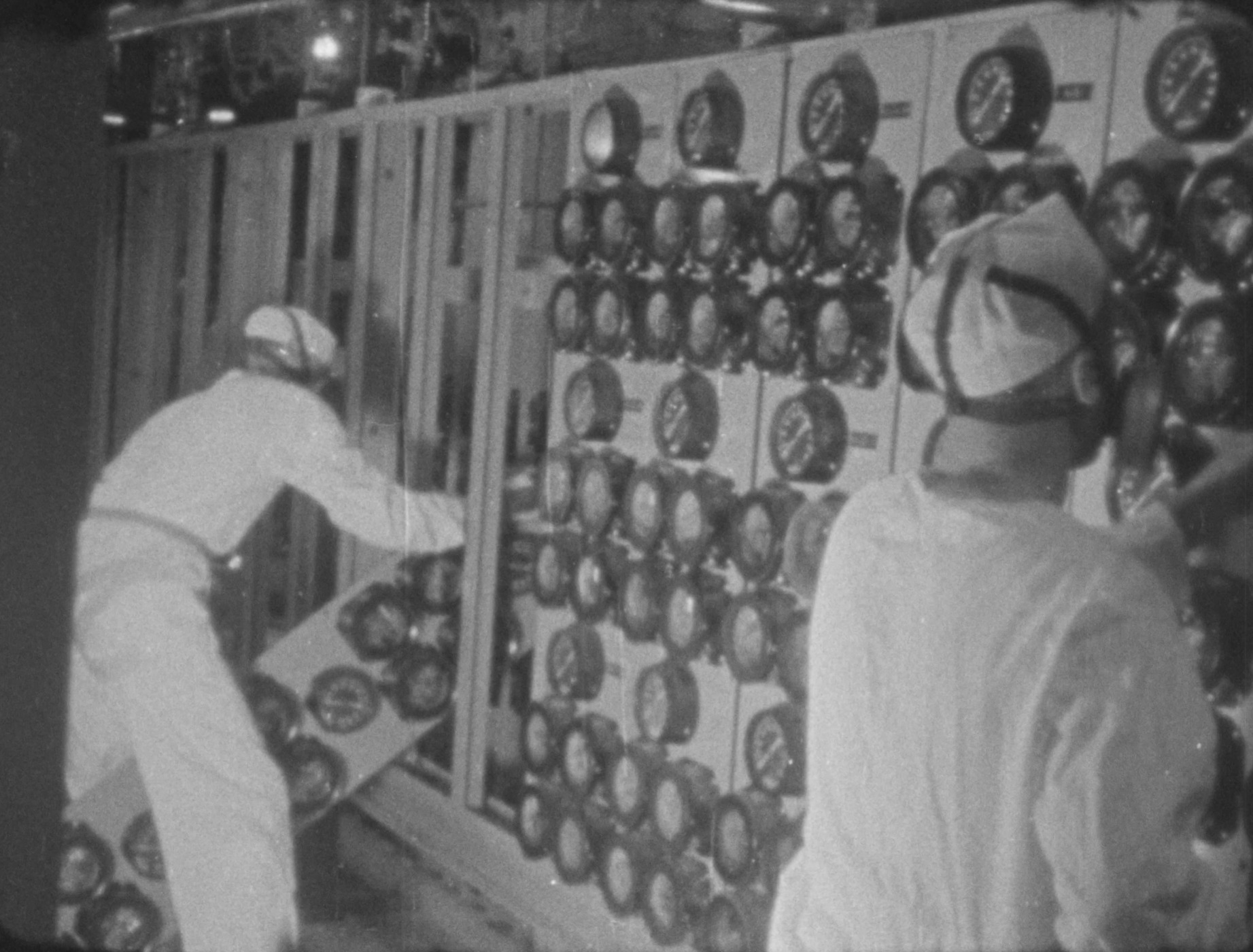
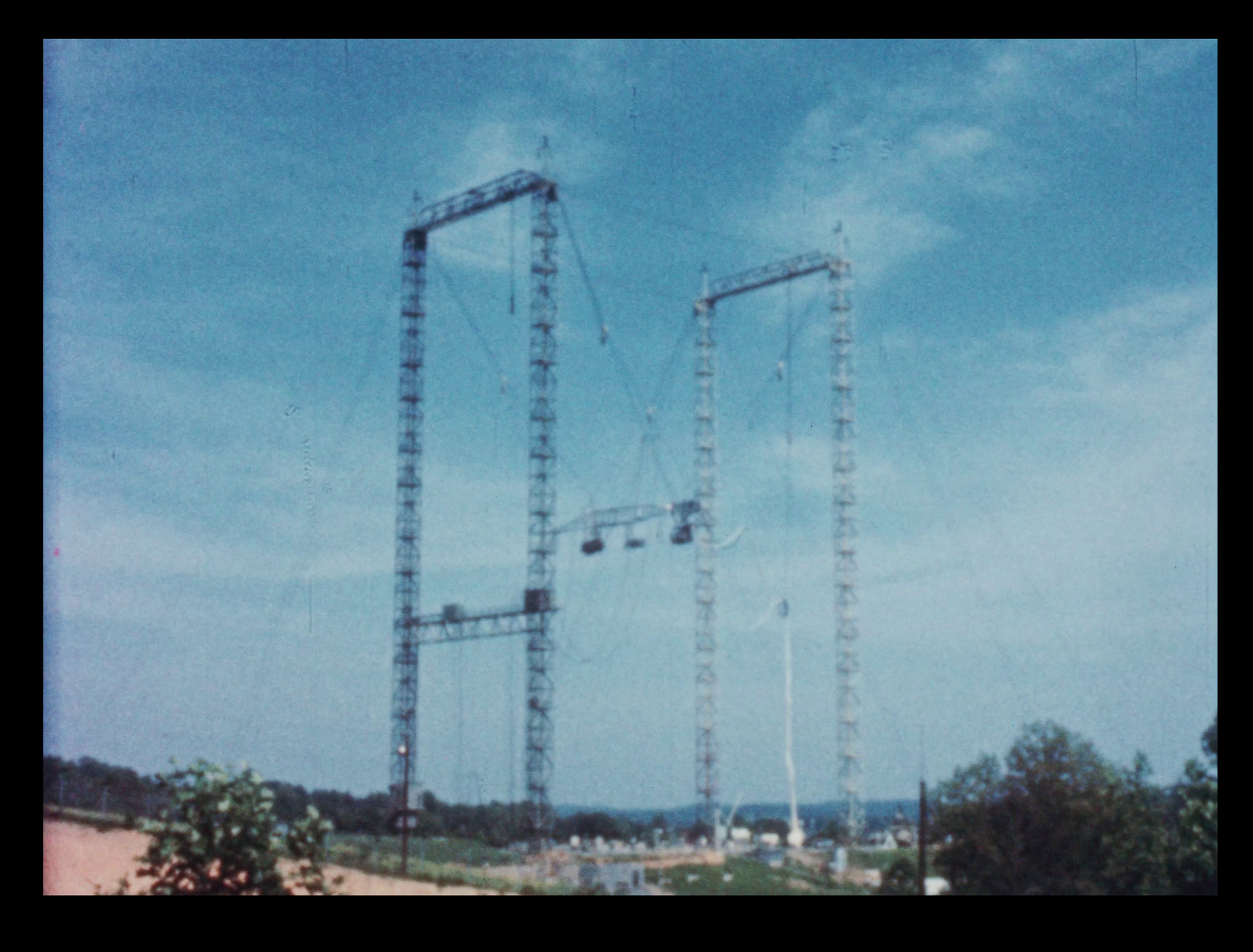
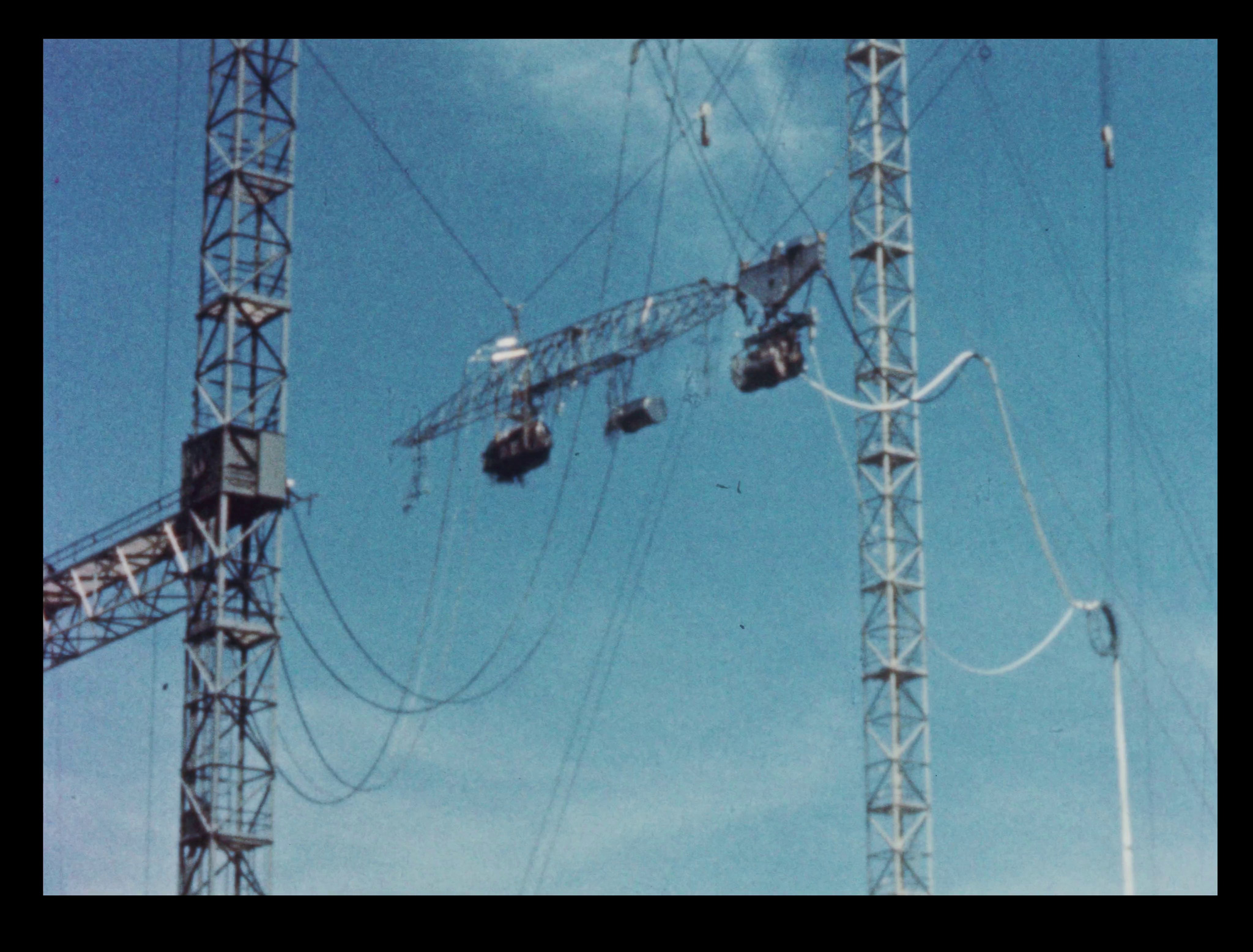
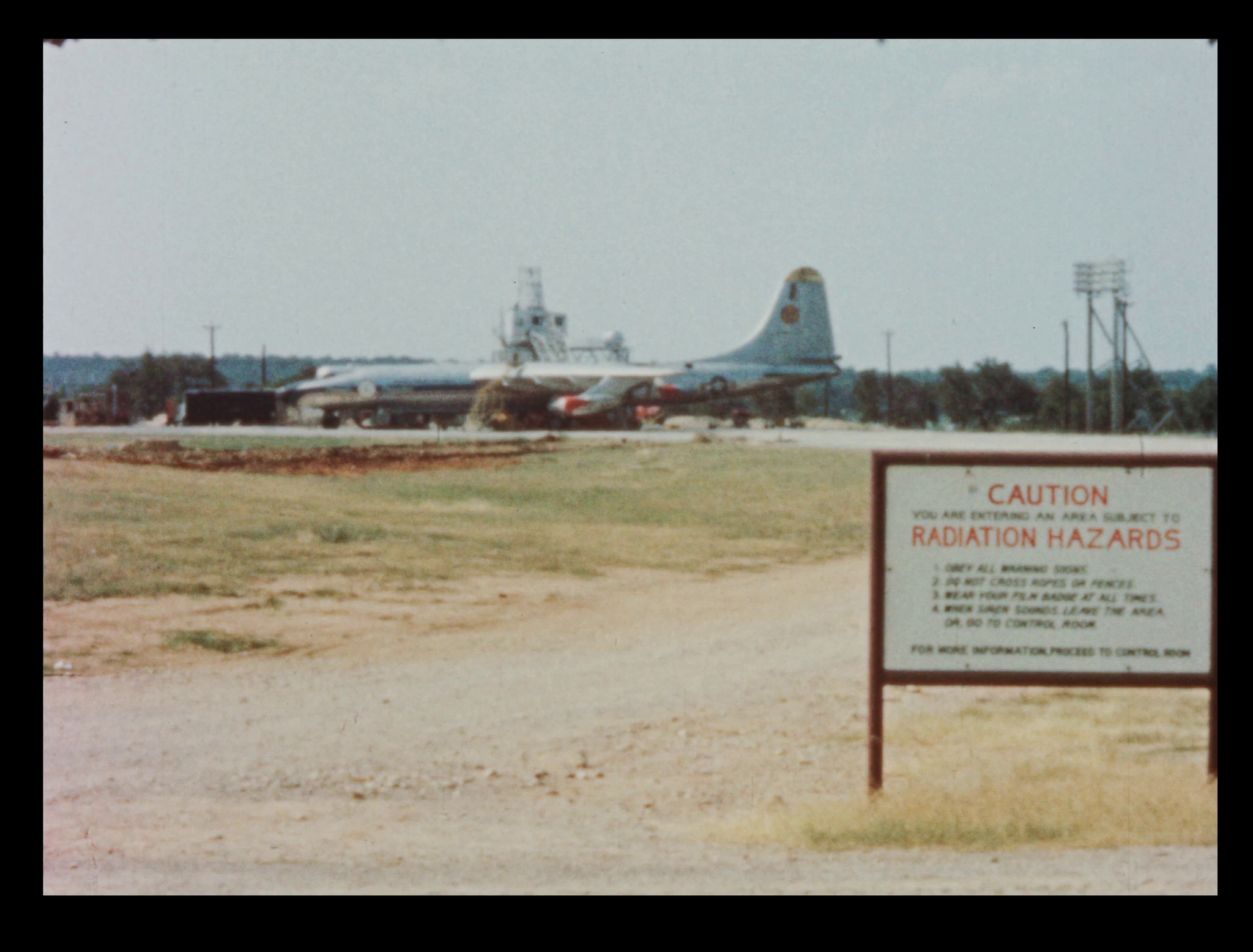
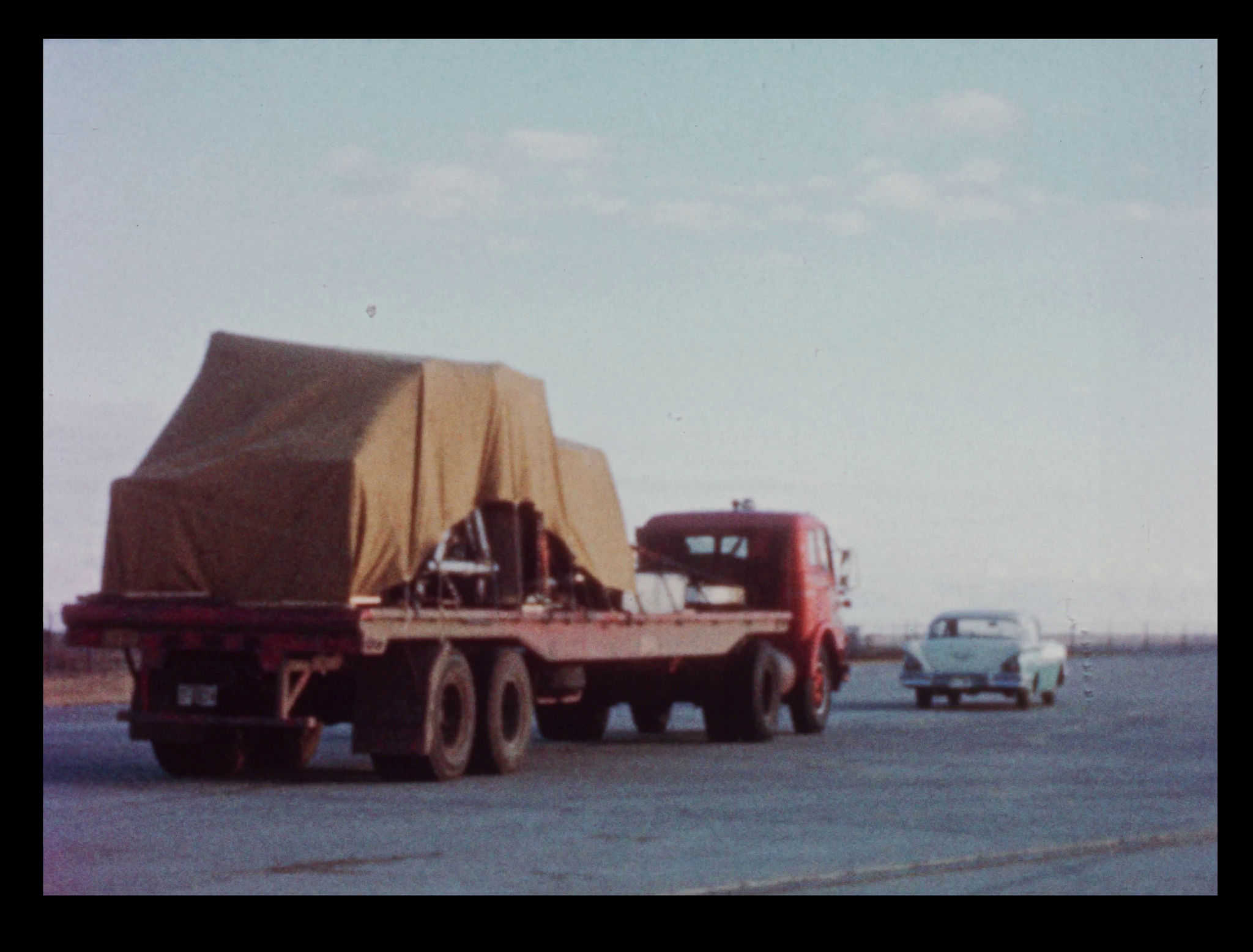
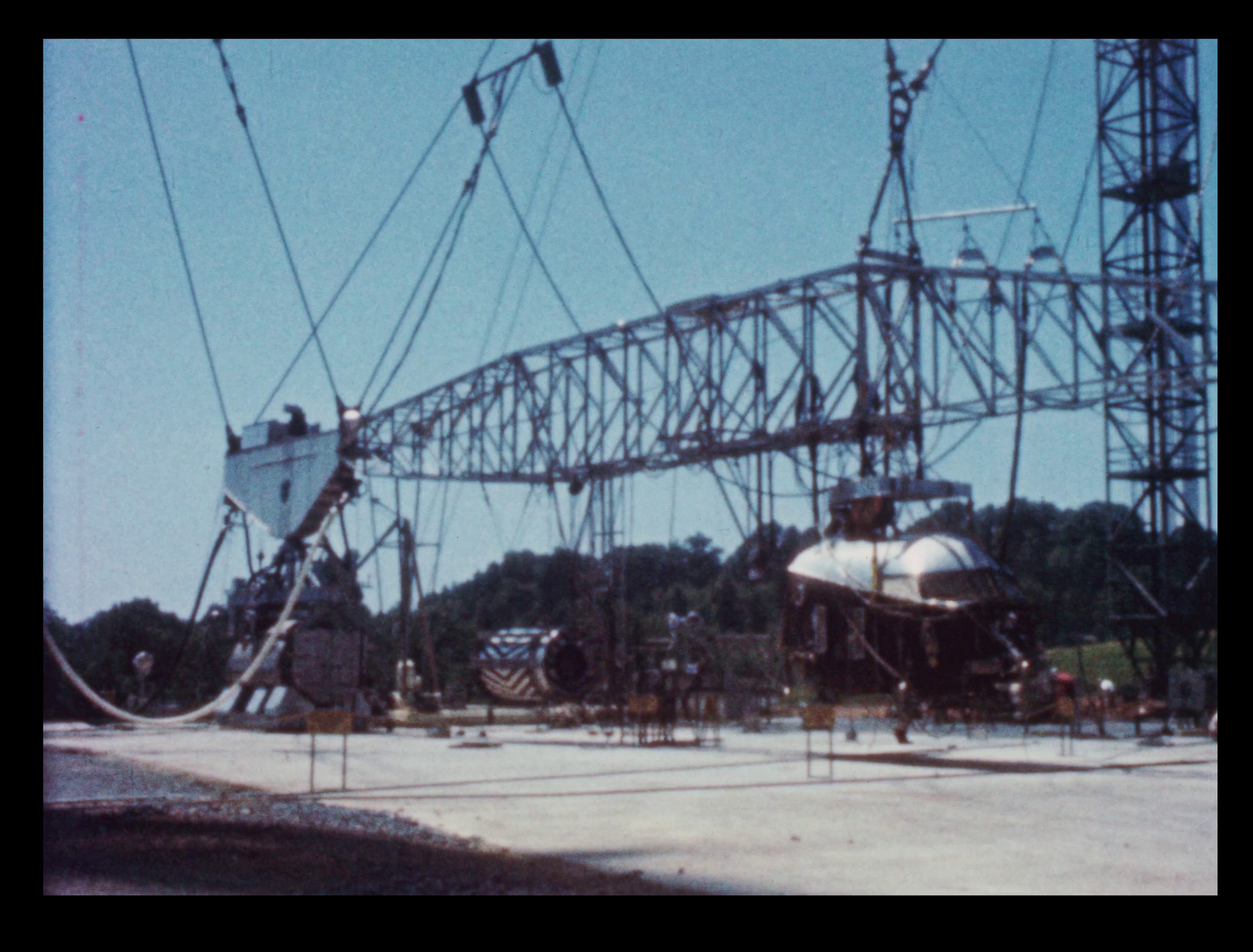
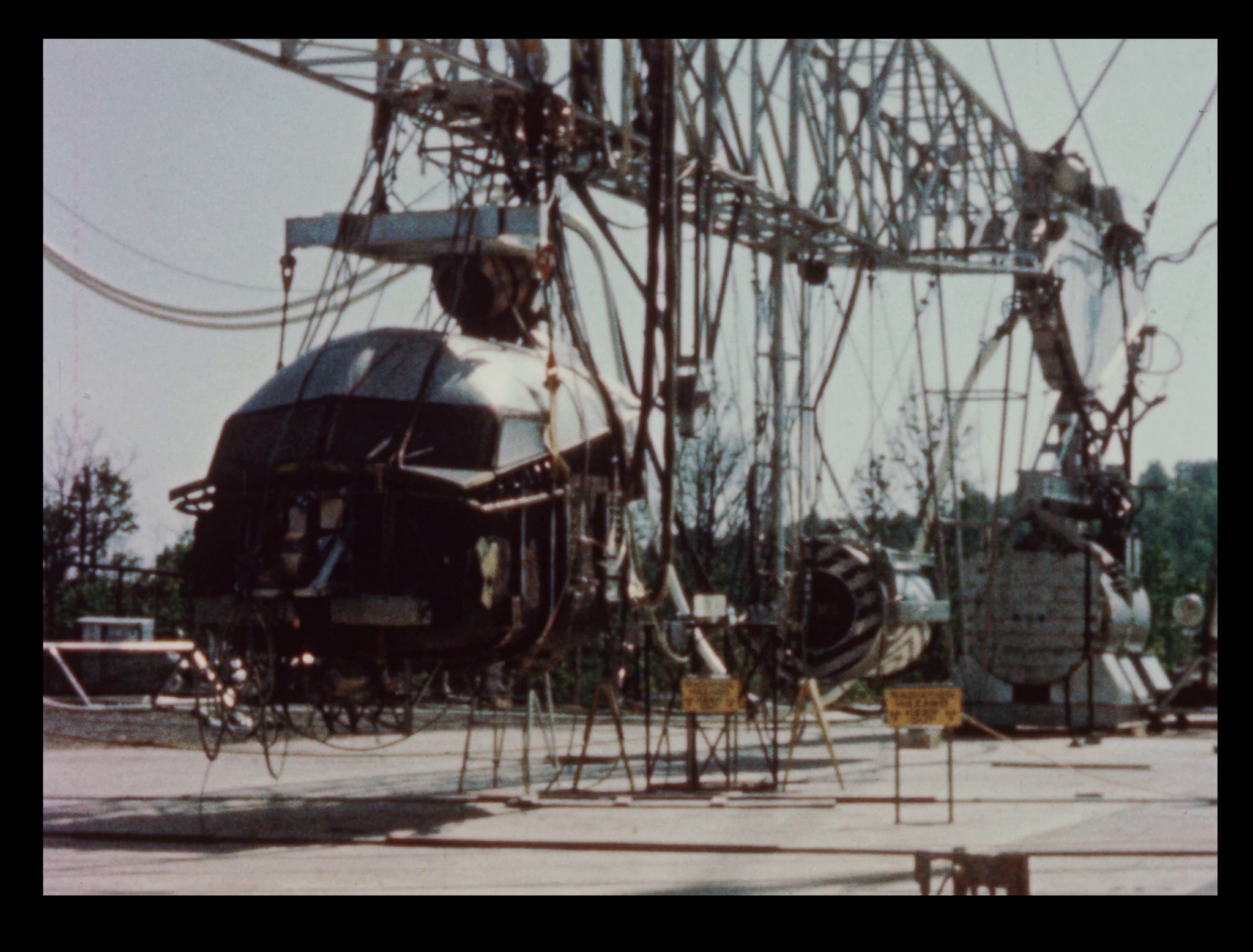
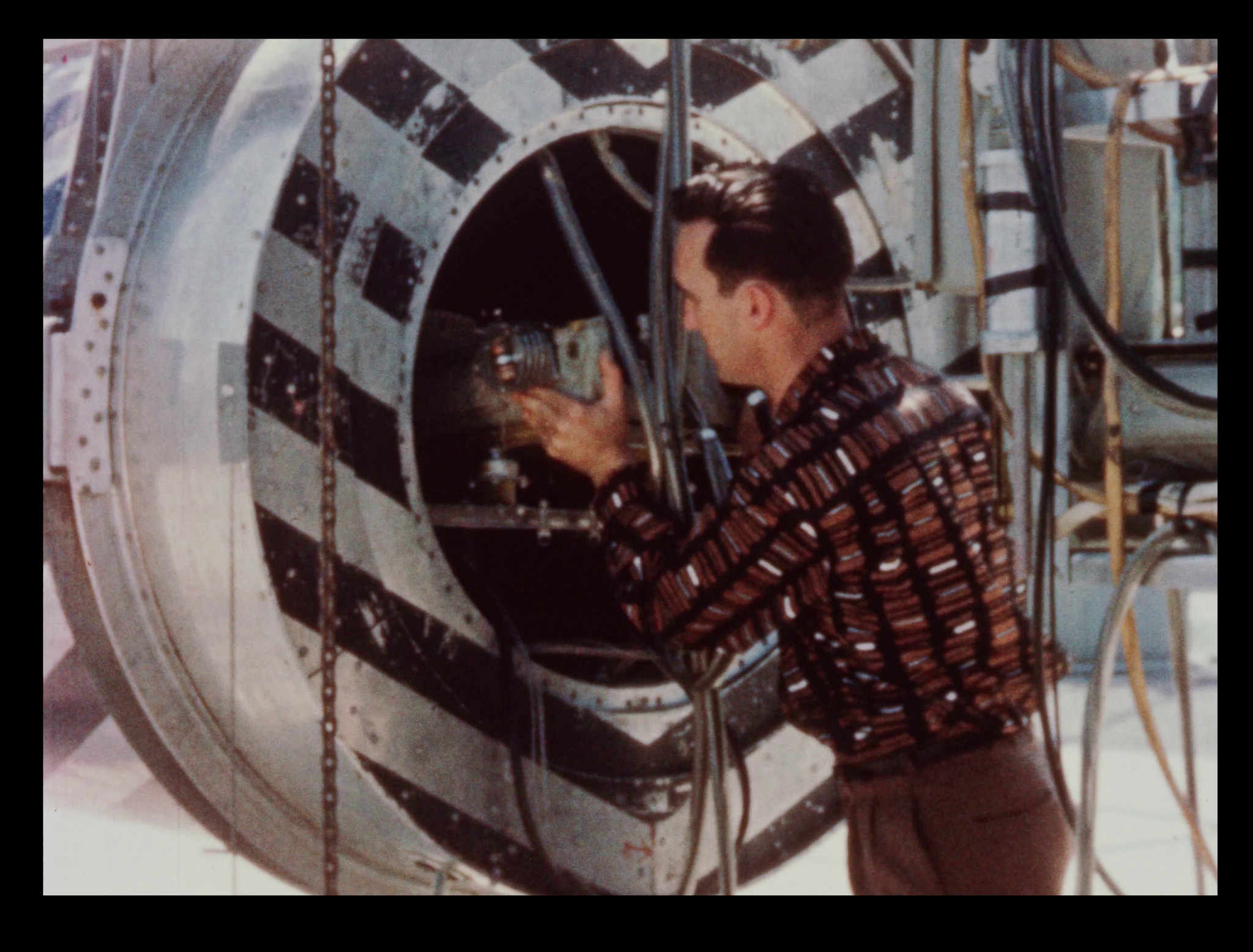
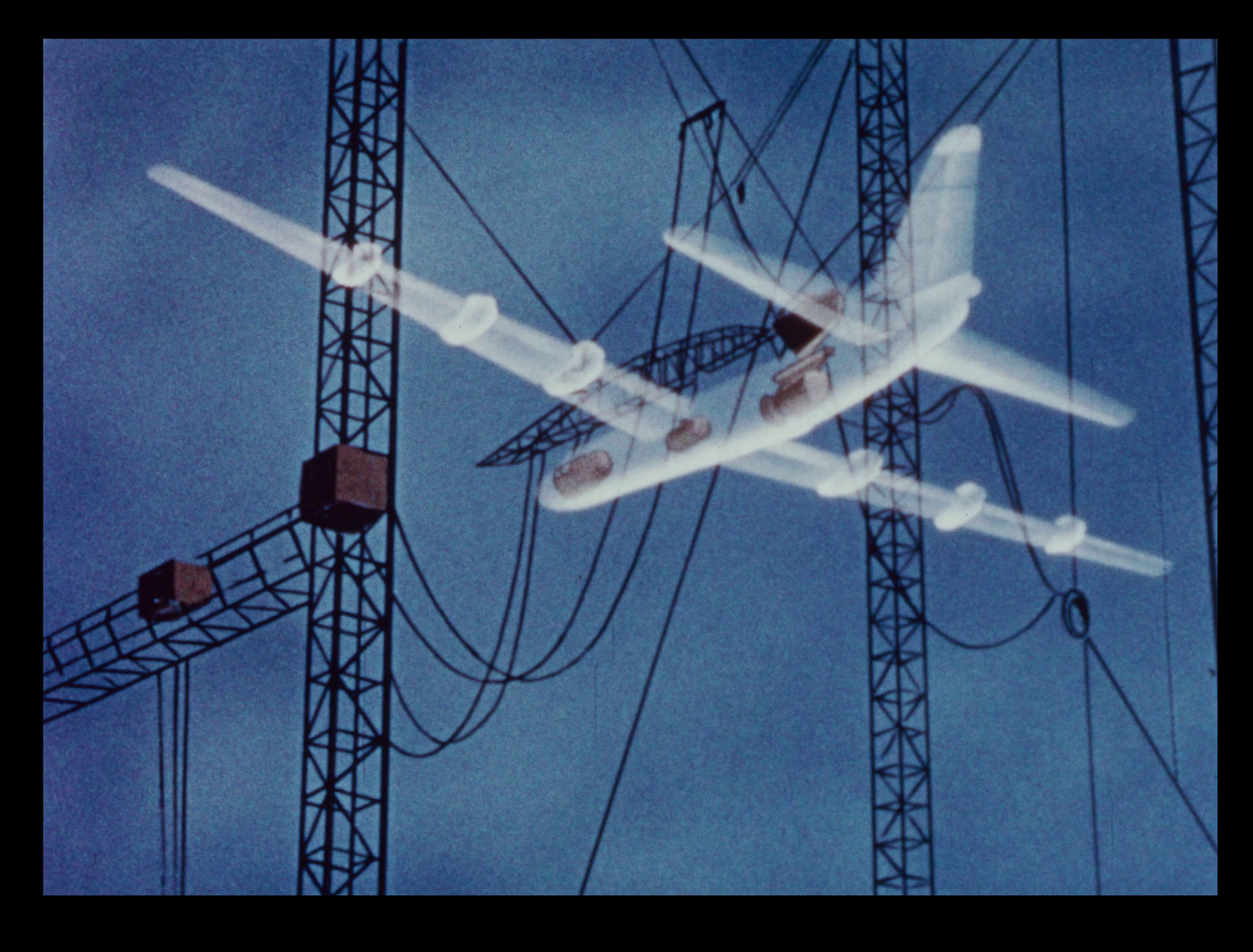
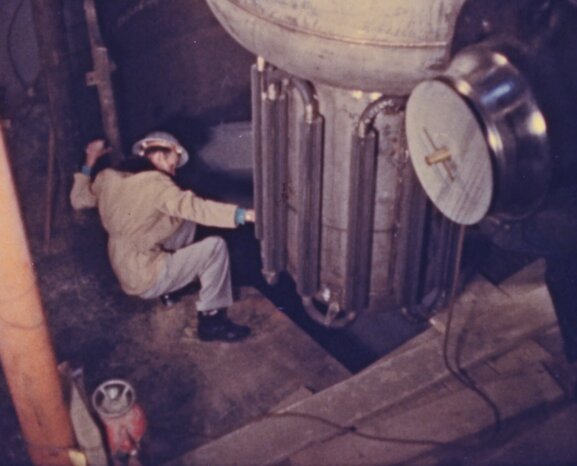
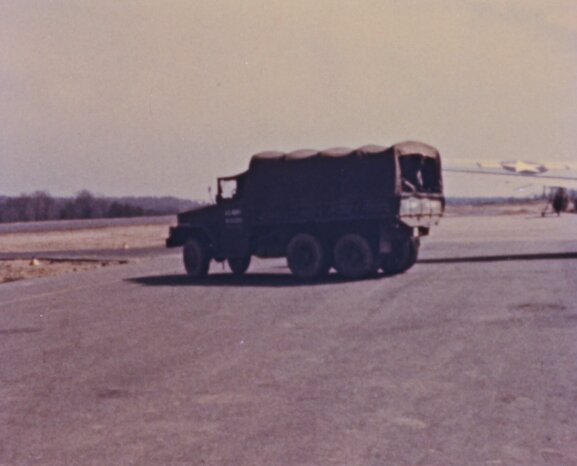
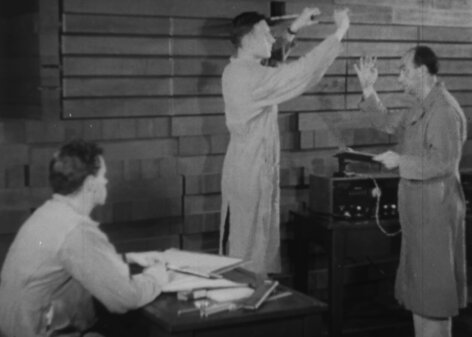
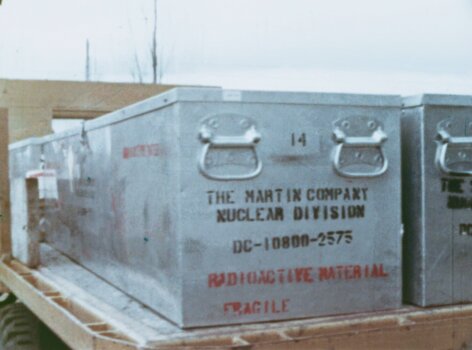
    <p>This shows the classic Sandia destructive nuclear waste cask tests where they

hit it with a rocket powered truck and train and then burn it in jet fuel for 90
minutes. While this exists online, I wanted a higher-res scan so this is the
first publicly available 2K scan as far as I’m aware.</p>

    <figure>
<div class="ratio ratio-16x9"> 
<iframe src="https://www.youtube.com/embed/1LVqkhpp0wQ?start=0" title="Accident Testing" srcdoc="&lt;style&gt;*{padding:0;margin:0;overflow:hidden}html,body{height:100%}img,span{position:absolute;width:100%;top:0;bottom:0;margin:auto}span{height:1.5em;text-align:center;font:48px/1.5 sans-serif;color:white;text-shadow:0 0 0.5em black}&lt;/style&gt;&lt;a href=https://www.youtube.com/embed/1LVqkhpp0wQ?autoplay=1&amp;start=0&gt;&lt;img src=https://img.youtube.com/vi/1LVqkhpp0wQ/hqdefault.jpg alt='Accident Testing'&gt;&lt;span&gt;▶&lt;/span&gt;&lt;/a&gt;" allow="accelerometer; autoplay; encrypted-media; gyroscope; picture-in-picture" allowfullscreen="">
</iframe>

</div>
</figure>

    <p><button class="btn btn-primary" type="button" data-bs-toggle="collapse" data-bs-target="#transcript2" aria-expanded="false" aria-controls="transcript2">
<i class="fas fa-file-alt me-2"></i> Show Transcript
</button></p>

    <div class="collapse mt-3" id="transcript2">

<div class="card card-body">

        <p>Accidents happen. Transportation accidents can involve the carriers of
containers used to transport highly radioactive materials, such as the spent
fuel from nuclear power plants.</p>
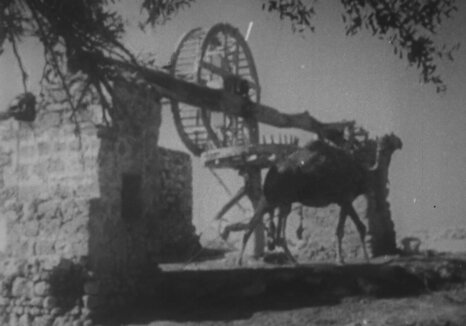
        <p>These containers, called casks, are designed by engineers in the nuclear
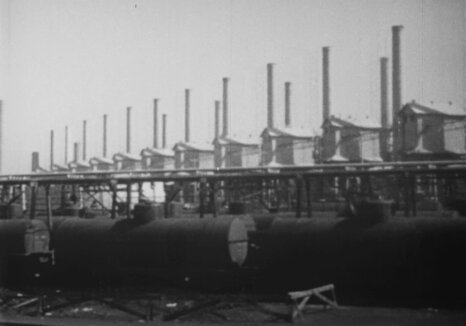
industry and the federal government to survive the potential hazards of
transportation accidents.</p>

        <p>Casks must pass a series of qualification tests prescribed by the Nuclear
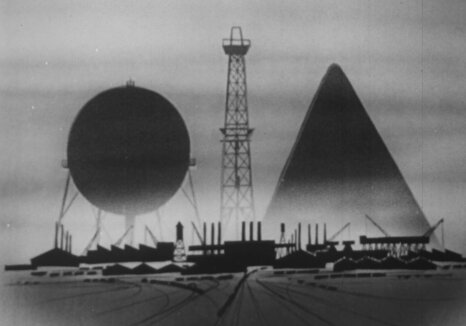
Regulatory Commission and the Department of Transportation that simulate the
threat that casks would face in serious accidents involving impact, puncture,
fire, and immersion.</p>

        <p>When a new cask is being developed, designers must demonstrate, either with
analysis, experiment, or both, that it can survive the impact conditions of a
30-foot drop onto an unyielding target.</p>

        <p>Other prescribed tests in the sequence include puncture, fire, and extended immersion in water.</p>

        <p>Beyond the required tests, casks have been dropped from 2,000 feet onto hardpan desert soil
in order to evaluate the effect of different targets and impact velocities.</p>

        <p>despite such tests and despite the fact that no cast designed for the shipment of highly
radioactive material has ever leaked as the result of a transportation accident a question
frequently asked is but how do you really know the casks would survive actual accidents
to answer that question engineers at Sandia National Laboratories have undertaken studies
to ascertain whether current analytical methods can accurately predict what will happen in very
severe accident environments. The first step is to develop a mathematical model of the entire
physical system and then evaluate the model with a computer. One measures and determines weights
and describes how various sections and elements of the transportation system will react in an
accident. How much force it will take to crush these elements. How much energy they will absorb
and how the container will interact with the transportation system.</p>

        <p>One strips away all extraneous elements, looks only at the basic structure,
the frame, the sheet metal, the engine and wheels, the cask itself, the tie-downs.</p>

        <p>One studies the strengths of the various materials,
calculates the forces of crushing or crumpling the structural elements.</p>

        <p>With this information, the computer is used to determine how fast the cask will be traveling
when it reaches the massive object it impacts.</p>

        <p>Reduced to simplest terms, this is the general framework of the problem.</p>

        <p>Computers are used to obtain solutions to these problems,
to tell what will happen to the various elements of the total system
in a specified set of accident conditions.</p>

        <p>Using the output of the system dynamics model as the input data
for the cask deformation model, the engineer can use the computer
to analyze what will happen to the cask.</p>

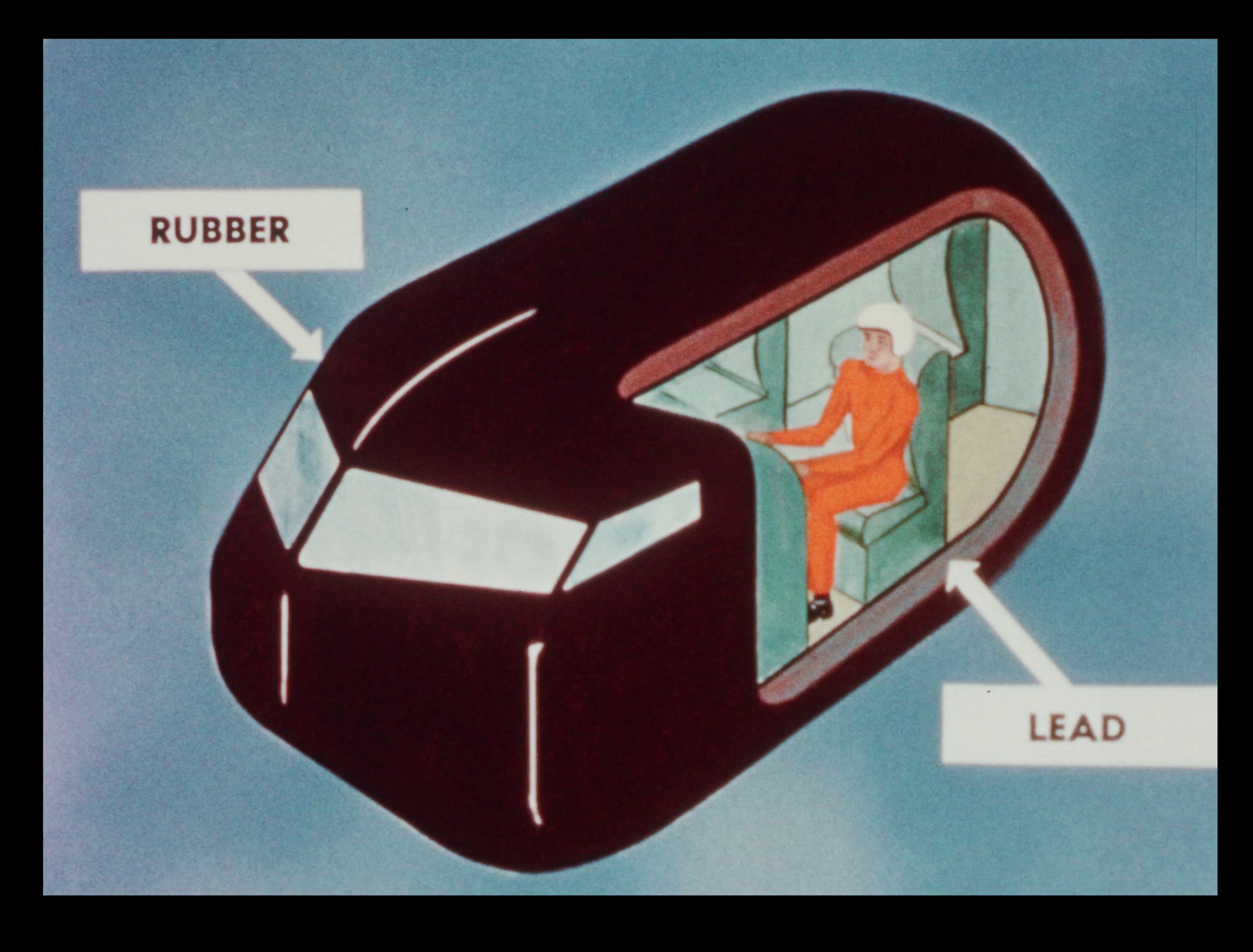
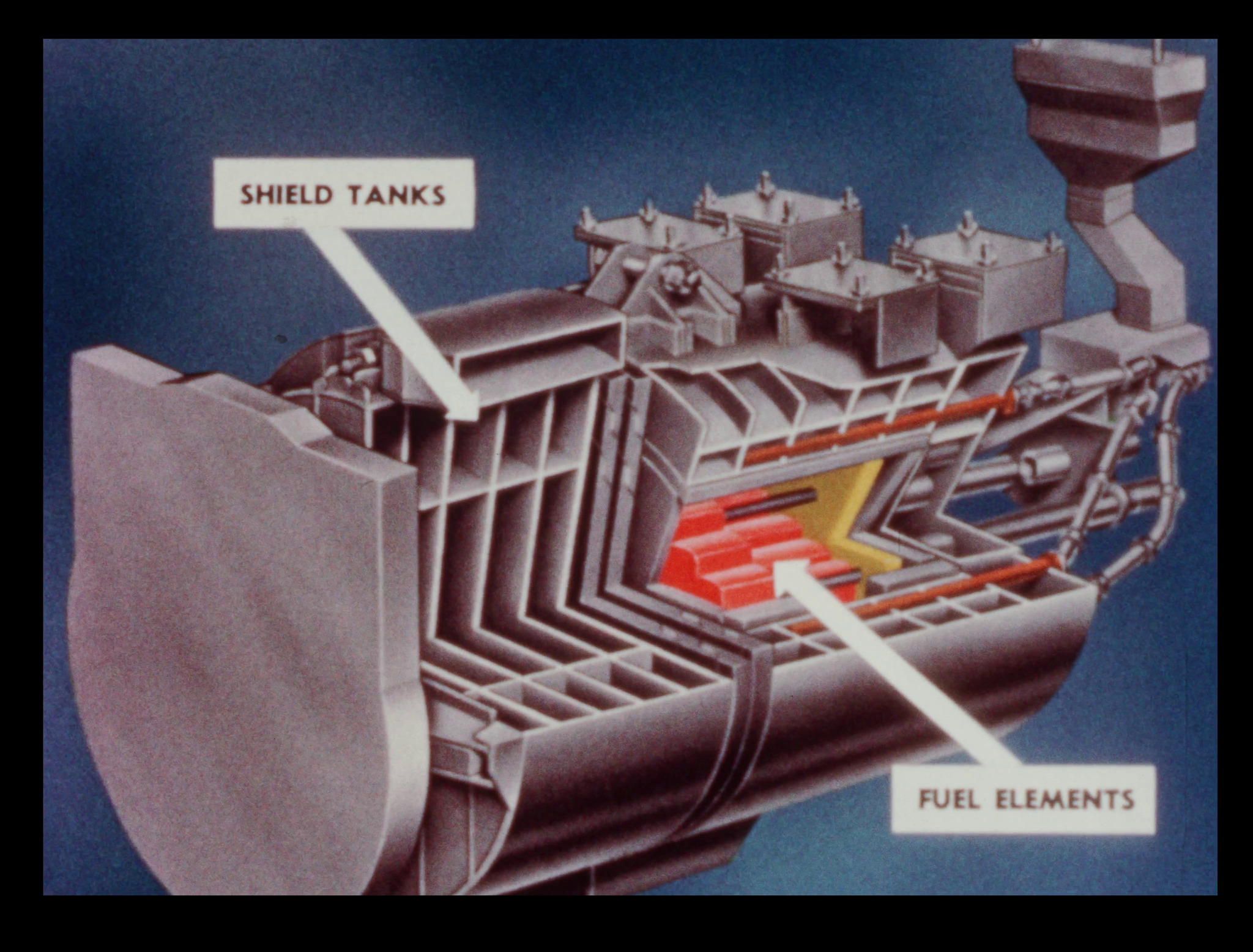
        <p>With information on the various materials used in constructing the cask and the yellow impact limiters that absorb energy during a crash,
plus knowledge of their physical arrangement and the speed of impact, the engineer can predict the extent of cask deformation.</p>

        <p>Scale model testing is one possible way of verifying the computer analysis.</p>

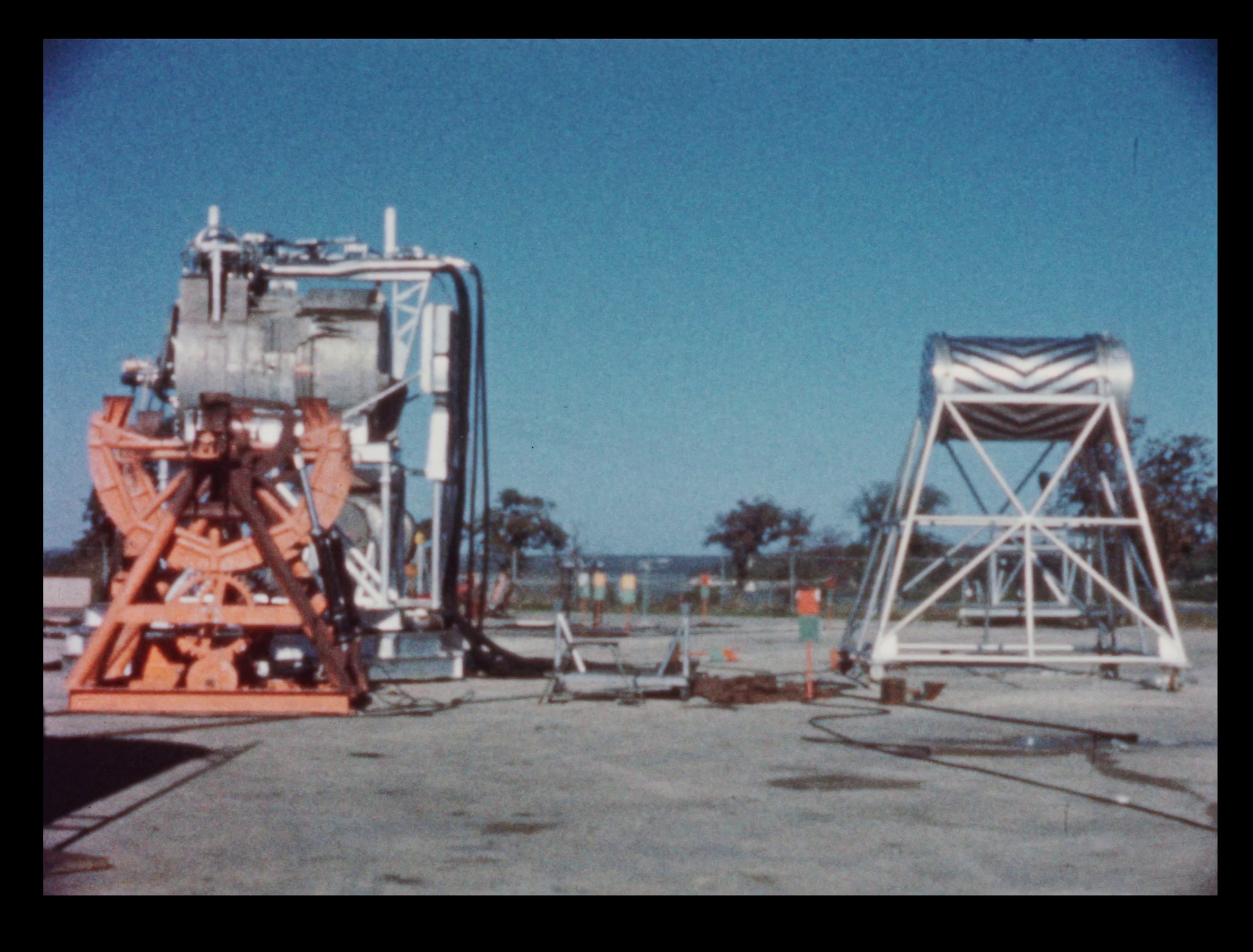
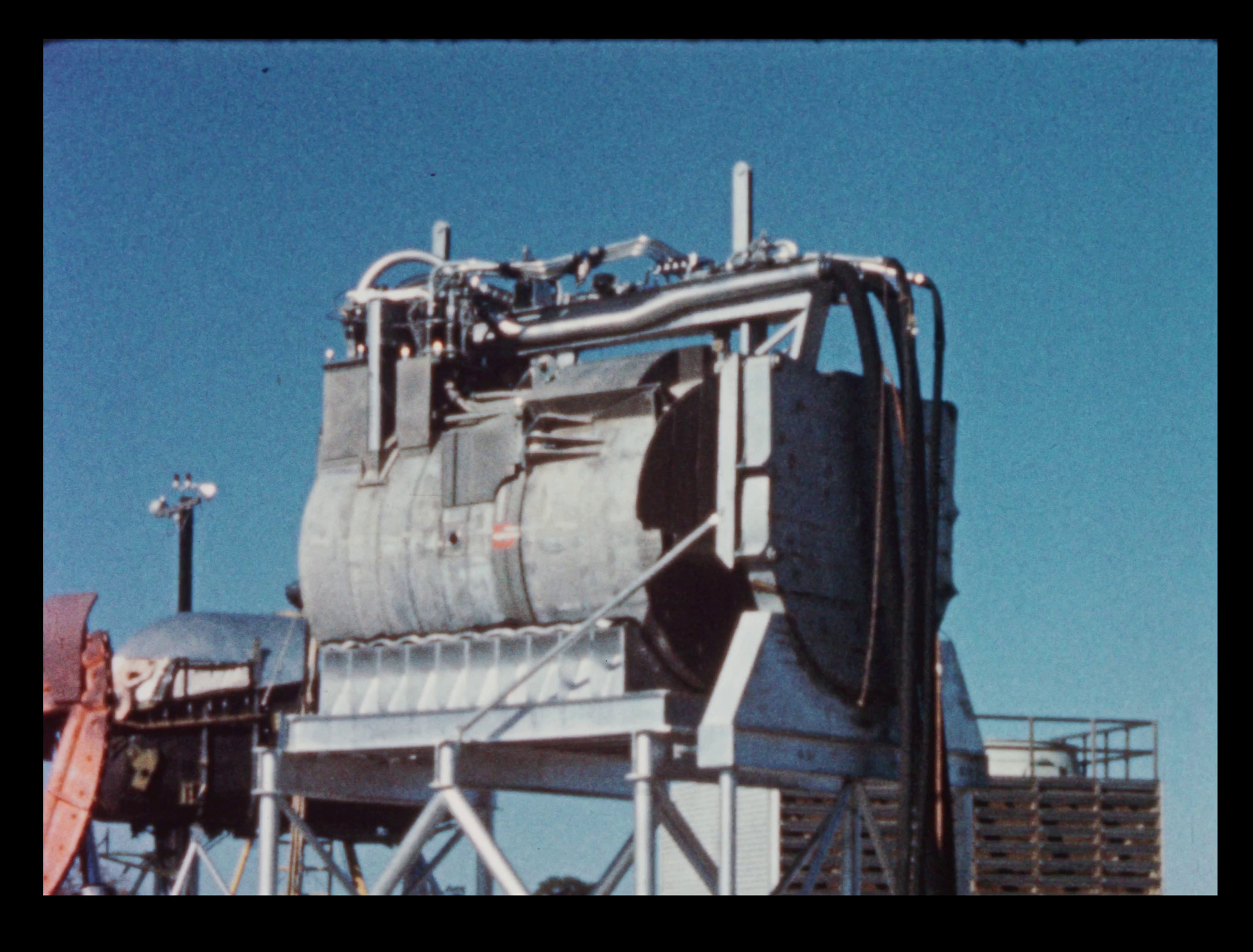
        <p>Tools such as a centrifuge and high-speed cameras, for example,</p>

        <p>Allow a cask to be studied during a severe impact without concern for any vehicular structure around it.</p>

        <p>A centrifuge can be used to study all kinds of impacts, side-on or angle, and at various speeds.</p>

        <p>After a series of scale model centrifuge tests and mathematical predictions,</p>

        <p>it appeared that the casks would survive even extremely severe impacts without loss of containment or shielding.</p>

        <p>Three specific transportation accident environments were then analyzed.</p>

        <p>First, by computer simulations or studies, then in a series of 1-8 scale model tests of simulated accidents.</p>

        <p>The first scale model test simulated a truck transporting a nuclear cask crashing into a solid concrete structure at 60 miles per hour.</p>

        <p>The spray is from the braking system for the rocket sled.</p>

        <p>Other tests were conducted at 70 to 80 miles per hour.</p>

        <p>All models were instrumented to measure such things as the acceleration of the cask through the time of impact.</p>

        <p>This series of close-ups shows the deformation to the casks.</p>

        <p>The second accident situation involved a grade-crossing accident</p>

        <p>in which a stalled tractor-trailer is hit by a diesel locomotive traveling at high speed.</p>

        <p>The model cask was mounted across the track on supports simulating the bed of a tractor trailer.</p>

        <p>The scale model locomotive was propelled by rockets to a speed of 80 miles per hour.</p>

        <p>It smashed into the cask and swept it away.</p>

        <p>Here’s a slow motion close-up of what happened during impact.</p>

        <p>The cask fins were bent and there were dents where the locomotive frame had hit,</p>

        <p>but there was no passage open to the cask interior.</p>

        <p>The third accident situation simulated a rail-mounted nuclear fuel cast involved in a high-speed
train accident in which the cast car impacts a solid structure, such as a massive bridge
support.</p>

        <p>In the scale model test you’re about to see, the rail car was traveling 80 miles per hour
at impact.</p>

        <p>Following the scale model tests, a series of full-scale tests was conducted in order
to verify the accuracy of analytical prediction techniques.</p>

        <p>These tests represent an upper limit in the range of credible accidents.
is they are severe over tests. Here in real time is the 60 mile per hour test.
cask sustained some minor damage but pressure tests after impact indicated
that there was no loss of containment integrity that is there would have been
no release of radioactive material most important however was the fact that the
damage that occurred was similar to the damage that had been predicted
analytically the damage that had in fact already been seen in the scale model
tests the test allowed designers and engineers to correlate the results of
mathematical computer modeling, scale model testing,
and the full-scale testing of a cask on a truck.</p>

        <p>Here, in slow motion, we can compare the scale model
test at the top of the screen with the full-scale test.</p>

        <p>The cask that survived the 60 mile per hour test
was then cleaned up and readied for a second test
of the same type, this one at 84 miles per hour.</p>

        <p>Results of this test also closely paralleled predictions.</p>

        <p>The cask again survived without damage serious enough to jeopardize containment of its contents.</p>

        <p>In the third test sequence, a diesel locomotive crashed into a stalled truck carrying a nuclear
fuel cask.</p>

        <p>By an array of six rockets the locomotive was traveling 81 miles per
hour when it struck the 22-ton cask. This slow-motion footage shows more clearly
what happened at impact.</p>

        <p>Here, for comparison’s sake, is the impact of both the scale model and the full scale
locomotives.</p>

        <p>In the fourth test, a railroad cast car was crashed into a 690-ton concrete abutment at
80 miles per hour.</p>

        <p>These shots show how the crumpling of the front end of the car structure
absorbed much of the impact energy, thus protecting the cask.</p>

        <p>Here again, there was close correlation
between the results of the scale model test and the full scale test.</p>

        <p>Following the crash test, the cask and rail car were moved to a fire test site and immersed
for 90 minutes in burning JP4 jet fuel. Temperatures experienced by the cask ranged between 1800
2,100 degrees Fahrenheit. The rail car carrying the cask eventually warped and
rolled onto its side, but the cask survived more than an hour and a half of
fire with no consequences that would have affected its ability to contain its
radioactive contents.</p>

        <p>The full-scale tests made it clear that existing
mathematical modeling techniques and scale model testing are valid and
inexpensive methods of evaluating the structural properties of nuclear transport casks.</p>

        <p>Even in the event those casks were to be exposed to extremely violent transportation environments,
since these modeling and testing techniques proved valid, they can be used in the future
in the design of casks and other shipping systems.</p>

      </div>
</div>

    <h2 id="nuclear-waste-collisions-with-red-alert-music">Nuclear Waste Collisions with Red Alert Music</h2>

    <p>For extra fun, I also made a short highlights reel of the main collisions synchronized to the
music from the old video game: Command &amp; Conquer: Red Alert.</p>

    <figure>
<div class="ratio ratio-16x9"> 
<iframe src="https://www.youtube.com/embed/0-fWLi1-q1U?start=0" title="Accident Testing Highlights" srcdoc="&lt;style&gt;*{padding:0;margin:0;overflow:hidden}html,body{height:100%}img,span{position:absolute;width:100%;top:0;bottom:0;margin:auto}span{height:1.5em;text-align:center;font:48px/1.5 sans-serif;color:white;text-shadow:0 0 0.5em black}&lt;/style&gt;&lt;a href=https://www.youtube.com/embed/0-fWLi1-q1U?autoplay=1&amp;start=0&gt;&lt;img src=https://img.youtube.com/vi/0-fWLi1-q1U/hqdefault.jpg alt='Accident Testing Highlights'&gt;&lt;span&gt;▶&lt;/span&gt;&lt;/a&gt;" allow="accelerometer; autoplay; encrypted-media; gyroscope; picture-in-picture" allowfullscreen="">
</iframe>

</div>
</figure>

    <hr />

    <h1 id="sun-of-man">Sun of Man</h1>

    <p>A 60-minute documentary from 1988 covering nuclear fusion power.</p>

    <figure>
<div class="ratio ratio-16x9"> 
<iframe src="https://www.youtube.com/embed/WussAV3DKA4?start=0" title="Sun of Man" srcdoc="&lt;style&gt;*{padding:0;margin:0;overflow:hidden}html,body{height:100%}img,span{position:absolute;width:100%;top:0;bottom:0;margin:auto}span{height:1.5em;text-align:center;font:48px/1.5 sans-serif;color:white;text-shadow:0 0 0.5em black}&lt;/style&gt;&lt;a href=https://www.youtube.com/embed/WussAV3DKA4?autoplay=1&amp;start=0&gt;&lt;img src=https://img.youtube.com/vi/WussAV3DKA4/hqdefault.jpg alt='Sun of Man'&gt;&lt;span&gt;▶&lt;/span&gt;&lt;/a&gt;" allow="accelerometer; autoplay; encrypted-media; gyroscope; picture-in-picture" allowfullscreen="">
</iframe>

</div>
</figure>

    <p><button class="btn btn-primary" type="button" data-bs-toggle="collapse" data-bs-target="#transcript3" aria-expanded="false" aria-controls="transcript3">
<i class="fas fa-file-alt me-2"></i> Show Transcript
</button></p>

    <div class="collapse mt-3" id="transcript3">
  <div class="card card-body">

        <p>We are trying to do exactly what the sun does.</p>

        <p>We have to build big machines, very expensive machines to carry out our research.</p>

        <p>There’s no doubt that job turned out to be more difficult than people thought 20, 25
years ago.</p>

        <p>Fusion is so important to the future of the world.</p>

        <p>3, 2, 1, shot.</p>

        <p>The only catch is that we don’t have it yet.</p>

        <p>3, 2, 1, push.</p>

        <p>In our estimation, for the next century, we need fusion.</p>

        <p>It’s a bright sunny morning in Princeton, New Jersey. Rob Goldston leaves his car in
the driveway and rides his bike to work. It’s his daily quest for fusion energy, a quest
to copy the sun.</p>

        <p>And what we’re trying to do is imitate the fusion process that goes on in the sun, create
energy by the same kinds of physics, but within the laboratory.</p>

        <p>The laboratory is Princeton’s plasma physics lab. It’s been home to fusion research
since Harry Truman was president.</p>

        <p>Goldston manages experiments run by the 75 scientists here,
trying to see if fusion could be an economical alternative
source of energy.</p>

        <p>The quest for fusion energy has been a long and winding road,
much like the concrete corridors leading to Princeton
University’s fusion test reactor.</p>

        <p>A lot of fusion veterans walk through here.</p>

        <p>Goldston’s 16 years in fusion science is only a fraction of the collective 2,000
fusion research years that Princeton physicists have logged.</p>

        <p>This is where science hopes to open the door to a new future where energy is
safe, clean, and unlimited. it but even approaching that door has taken many
years lots of money and engineering wizardry like this huge fusion test reactor
and there’s a sense that it’s a much more expensive experiment than we’ve worked
with before and so we have to be more careful than before but it’s mostly
exciting it’s mostly an experience of new physics new regimes we haven’t been to
before so the the experiment experiences exhilaration more than feeling a sense
of being imposed upon by it. Princeton’s TFTR, as it’s called, is among the
world’s largest fusion test reactors, $350 million worth of copper, stainless
steel, and cable.</p>

        <p>Fifty years from now, history may remember TFTR as the forerunner of clean, safe, endless energy.
But for what may already seem to be an endless era of research,
TFTR amounts to one giant physics experiment
to which dozens of scientists dedicate their time and their lives.
It’s a one mega amp shot with 12 mega amps of balanced beam injection.
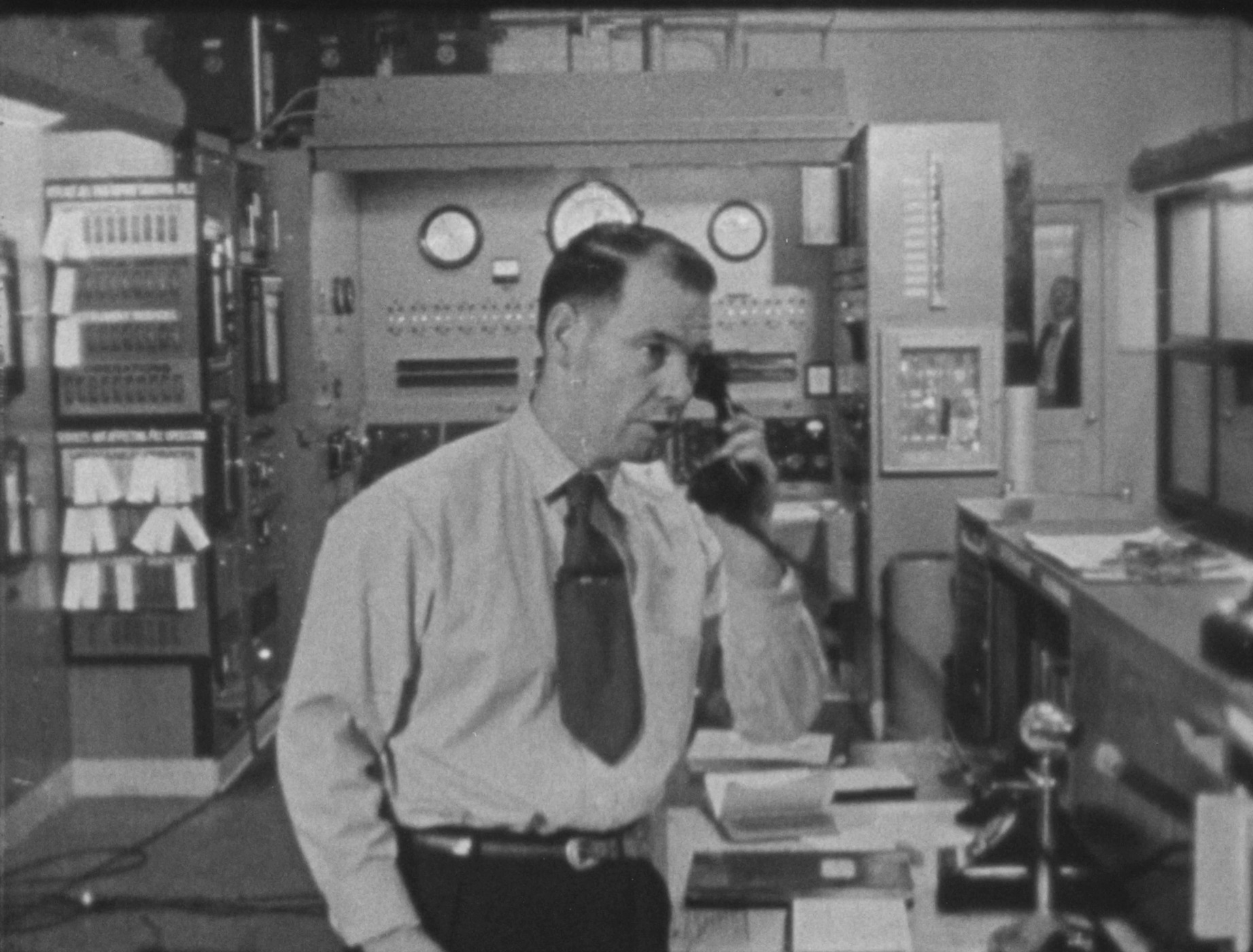
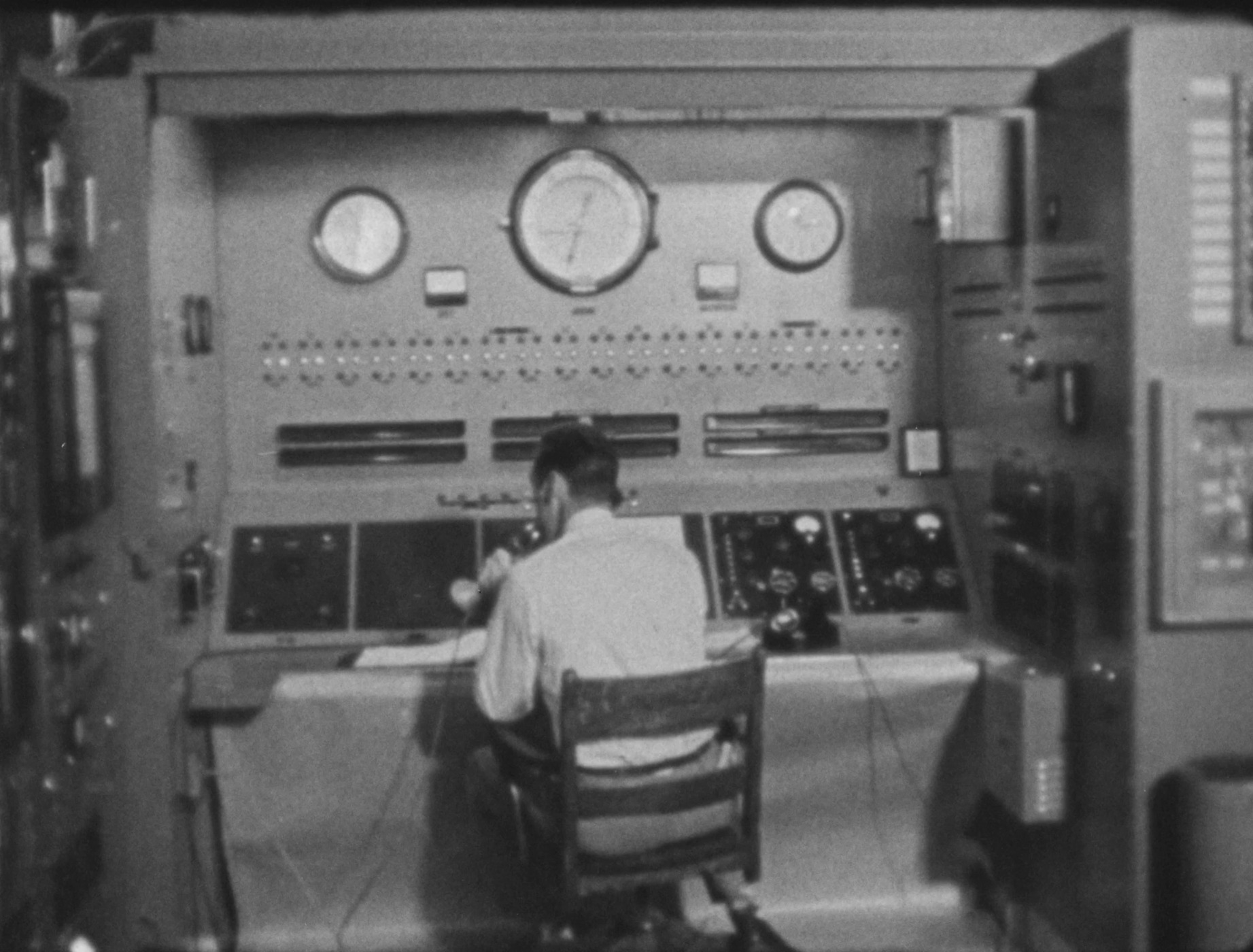
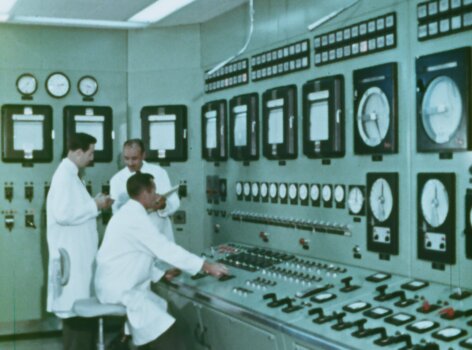
The control room resembles the Houston Control Center that monitors space shots.
There’s even a countdown.</p>

        <p>One minute.</p>

        <p>But instead of rockets blasting, here motors whine.</p>

        <p>The sound of the reactor draining power reserves to fire up atoms and run giant
magnets. Oh, that’s pretty. That’s a nice shot. Look at that. That’s really quiet.
They’re called shots because each one lasts only about five seconds.
Scientists feel if they can make fusion reactions last longer, we won’t have to
worry if we run out of coal or oil. If we do not have this alternative source of
energy, we will be in a world situation that would be much worse than where we could be
if this energy were available.</p>

        <p>The energy available today won’t be around tomorrow.
The world’s growing population, forecast as high as 10 billion next century, will tax
our depleting supplies of coal and oil.</p>

        <p>Today’s nuclear power picks up some of the slack, but safety and reliability issues have
already stifled the growth of nuclear fission. The answer to tomorrow’s growing demand for
power may not lie here on Earth. It may come from the basic energy that powers the universe.
The sun and the stars, they’re the universe’s way of making nuclear energy. But unlike today’s
man-made reactors that split atoms, the sun makes them fuse together. Its immense gravity
traps hydrogen atoms until the sun’s blazing core blends them into helium.
Their fusion unleashes dynamic energy and titanic heat.</p>

        <p>The same atoms that power the stars are plentiful here on Earth.</p>

        <p>Our oceans are rich with hydrogen, the most abundant element in the universe.
This is how science understands fusion. Each atom of hydrogen is like a tiny
planetary system. It rides a balance of a negatively charged electron orbiting
around a positively charged nucleus made of a single proton. Water also has
another type of hydrogen, deuterium, an isotope that lends itself to controlled
fusion research. It’s got an electron, too, and a nuclear proton as well.</p>

        <p>But the deuterium nucleus also carries one neutron, a particle with no
electrical charge at all. There’s no shortage of deuterium. It’s found in one
in every 6,000 molecules of seawater. It’s also easy to extract. But more
importantly, it only takes a teaspoon of deuterium to equal the energy you get
from 100 barrels of oil. A typical fusion reaction would combine deuterium with
another hydrogen isotope, tritium. Besides carrying two neutrons, tritium is
man-made. It’s also radioactive.</p>

        <p>But unlike today’s nuclear reactors, where waste stays radioactive for thousands
of years, tritium radioactivity would last less than a hundred years. Fusing
them forms harmless helium and releases massive energy, sending neutrons
bursting away. In theory, those flying neutrons would strike a reactor wall
that collects heat to drive electric turbines, while also regenerating expensive
tritium.</p>

        <p>The nice thing about fusion is there’s less radioactivity, and if you build the
thing right, it really has no ability to disperse itself over the countryside.</p>

        <p>Imagine a busy train station, one where people hurry no matter how crowded it gets.</p>

        <p>Now, it’s human nature for people to try not to run into each other, but let’s
just suppose that people kept coming into the station, but nobody could get out.
Well, eventually, as the crowd got more dense, there’d be a bigger chance of a collision.
Well, it’s that concept of density and confinement that science hopes will force hydrogen nuclei
to collide, fuse, and release energy.</p>

        <p>Laboratories don’t have the sun’s gravity or size to clamp so much atomic
density in place. But there are other ways to increase the chance that atoms
will collide and fuse. The method at Princeton’s Plasma Physics Lab is higher
temperature. Two years ago, scientists here used super hot beams, raising the
reactor temperature to a record 300 million degrees, six times hotter than the
interior of the sun. Heat makes atoms speed up.</p>

        <p>When they’re hot enough, electrons break away from their nuclei. The resulting
atomic swarm creates a plasma. It’s a warm plasma that burns in a fluorescent
light bulb. When plasma is hotter and denser, nuclei have a better chance to
slam together. But the proton’s positive charge makes nuclei repel, just like
people scurrying in a train station. They also respond to a magnetic field. It
takes a strong one to trap nuclei till they collide. That’s where Princeton’s
TFTR comes in.</p>

        <p>Embedded inside is a donut-like chamber where plasma is made. Surrounding the
chamber, two sets of powerful magnets. Their grip resists the plasma’s struggle
to strike the reactor wall and cool, in effect binding protons onto a collision
course. But plasma is as hard to confine as it is to see. It’s like trying to
hold jello with an elastic band. The view from inside the chamber shows carbon
bumpers glowing with hot gas, a sign that some burning plasma is leaking away.
Solving the plasma confinement problem could solve the fusion mystery. Right
now, Princeton scientists have to put in a lot more energy than fusion reactions
give back.</p>

        <p>By 1991, they hope to break even.</p>

        <p>That means getting as much energy out as they put in.
But TFTR is designed only to test the conditions to make fusion.
If future reactors work, they’ll make plasma ignite, just like a match lights a fire.
enough fusion reactions, the plasma would stay hot by itself and outside power
needed to ignite it could be turned off. But we haven’t yet got the thermal
insulation to the point where the fusion power that’s generated would be enough
to keep the thing going on its own. We still have to put in our own power from
outside. The Austrian-born physicist who runs the plasma physics lab has been
researching fusion for over 30 years. Dr. Harold Firth foresees an experimental
reactor by 2010. He also knows the old fusion axiom that success is always 20
years away. But now scientific success is not 20 years away you know it’s it’s at
hand what’s 20 years away is the proof that this will be economically
attractive. Princeton’s plasma physics lab is among several facilities around
the world researching magnetic fusion. Now that’s one approach but it’s not the
only one. That satellite dish reminds scientists here that they have some
competition. It enables Princeton’s computers to communicate with another
computer more than 3,000 miles away at the Lawrence Livermore National
Laboratory near San Francisco. This California computer complex is the nerve
center for magnetic fusion research around the world.
it looks a little like a coin laundromat.</p>

        <p>but there’s no cleaning here it’s all thinking and some tape changing courtesy a
robot that works like a jukebox livermore supercomputer is a multi-million
dollar project run by the Department of Energy it serves plasma research in more
than a dozen American universities, as well as fusion labs in Japan, Europe, and
the United States.</p>

        <p>A high-tech pumping system pipes special liquid that keeps super-fast processors
cool. But in supercomputing, they’re the hottest thing. They enable several
fusion researchers to tap in at the same time. One of those processors over
there might be sending data to New Jersey, for instance. And another processor
might be sending it to my diacommit across the room here.</p>

        <p>Livermore’s supercomputer is designed to do in moments what a personal computer
might take years. It’s become the world’s first electronic fusion ambassador.
This particular center plays a crucial role in the international development as
well as the US development of fusion.</p>

        <p>But ironically, most of Livermore’s magnetic fusion research no longer exists.
A $300 million project using parallel magnets, sometimes called mirror fusion,
was shut down because it cost too much to run. But there is other research here
that could give magnetic fusion a run for its money.</p>

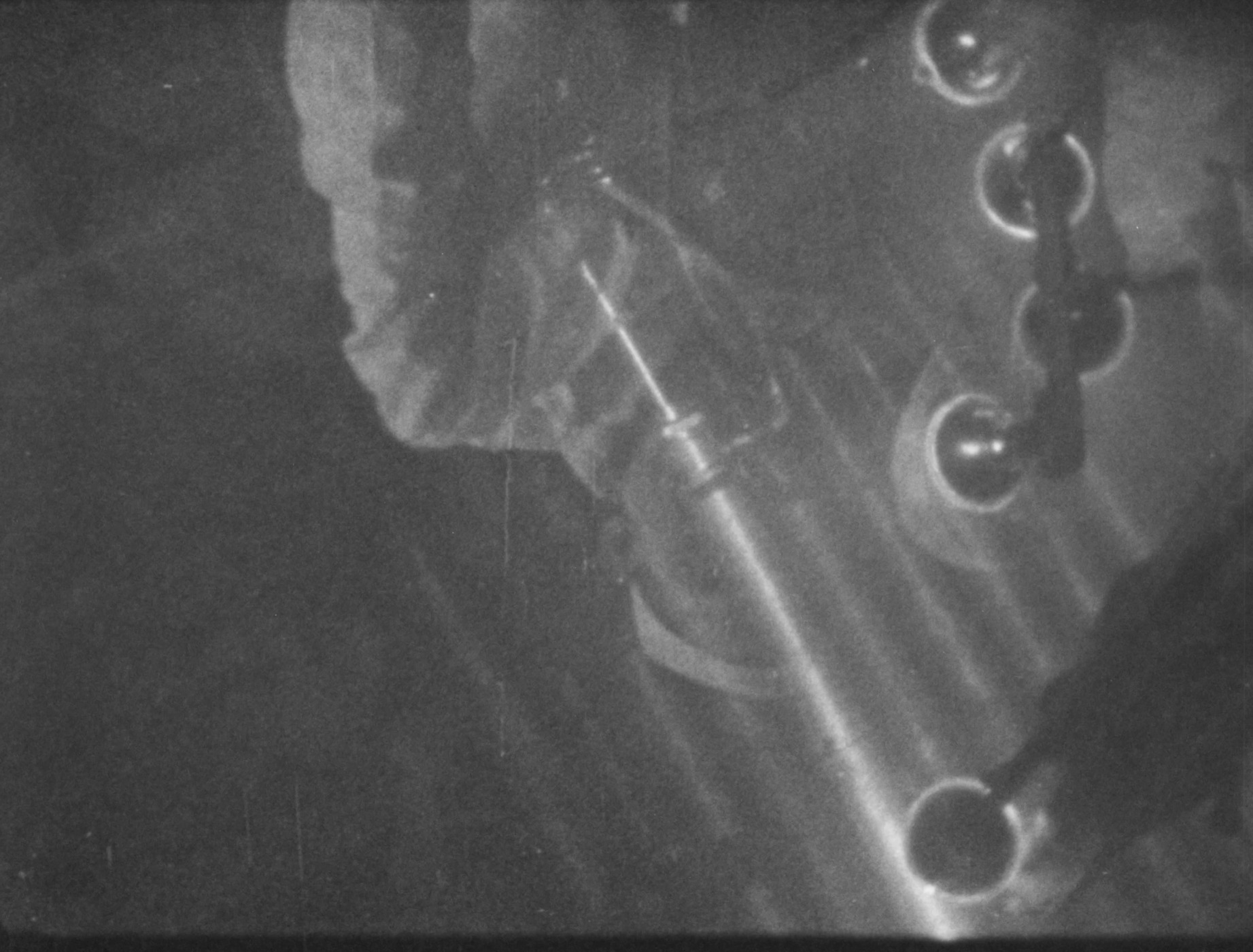
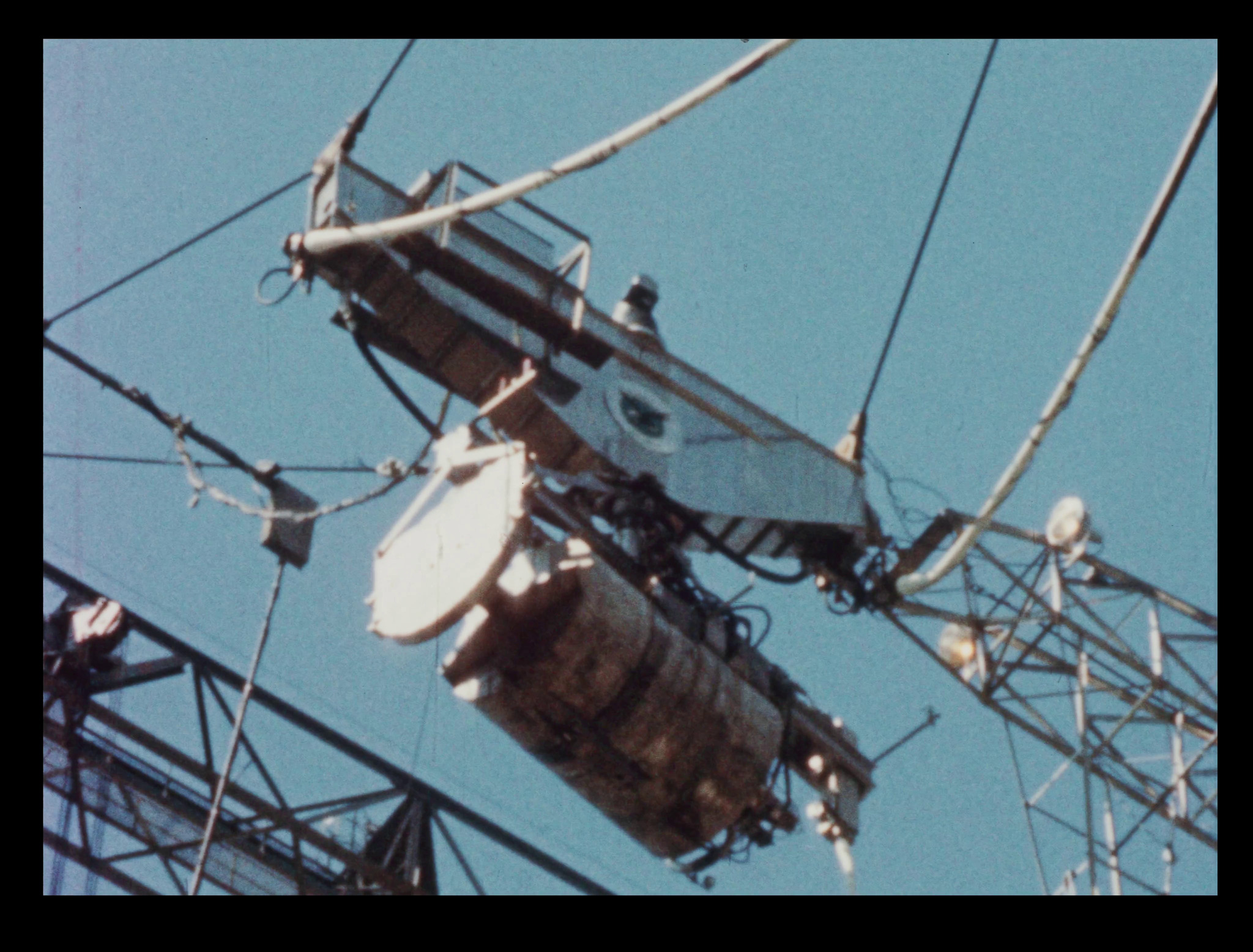
        <p>3, 2, 1, go. This is Nova, a $176 million investment, the cornerstone of what’s
called inertial confinement fusion. And it takes something this big. to hit
something so small. The bottom tip of that metal arm holds a tiny pellet
containing fusion fuel. It’s the dead center of a five-story target chamber
that looks more like a giant metal octopus. When I first started, I walked in
here. It’s like being in a space movie or something, but after a while, it
becomes second nature. There’s a lot of things to think about when you’re doing
this. This is just one small part of it. But this one small part plays a big
role in fusion research. Laser fusion, in effect, turns pellets into tiny
hydrogen bombs. It only takes a microsecond. But slow motion shows how a laser
beam makes the pellet shell blast away. That makes the fusion fuel inside heat
up and implode. And researchers hope make deuterium and tritium fuel fuse.</p>

        <p>All of this with the goal of trying to improve the fusion process with each shot
so that we understand better what’s going on for the ultimate goal of trying to
get more energy out of this pellet than we put in it with the laser this is a
scale model of the nova laser the real thing is over 300 feet long longer than a
football field it’s designed to fire a lot of power in less than a blink of an
eye in fact in a billionth of a second it drives 200 times the power of all the
power plants in the united States. 6, 5, 4, 3, 2, 1, shot. You could fit NOVA’s
control room in a corner at Princeton’s TFTR. Yeah, we got it. Yeah. Good, good
shot. But the laser it controls is the biggest and most powerful in the world.
It’s the third generation of Livermore lasers, each raising hopes that inertial
confinement is the way to go.</p>

        <p>That requires a certain minimum fuel pellet size, which we do not have enough laser energy
to compress a pellet that size.
It means you’re going to have to build an even bigger laser.
It means that it’s most likely that we will have to have an even bigger laser than NOVA.
One of our challenges for the next year and a half to two years is to refine our concepts
for a technical and economic baseline to show us how we can build that laser at what we
tend to call an affordable cost. Reportedly, it was a secret nuclear bomb that told researchers
how much power that bigger laser would need. In a 1986 project dubbed Centurion Halite,
scientists found the bomb’s intense radiation made a fusion pellet’s hydrogen fuel ignite.
But Livermore has little to say about it. Much of the work here is classified. Even
the energy funding comes from a defense pie. They’re not just pursuing commercial power
here laser fusion lets science study the effects of nuclear weapons within the safety of a
laboratory. Beyond that there’s not much detail I’m afraid I can go into in that area. Livermore
and Princeton are going after the same fusion goal in different ways. They call it a friendly
rivalry where nobody’s ahead. But scientifically I’m sure that we view it as some some sort
of a race and a rivalry, but it’s not an intense one.</p>

        <p>It’s a very good thing that not all the hopes of the future should dangle from a
single thread. These hopes cost lots of money. Next year’s magnetic fusion
budget totals over $351 million. There’s another $164 million for inertial
confinement. But those funds are over $100 million less than peak years when
the energy crisis gave fusion research funding a boost. It’s very difficult to
motivate political figures who are beset with day-to-day problems to think 25,
30 years in the future.</p>

        <p>In the near future, the next decade, Princeton plans to build a new machine
designed to achieve ignition. But budget cuts mean the compact ignition
program, better known as CIT, may have to wait another two years. And the
machine after that may be so expensive that one government may not be willing to
pay for it We may have to have several governments contributing into it,
and that really slows down development.</p>

        <p>In the fusion community, Steve Dean is a household name. He’s a physicist by
trade who lives, breathes, and literally drives fusion. A few years ago, he
left a job at the Department of Energy, raised private corporate funding, and
moved into a nearby Maryland office. Actually, I’m going to be over at NRL next
Tuesday. Are you going to be in the neighborhood of the plasma physics
division? Dean’s Fusion Power Associates keeps labs and private industry up to
date on fusion research. He’s also kept up with a bottom line, whether costly
research and expensive reactors will price fusion out of the market.</p>

        <p>I think that’s a real problem if that turns out to be the case.
I personally believe that we can make discoveries
and come up with ideas and methods that will be cheaper than what our knowledge allows us to do today.
Dean is not the only one who thinks fusion will take a global commitment.
Fusion scientists are now marking more than 30 years of international cooperation.
A top emissary of scientific glasnost frequently meets with American scientists in Washington.
Eugene Velikov is the Soviet science minister.</p>

        <p>Secretary General Gorbachev, in meeting with the President, told him exactly he
is interested in fusion, and our government is interested, and make a decision
to try to make this internationally. But fusion science is a lot older than 30
years. Seven American presidents have funded it. Those first funds, though,
went to study a fusion science that’s both secret and explosive. The hydrogen
bomb, the deadliest force known to man. It’s wild fusion energy that’s
uncontrolled. Its development after World War II inspired researchers to try to
tame it. But back then, plasma physics was virtually an unknown science.
That’s why a 1951 edition of the New York Times caught science by surprise. In
a front-page article, Argentina’s president Juan Perón boasted a laboratory
breakthrough, claiming an Austrian physicist working near Buenos Aires
successfully controlled nuclear fusion. Skeptical scientists later found there
was no breakthrough and no fusion energy. But the story would turn a Princeton
physicist into one of the fathers of modern fusion research. Dr. Lyman Spitzer
started thinking about new ways to control fusion reactions. But he needed a
little seclusion to think them through, so he and his wife went on a Colorado
ski trip.</p>

        <p>So I was all primed to think about magnetic fields, which is a very esoteric
subject, and I figured out on the lift that really the magnetic field should be
a method of acting at a distance, pushing on a hot plasma and keeping it from
striking the walls where it, of course, would immediately cool. Spitzer worked
out his ideas and got the Atomic Energy Commission interested. We grew and grew
and grew, and now what you see here is a direct result, or at least an outcome,
of that early project.</p>

        <p>These coils that you see here, these carry electric current in this direction,
and that produces a magnetic field that goes around this racetrack, as we called
it, that, in principle, can hold the plasma in. And if it’s hot enough, the
hydrogen nuclei will fuse and produce electric power. Knowing he was copying
the energy of the sun and the stars, Spitzer called his device the Stellarator.
He used it to mount Project Matterhorn.</p>

        <p>It was Princeton’s first fusion research, and it was cloaked in secrecy. But
fusion’s first pioneers got disappointing results. And in fact, if we’d gone
right ahead and built a device that was 10 times bigger than this, it would have
worked very much the way the present devices are. Looking back, it’s not
surprising that the people were disappointed in their early efforts. There was
no way they could have succeeded with the knowledge they had at the time. But
from Russia came some early fusion genius.</p>

        <p>Dr. Andrei Sakharov and his wife Yelena live on the seventh floor of a Moscow apartment.
Together, they’ve braved the Kremlin’s muscle to fight for human rights.
A fight that’s won Sakharov the Nobel Peace Prize.
But Sakharov’s science won him worldwide respect.</p>

        <p>After working on the Soviet hydrogen bomb, Sakharov turned to more peaceful science.
In the early 50s, he and Dr. Igor Tom wrote a theory of magnetic confinement,
fathering the concept that inspired modern fusion research.</p>

        <p>Sakharov speaks broken English, but speaking in Russian, he told us through an interpreter,
the fusion science that grew out of his early theories is making good progress.
This work turned out to be much more difficult and lengthier than it had presented itself to
Sergei Tom and myself in 1950. But the fundamental principal problems have been overcome.</p>

        <p>The reasons
for instability have been explained and it seems to me that we not only know that the magnetic
fusion device is possible but also the parameters in which magnetic fusion can become a real
operating machine how do you think fusion might change the world yeah I think that controlled
fusion reactors will decide problems of energy production which already have other solutions
and therefore I do not think that fusion will change the world its purpose does not have that
revolutionary character that the other great discoveries of the 20th century have had when
something was being solved for the first time all the same i think that practically it will
be very important for humanity I think that large-scale atomic energy production will receive
a great deal from controlled fusion in the first stage i think that this will take the form of the
breeder reactor controlled fusion reactions to obtain uranium-238 for use in atomic energy
production. Of course, this means of atomic energy is founded upon fission with all of its difficulties
and dangers. For this reason, I support the idea of placing all nuclear power underground. The fusion
breeder that Sakharov mentioned is a concept the Russians still study but found too impractical by
Western and Japanese science. It was the concept of safety though that prompted Sakharov to return
to english and remind fusion researchers to never forget we have no right to have another
chernobyls the man who’s given his life to peace feels science must do the same for the atom
that’s not a new idea
Hopes resting on the nuclear promise led the world’s scientific nations to start sharing
knowledge.</p>

        <p>So the cloak of secrecy surrounding fusion and fission research started to lift.
Just before the opening of the conference, the United States and Great Britain
jointly announced the declassification of their thermonuclear research programs,
and the United States unveiled its most promising experimental devices actual
operating machines like Princeton’s b2 stellarator these represent the various
paths being explored in a quest for a new source of power many of these machines
were operated throughout the conference the Princeton exhibit included a model
of the university’s stellarator laboratory devoted entirely to fusion research
Another approach, the racetrack stellarator, in which the twist in the magnetic
field is produced by current flowing through adjacent groups of wires in
opposite directions.</p>

        <p>The Los Alamos Scientific Laboratory showed a number of operating devices
including Scylla, in which the plasma is superheated by compression. All of the
machines are still in the experimental stage, but from one of these research
channels may come the elusive secret of cheap, plentiful power. A secret which
certainly will be unlocked the sooner as a result of international cooperation.
Fusion first worked in secret because governments wondered if nuclear byproducts
might help make powerful bombs.</p>

        <p>They knew that, in theory, a plasma chamber wrapped inside a uranium blanket
would lead to a fusion breeder reactor capable of making plutonium, a key
ingredient for nuclear weapons. were afraid maybe this was some sort of
shortcut for making fissionable material for bomb. So by 58, it was clear that
building a fusion reactor just had to be one of the toughest ways on Earth to
make material clandestinely for bomb. And then it made sense to declassify.
Suddenly, fusion was heard around the world. And at a 1958 Atomic Energy
Conference in Geneva, researchers from a host of nations showcased their fusion
science. Soviets were there, the Japanese, the Europeans. And it was
remarkable, because up until that time, all these programs had been conducted in
secret. And when people opened the veils and they showed the other parties what
they had done, it was all the same.</p>

        <p>But not for long.</p>

        <p>In the mid-1960s, Russian scientists working in Moscow announced a major fusion
achievement. Using Sakharov’s theories, the Soviets improved on the donut-like
confinement chamber. Researchers at places like Moscow’s Kurchatov Institute
invited the world to copy their idea and the world copied away. They even copied
the word Tokamak, a Russian acronym that applies to today’s most common fusion
research device. The Soviets opened their fusion research doors years before
anyone ever heard of Glasnost, symbolizing that scientists around the world find
it a lot easier to cooperate than their respective nations do.</p>

        <p>Perhaps it is today’s spirit of Glasnost that led the Soviets to invite our
cameras in for a rare and comprehensive look at fusion research here in the
USSR. this is russian fusion research at work the lab looks a lot different
than princeton’s tftr but the goal is exactly the same the ignition of the dt
reaction is the most important step in our old work we worked 38 years and if we
don’t ignite the reaction the public opinion will be against fusion 40 years
spend it and not ignite the reaction that is an unluck</p>

        <p>you’re watching some of the international spirit to make fusion work the man
standing is sam hoken an american exchange scientist from mit he learned fast
that it helps to speak russian here He also learned from dusty oscilloscopes and
obsolete technology. After hearing how Russian science suffers from technical
setbacks and shortages, he came to Moscow armed with his own personal computer.
And that’s something that all American scientists and all Western scientists
know, that when you come to the Soviet Union to do exchange work, bring your own
equipment, everything, including a voltage meter, soldering iron, whatever you
want, because even if it’s here, it’s hard to find and things get tough.</p>

        <p>But the brain power here is top notch Dr. Vyacheslav Strelkov manages Moscow’s
fusion workhorse, better known as T-10. It’s older and a lot smaller than
Princeton’s TFTR, but it leads the world in a key type of plasma heating
technology. Where most other tokamaks use electric heat and so-called neutral
beams, T-10 uses gyrotrons that generate the same kind of heat you get when you
turn on a microwave oven.</p>

        <p>one. It’s called T-15. It’s the Soviets’ first modern generation tokamak experiment. When it’s
ready, it will look just like Princeton’s TFTR. But there are some key differences. The Soviets
are building T-15 with a superconducting coil. It will act like a power bank, storing the energy to
heat and confine the plasmas, minimizing the power T-15 will have to drain from Moscow’s
power company.</p>

        <p>A real thermonuclear reactor must have only the superconductor coils.
It is practically impossible to have a thermonuclear reactor with usual magnet.
T-15 is supposed to start in December.
That’s more than five years since Princeton turned on TFTR.
The Soviets had hoped T-15 would have been working right now, but it suffers from a five-year
lag that underscores a fundamental complaint that bureaucratic rivalries and managerial
conflicts often slow down Soviet scientific development.</p>

        <p>It is not easy, so many difficulties, not only the scientific difficulties, the technology
difficulties and also difficulty of organization manager maybe problem of management another
problem radioactivity first generation fusion reactors will burn radioactive tritium the soviets
say both they and their american counterparts have painful memories that will force them to minimize
contamination the public opinion no is against erect radioactivity we know in
the United States and now after Chernobyl in our state that the opinion
is that the energetic must be with such low level of radioactivity there’s
plenty of energy and enthusiasm here to make fusion work the Russians hope t15
will help them catch up to fusion science around the world.
Russia until now has been pretty much out on its own.
And as experiments get bigger,</p>

        <p>as it looks like a fusion reactor is going to be a big, complicated, expensive thing,
at least at the beginning,
it is clear that international cooperation is necessary.
It is nonsense to make a competition in such field as fusion
because it is a very long-term goal
and we benefit from the development of tokamak in the United States.
The Soviets’ appeal for joint fusion development historically gets a lukewarm response at the Pentagon and on Capitol Hill.
It’s a concern that the Russians are subtly trying to grab Western technology.
As one House staff member put it, we don’t want to give away the store.
Among those concerned, the New Jersey congressman who chairs a House Science and Technology Committee.</p>

        <p>As it is now, in my judgment, we’re a little paranoiac on technology transfer.
I don’t mean that unfairly.
I mean legitimately we have concerns there.
We’re all going to have to change our ways of how we do business internationally
and our concern of technology transfer and the protection of our country,
which everybody understands.
But if we’re going to be doing these big things together,
we’re going to be breaking new ground, we’re going to do joint missions to Mars
with the Soviets and so forth,</p>

        <p>we’re going to have to be in a position of being developing new methods which we don’t exist today
those concerns held back researchers like doug post he’s a princeton physicist we met last april
that was just before he left for germany where he and teams of scientists from around the world
are working to design the international test engineering reactor better known as iter the
A multi-billion dollar reactor would be a joint project to be built after the turn of the century.
Originally, Post and other scientists hoped the Munich conference would actually lead to construction.
But the U.S. Defense Department was concerned that there would be issues associated with technology transfer
with the Soviet government, and so they basically downgraded it to a design study.
Before we get to the big construction area, we’ve got to see this relationship between the Soviet Union
and the Western countries continue to mature by quite a bit.</p>

        <p>I can’t tell you how that’s going to go. That’s up to the Russians. But if we
make proper steps in the arms race control and disarmament after start and
better interrelation, I think why not? But if East and West grow close enough
to start test reactor construction, then where would it be built? Princeton’s
TFTR is the latest in a series of plasma physics lab experiments. With CIT
planned to start in 1996, it’s unlikely that Princeton would have time, place or
room for another project.</p>

        <p>California’s Lawrence Livermore Laboratory hopes to build a new laser even
bigger than nova to perfect inertial confinement fusion so it’s unlikely that
iter would be built there in fact it’s unlikely that iter will even be built in
the united states the u.s is only one of four major fusion research nations the
betting money on iter’s location somewhere in a rural tract in europe we’re very
nationalistic when you when you get right down to it and i think this especially
on the in the congress you’ll see a lot of resistance to having that us money go
abroad if we had to stop some of our own plasma work in this country that we’re
working on again in princeton tokamak and so forth and versus participating in
funding uh an either program in europe i think we would we would work with i
know we would go to the domestic end you understand where i’m trying to come
from so i don’t think that the decision process is as hand as yet Nor do I think
that the case is set and anybody determined that that program would be built in
Europe or any place else at this point. So why don’t we start with our usual
agenda and see what the status is of the machine, beams, and so forth. But
before ITER, there’s still TFTR.</p>

        <p>Every Monday morning, Rob Goldston leads a crowded conference updating
Princeton-Tokomak progress. We had about three or four choices of problems on
the RF limiter. and it turned out the difficulty that we’re seeing the hot spot
most likely wasn’t insulated on the limited balance it’s like managing a
baseball team except here they use computers instead of bats and their field is
a mysterious and challenging level of plasma physics what to talk about how we
how we implement this procedure to save the machine and also let us operate but
if TFT our works the machine won’t be saved it only burns deuterium now but in
two years, Princeton plans to wrap up research with a hundred tritium shots.
Resulting radiation will make TFTR literally too hot to handle. Maintenance
would require special tools and special robots. Those planned tritium shots
raised government concern. Federal research found TFTR’s radiation would pose no
danger even in the unlikely chance that safety systems fail. In fact, a geology
study concluded there’s only a one-in-a-million chance that even harmless trace
amounts of tritium would penetrate underground water supplies. Yet tests are
underway to see if in a worst-case scenario, like a major fire, nearby Princeton
neighbors would still need an emergency response plan. Leaking radiation
apparently went unnoticed for three hours yesterday. The nuclear reactor at the
Three Mile Island plant overheated and shut down at 4 a.m. Three Mile Island, a
symbol for what can go wrong with nuclear power. Loose This radioactivity
contaminated one of the reactor buildings. The device itself radiated with what
nuclear scientists call after heat. After heat could affect fusion too.</p>

        <p>Fusion reactors would produce a safe helium ash that’s a lot simpler to dispose
than the radioactive waste from today’s nuclear fission power plants. And no
matter what happens, the reactor’s plasma chamber would contain no more than
four seconds of fuel at any one time but fusion also makes neutrons that bombard
the chamber’s wall that would make the wall radioactive and that contamination
would also spread to the reactor’s supporting structure but compared to a
fission power plant where the thing has that much energy inside this thing
really hasn’t got the energy to not only damage itself but damage a containment
building and end up moving out it’s it it doesn’t you feed the fuel in very
slowly into a fusion power plant you don’t keep it there the way you have to in
a fission power plant all the time that’s if engineers build it right the
challenge of material science is to develop metals and compounds that resist
radioactivity the material of the first wall cannot work in such big neutron
fluxes 30 years it must be changed after some three or four years and therefore
such a reactor must stop and must be repaired and the first wall must be
changed. That is not a commercial kind of machine. We might even be able to make
a wall that lasts 30 years and there are other possibilities too. We may go to a
fuel cycle that doesn’t involve tritium, for example. Then the neutron flux on
the wall goes down a lot. A safe fusion fuel cycle might involve a little
travel, like a trip to the moon. The moon is loaded with Helium-3, an isotope
not found here on Earth. Burning deuterium and lunar helium would be a lot safer
than tritium. Both Soviet and American space programs plan some lunar mining
missions, possibly to bring back Helium-3.</p>

        <p>Engineers think a fusion reactor might look something like this. There’d be a
concrete igloo to contain radioactivity. Robotics would be needed to maintain
the reactor structure. Such a reactor could be up to 50 years away. But the
promise of fusion provides fuel for imagination. It could not only power our
utilities, it could run our rocket ships too. On almost every count, fusion
would seem to be superior to fission. The only catch is that we don’t have it
yet. But Isaac Asimov uses fusion all the time. His noted science background
helps him dream of worlds that turn from today’s heavy chemical rockets to
tomorrow’s faster fusion rockets that burn lighter hydrogen fuel, meaning a trip
to Mars that would take us months today might only take a few days tomorrow.
We’ll be able to pack more energy into a spaceship so that we can have more bang
for a buck. What we really need to make my science fiction work is faster than
light travel. But I don’t consider that much of a possibility at all.</p>

        <p>Still, with fusion alone, we ought to be able to reach any point in the solar
system we want without too much trouble and maybe if we take a little trouble
reach some of the nearest stars i must admit that i had rather thought that we’d
have done it some time ago the fact that we haven’t done it yet is a little
disheartening that disappointment is felt by a growing number of scientists as
well as the very industry that would sell fusion power at this point there’s a
significant risk in whether or not fusion will actually work. Ken Mattson works
for the New Jersey utility that supplies the energy that runs Princeton’s TFTR.
Utilities don’t supply much more than that to support today’s fusion research.
Beset by problems plaguing the nuclear fission industry, they’re waiting for
more promising results in fusion before jumping in.</p>

        <p>If you had fusion that worked, but you couldn’t maintain it economically, or you
couldn’t operate it economically, then it isn’t a viable technology, even though
it works. It’s not a viable technology for our ratepayers. That doesn’t mean
power companies forget. Nestled beneath California’s purple foothills lay
sprawling research. Microchip manufacturers, computer firms, laboratories, they
checker flatlands south of San Francisco, appropriately called the Silicon
Valley. Among the science centers here, the Electric Power Research Institute,
a think tank supported by the American power industry. They think a lot here
about nuclear physics.</p>

        <p>But Dr. David Wurlidge also thinks about fusion, a much different type than
current research. The technique here is to try to avoid the use of plasmas, or
at least to try to avoid the use of very high energy. It’s called muonic
catalytic fusion, in which a bulky heavy electron acts like a powerful glue,
bonding deuterium and tritium a lot more tightly than a normal electron would.
So tight, the nuclei run a better chance of fusing. And instead of super hot
plasmas, particle accelerators would generate muons at low temperatures. It’s an
old idea littered with technical problems, but EPRI sees new promise. We’re
interested in this process because at a very low level of funding with very
small scale experiments, one has an opportunity perhaps to participate in a
breakthrough perhaps in the next five years we may need a breakthrough on any
type of alternative energy source for more reasons than we realize most
commercial power plants today not only make energy they make pollution too the
fossil fuels they burn send gases into the air
And it’s not just power plants.</p>

        <p>Anything that burns also pollutes. They fill our skies with carbon dioxide and
nitrogen oxide, along with other man-made pollutants, chlorofluorocarbons and
methane, gases that have come to be known as the greenhouse gases. Greenhouses
trap sunlight and heat, an efficient way to make plants grow better. It works
well for botany, but it’s not so good for humanity. As greenhouse gases encircle
the earth, trapped sunlight raises temperatures making climates change.</p>

        <p>Professor Ned Rees teaches meteorology at New Jersey’s Rutgers University in New
Brunswick. He’s accustomed to tracking weather patterns like winds, rain, and
humidity. But lately, he’s been tracking something else. What we’re looking at
here is the global average concentration of carbon dioxide for the last 23
years, beginning in 1958 and extending up through 1981, and the ups and downs
that you see here are the variations over the course of each year. Carbon
dioxide increases and decreases with season, but the important thing to see is
that the general trend has been upward, and it shows that during those 23 years
there has been something like a 10% global worldwide increase of carbon dioxide
that has taken place.</p>

        <p>There are signs that the greenhouse effect is taking its toll. Some
meteorologists point to recent heat waves and a costly Midwestern drought.
There’s evidence of desert migration in Africa that’s gobbling up the already
limited farmland. And if the greenhouse keeps up, scientists fear some melting
of the polar ice caps will make the oceans rise, triggering beach erosion and
floods. It’s possible that some of the things that have taken place in the
Sahara Desert regions, the droughts that we’re seeing now, could be some of the
first manifestations of that, kind of a forerunner of things to come.</p>

        <p>But the time range that we’re talking about where the effects are going to
become incontrovertible is going to be in the next few decades. It’s going to
be very, very difficult to do anything about it because the fossil fuel
combustion is something that has been an integral part of our civilization for a
very long time.</p>

        <p>The most important thing that we could do would be to try to go to some
alternative types of fuel, but building a few nuclear power plants, nuclear
fusion facilities around the U.S., for example, probably wouldn’t have too much
of an effect. It would have to be a very large-scale type of a thing to really
make a difference. Now, there’s speculation in how strong those effects are and
how much carbon dioxide it takes to create that sometimes called greenhouse
effect. But it’s only prudent that we look to other forms of power generation
which don’t create carbon dioxide for the long run so that we do manage to
maintain our environment in a form that we find both productive, comfortable,
and otherwise acceptable.</p>

        <p>Presidential science advisor Dr. William Graham works in the old executive
office building next to the White House. His office is down the corridor from
the room where Lieutenant Colonel Oliver North and his secretary, Fawn Hall,
shredded Iran-Contra documents.</p>

        <p>But for Dr. Graham, that nearby modern American history is hardly as significant
or pressing as what man’s doing to Earth. These aren’t short-term effects I’m
talking about. Earth’s a big place. It’s got a big atmosphere.</p>

        <p>But over the long run, we want to be careful that what we put in the atmosphere
doesn’t have undesirable side effects. And fusion can help in that. Our sun
has been burning for over four billion years.</p>

        <p>It’s only in the last hundred years that we’ve really come to understand why.
Perhaps in the next hundred years, we’ll also learn how to harness the sun’s
energy here on Earth. On paper, fusion energy sounds like a clean, safe,
limitless source of power. But to make a son of man here on Earth will take
some hard decisions. After 40 years of expensive research, can we afford the
cost of 40 more? can we afford the risk that maybe it won’t work? If you ask
the scientist you’ll be told we can’t afford to wait. With a growing human
family we’re going to need more energy to power the world and there just aren’t
that many sources of energy around. I looked up the population figures the other
day and at the time that the fusion program started there were two billion
people in the world, 1953.</p>

        <p>Today there are five billion people in the world. That’s three, you it’s more
than doubled. By the time we find out whether or not we can really build a
fusion reactor say shortly after the turn of the century there probably be
another 3 billion people in the world, and by the time we can start producing
energy with fusion or any other new technology we’re talking about 10 to 15
billion people in the world. There’s just simply no way you can support that
population with conventional energy sources. Fusion of course is designed not
for us but for our children’s future because we know that in the 21st century
the world is going to run out of coal and oil and what are we going to do when
that happens if we don’t do the work now we won’t be in a position to ensure our
children’s energy future and their standard of living in the 21st century the
time when there will be a lot of fusion power being commercially applied when
when fusion takes over a good share of the power requirement, will be sort of
2040, 2050.</p>

        <p>That seems like a very long time away. But if you draw a little graph on when
the crunch really hits, the rising power requirements around the world with the
growing population and the rising standards of living crossing over with the
falling fossil fuel resources, you find that the crunch hits in 2050. So that
is not a bad time to be able to shoulder a big piece of the load. Because if
fusion mostly depends on our brain, not from the resources and other, in the
modern time, high technology win. In such case, I am sure we win. But how fast
is the question?</p>

        <p>Fusion is so important to the future of the world, to the populations, to
civilization, that it’s a technology that we have to develop. We can’t afford
to overlook any options. It will be something that’s useful for mankind, maybe
my grandchildren. My own children now are of an age that this won’t happen in
their lifetime. It’s like working on the first layers of a pyramid. pyramid
you can see the final product in your mind but it will be generations after my
generation that will actually finish this I’m going to be confident within a few
years we will know that the laws of physics make it possible to to extract
energy from fusion for the welfare of mankind we have no right to have another
Chernobyl. Plasma, what is plasma? That’s not part of your blood. That’s not
what we’re talking about. A plasma is a fourth state of matter. They could be
future plasma physicists, but today they’re only visitors. Princeton’s plasma
physics lab runs hundreds of tours each year. This one is no different. As
always, the lab’s auditorium rings with curiosity and questions. When this
thing’s running, what’s the radiation level on the floor? Very high.</p>

        <p>While chasing the fusion mystery, plasma physicists often find themselves
splitting time between science and public relations. They know how good PR
helps save federal funding, but it also helps educate and inspire. it may take
two more generations of plasma physics before the world enters the fusion era
that was the last balance shot that we had with 795 is that good enough to try
to get a temperature or is that for nearly four decades science has been
struggling to make fusion work there are still decades to go before 2030 when
the first fusion reactor may go online those future fusion scientists will get
their cues from the Rob Goldston generation and its dedication to mastering the
atom sometimes down on the shore when the Sun is out and it’s very hot and I
have my little boy with me I’ll explain to him that the power that’s coming out
of the Sun is one of the sort of fundamental powers that the universe has and
it’s that kind of power that we’re trying to harness for fusion energy and I
think he gets a kick out of seeing that that’s what his dad is working on</p>

      </div>
</div>

  </div>
</div>]]></content><author><name>Nick Touran</name></author><summary type="html"><![CDATA[Announcing the publication of 3 nuclear films from the 1980s-90s: one with 90's kids explaining nuclear power, one with the famous rocket-powered trucks and trains hitting test casks, and a fun one about nuclear fusion.]]></summary><media:thumbnail xmlns:media="http://search.yahoo.com/mrss/" url="https://whatisnuclear.com/img/waste-cask-collision.jpg" /><media:content medium="image" url="https://whatisnuclear.com/img/waste-cask-collision.jpg" xmlns:media="http://search.yahoo.com/mrss/" /></entry><entry><title type="html">Nuclear Reactor Consumer Labels</title><link href="https://whatisnuclear.com/news/2025-08-07-reactor-consumer-labels.html" rel="alternate" type="text/html" title="Nuclear Reactor Consumer Labels" /><published>2025-08-07T00:00:00-07:00</published><updated>2025-08-07T00:00:00-07:00</updated><id>https://whatisnuclear.com/news/reactor-consumer-labels</id><content type="html" xml:base="https://whatisnuclear.com/news/2025-08-07-reactor-consumer-labels.html"><![CDATA[<div class="row">
<div class="col-md-8">

    <p>Reactor discussions are most productive when informed by a clear understanding
of the reactors involved. Therefore, I propose we begin using standardized
Nuclear Reactor Consumer Labels to display key information.</p>

    <p>Just as nutrition facts on cereal boxes are governed by the Nutrition Labeling
and Education Act of 1990 (codified in 21 CFR 101.9), these labels would provide
a consistent and valuable resource. The Broadband Label Order (codified in <a href="https://www.ecfr.gov/current/title-47/chapter-I/subchapter-A/part-8/subpart-A/section-8.2">47
CFR
8.2</a>)
further demonstrates the effectiveness of standardized labels, requiring
internet service providers to display Broadband Consumer Labels, often referred
to as broadband nutrition labels, offering clear, standardized, and accurate
information.</p>

    <p>Standardized Nuclear Reactor Consumer Labels would be a beneficial addition. You
can find definitions of the proposed fields on our <a href="/advanced-reactors.html#useful-reactor-data">advanced reactor page</a>.</p>

    <p>Taxpayers, investors, and other stakeholders involved in reactor development
programs should rightfully <strong>demand access to at least this fundamental
information</strong> from prospective reactor vendors. This information, a general
definition of the reactor, is not proprietary or subject to export controls. If
a vendor doesn’t provide it, I would generally advise against investing or
supporting their project.</p>

  </div>
<div class="col-md-2">

    <div class="facts-box">
  <div class="facts-title">
    AP1000 Facts
    
  </div>

  
    <div class="section-title">General</div>
    
      <div class="fact-line">
        <span>Type</span><span>PWR</span>
      </div>
    
      <div class="fact-line">
        <span>Fuel form</span><span>UO₂</span>
      </div>
    
      <div class="fact-line">
        <span>Fissile</span><span>3-5% U-235</span>
      </div>
    
      <div class="fact-line">
        <span>Coolant</span><span>Water</span>
      </div>
    
      <div class="fact-line">
        <span>Moderator</span><span>Water</span>
      </div>
    
      <div class="fact-line">
        <span>TRL</span><span>9</span>
      </div>
    
  
    <div class="section-title">Core</div>
    
      <div class="fact-line">
        <span>Structure</span><span>Zircaloy</span>
      </div>
    
      <div class="fact-line">
        <span>Control</span><span>Ag-In-Cd rods + soluble boron</span>
      </div>
    
      <div class="fact-line">
        <span>Avg. discharge burnup (MWd/kg)</span><span>50</span>
      </div>
    
      <div class="fact-line">
        <span>Core loading (tHM)</span><span>85</span>
      </div>
    
      <div class="fact-line">
        <span>Fissile loading (tHM)</span><span>3.8</span>
      </div>
    
      <div class="fact-line">
        <span>Power density (kW/l)</span><span>104</span>
      </div>
    
      <div class="fact-line">
        <span>Conversion ratio</span><span>0.5</span>
      </div>
    
      <div class="fact-line">
        <span>Cycle length (EFPD)</span><span>492</span>
      </div>
    
  
    <div class="section-title">Thermal</div>
    
      <div class="fact-line">
        <span>Flow rate (kg/s)</span><span>17000</span>
      </div>
    
      <div class="fact-line">
        <span>Core ΔT (°C)</span><span>32</span>
      </div>
    
      <div class="fact-line">
        <span>Outlet temperature (°C)</span><span>332</span>
      </div>
    
      <div class="fact-line">
        <span>Thermal Power (MWt)</span><span>3400</span>
      </div>
    
      <div class="fact-line">
        <span>Num. independent loops</span><span>2</span>
      </div>
    
      <div class="fact-line">
        <span>Num. heat exchangers/loop</span><span>1</span>
      </div>
    
  
    <div class="section-title">Shielding</div>
    
      <div class="fact-line">
        <span>Shield materials</span><span>Water, concrete, steel</span>
      </div>
    
      <div class="fact-line">
        <span>Bio shield thickness (m)</span><span>?</span>
      </div>
    
      <div class="fact-line">
        <span>Bio shield mass (t)</span><span>?</span>
      </div>
    
      <div class="fact-line">
        <span>Dose rate outside shield (mSv/hr)</span><span>?</span>
      </div>
    
  
    <div class="section-title">Plant</div>
    
      <div class="fact-line">
        <span>Power conversion</span><span>Steam Rankine</span>
      </div>
    
      <div class="fact-line">
        <span>Electric Power (MWe)</span><span>1115</span>
      </div>
    
      <div class="fact-line">
        <span>Thermal efficiency</span><span>33%</span>
      </div>
    
  
    <div class="section-title">Safety</div>
    
      <div class="fact-line">
        <span>Safety-related generators?</span><span>Yes</span>
      </div>
    
      <div class="fact-line">
        <span>SBO survival time</span><span>72 hours</span>
      </div>
    
  
</div>

  </div>
</div>]]></content><author><name>Nick Touran</name></author><summary type="html"><![CDATA[We should collect and display reactor data in 'Nutrition Facts' format to improve accuracy, standardization, and clarity]]></summary><media:thumbnail xmlns:media="http://search.yahoo.com/mrss/" url="https://whatisnuclear.com/img/reactor-nutrition-facts.png" /><media:content medium="image" url="https://whatisnuclear.com/img/reactor-nutrition-facts.png" xmlns:media="http://search.yahoo.com/mrss/" /></entry><entry><title type="html">About the Neutronics Scoping Tool</title><link href="https://whatisnuclear.com/news/2025-06-28-about-the-neutronics-scoping-tool.html" rel="alternate" type="text/html" title="About the Neutronics Scoping Tool" /><published>2025-06-28T00:00:00-07:00</published><updated>2025-06-28T00:00:00-07:00</updated><id>https://whatisnuclear.com/news/about-the-neutronics-scoping-tool</id><content type="html" xml:base="https://whatisnuclear.com/news/2025-06-28-about-the-neutronics-scoping-tool.html"><![CDATA[<div class="row">
<div class="col-md-8">

    <p>Much can be known about a nuclear reactor from relatively simple analysis
tools. We made the <a href="/neutronics-scoping-tool.html">Neutronics Scoping Tool</a> to help build an intuition for the core performance of different reactor
types, fuels, and enrichments. If you haven’t tried it out yet, click that link,
play around with it, and then come back for more info. You can also watch me
play with it in <a href="https://www.youtube.com/watch?v=GQzDfrdf71Y">this screenshare</a>.</p>

    <p>Using it, you can quickly:</p>

    <ul>
      <li>Estimate how much fuel is needed to go critical at a certain reactor size</li>
      <li>Estimate how long a reactor can stay critical at various power ratings</li>
      <li>Visualize core size and shielding at different sizes in interactive 3D with person for scale</li>
      <li>Understand how down-rated or up-rated a given power level is for a given core size (e.g. compared
to ‘typical’ reactors of a type)</li>
      <li>See the fuel cost and Levelized Cost of Electricity from nuclear fuel</li>
      <li>Estimate how much control is required</li>
      <li>Estimate average discharge burnup for a given core</li>
    </ul>

    <p>So if someone says they have a SFR that fits in a Volkswagen and can run for 10
years, you can use this tool to roughly understand their core characteristics.
This is intended to be helpful for the interested public, engineers, and
investors navigating the nuclear space.</p>

    <p>At the moment, only a few common reactor types are supported: Pressurized Water
Reactors (PWRs), High Temperature Gas-cooled Reactors (HTGRs), and Sodium-cooled
Fast Reactors (SFRs). We will add more as we do more unit cell calcs.</p>

    <div class="alert alert-success">
      <p><span class="badge bg-success">WARNING</span>
It must be emphasized that the models behind this tool are exceedingly simplified and may be
off by a good deal, especially for small cores. This is intended to be purely for scoping.
If you want to make any real decisions, please run more sophisticated calculations.</p>
    </div>

    <h2 id="how-it-works">How it works</h2>

    <p>The scoping tool consists of a core model with inputs, and the resulting reactivity vs. time curve.
The core model is defined by the following user-selectable inputs:</p>

    <ul>
      <li>Reactor type</li>
      <li>Core radius</li>
      <li>Core height</li>
      <li>Fuel enrichment</li>
      <li>Power rating (%)</li>
      <li>Cycle length override (optional and not recommended)</li>
    </ul>

    <p>Each supported reactor type is tied to an assumed fuel pin-cell design, which
includes:</p>

    <ul>
      <li>Fuel material and dimensions</li>
      <li>Clad material and dimensions</li>
      <li>Coolant material</li>
      <li>Moderator material</li>
      <li>Typical power density</li>
    </ul>

    <p>Without any real nuclear reactor physics, the inputs alone set some key
parameters, like:</p>

    <ul>
      <li>Fuel mass (if you input the core dimensions, enrichments, and unit cell, you can compute mass)</li>
      <li>Fuel cost (derived from mass and enrichment)</li>
      <li>Core heavy metal density (just fuel mass divided by core volume)</li>
      <li>Shielding required (basically wrapping the core volume in a blanket of shielding)</li>
    </ul>

    <p>Computing the reactivity vs. time curve is the hard part. Doing this requires
neutronics calculations with depletion. I’ve gone ahead and built unit cell
inputs and run them for you. The unit cell calcs provide:</p>

    <ul>
      <li>Reactivity vs. time in an infinite medium</li>
      <li>Migration area</li>
    </ul>

    <p>I used the open-source reactor physics codes
<a href="http://merlin.polymtl.ca/version5.htm">DRAGON</a> and
<a href="https://docs.openmc.org/en/latest/#">OpenMC</a> using ENDF/B-VII.1 cross section
input.</p>

    <p>DRAGON is a self-proclaimed legacy code developed at École Polytechnique de
Montréal for decades. It’s a true expert code that can model almost all reactor
types with extreme computational efficiency. It’s somewhat hard to learn and has
lots of modeling and approximation settings that you can accidentally abuse if
you’re not careful.</p>

    <p>OpenMC is a powerful Monte Carlo neutronics code maintained originally at MIT
and now Argonne National Lab. It can model any geometry and has very few
approximations or knobs, making it much easier to use and believe. Its
disadvantage is that it is computationally expensive (less of an issue these
days since reactor development teams often have supercomputers and/or clouds at
their fingertips).</p>

    <p>I ran both of them as a Quality Assurance step: OpenMC gives me what I’m
considering a reference solution but runs for some hours, and DRAGON gives me
much more information faster. So all the unit cell results in the scoping tool
are coming from DRAGON, but I spot-checked some of the DRAGON cases with
longer-running OpenMC cases to make sure I was using DRAGON correctly.</p>

    <p>I ran infinite (reflective boundary) DRAGON cases at 10 different enrichments
between natural and 20% with depletion at typical power densities for each
reactor type. The data was loaded into the web applet, which interpolates
linearly between the 10 enrichments to find the curve that matches whichever
enrichment the user selects.</p>

    <p>A leakage approximation is applied based on the core dimensions selected. The
k-infinite curves are converted to k-effective curves through the following
expression:</p>

\[\text{k}_{eff} = \frac{\text{k}_{\infty}}{1 + M^2 B^2}\]

    <p>where:</p>

    <ul>
      <li>\(k_{eff}\) is the reactivity with leakage</li>
      <li>\(k_{\infty}\) is the reactivity in an infinite array</li>
      <li>\(M^2\) is the transport-corrected migration area, related to the distance a
neutron travels from birth to absorption</li>
      <li>\(B^2\) is the geometric buckling in
a bare cylinder, which (as anyone familiar with Bessel functions knows) is
related to the core height H and radius R as: \((\frac{\pi}{H})^2
+(\frac{2.405}{R})^2\)</li>
    </ul>

    <p>H and R are user inputs, and we get \(M^2\) and \(k_{\infty}\) from the DRAGON
interpolations. Thus, we have a full reactivity vs. time curve!</p>

    <p>Note that this approximation doesn’t work well for very small cores, which
is why the tool becomes extra wrong then cores get too small. That’s why
it’s limited in how small you can make it on the sliders.</p>

    <p>For the power rating, a reactor making 100 watts for 100 days is neutronically
identical to one making 1 watt for 10,000 days or, equivalently, 10,000 watts
for 1 day. Thus, as the user slides the power rating from 1% to 200%, the tool
simply rescales the time axis.</p>

    <p>With each update, the reactivity curve is interpolated/extrapolated to \(k_{eff}
= 1.0\) to estimate the cycle length. After your reactor goes below 1.0, it needs
to be reloaded.</p>

    <p>The fuel LCOE is computed using the same unit cost assumptions in the <a href="/enrichment.html">SWU
calculator</a>. Your cycle is repeated for approximately
60 years of reactor life. The NPV of the fuel costs is divided by the NPV of
the electricity generated, both discounted at 8%.</p>

    <h3 id="lwr-unit-cell">LWR unit cell</h3>

    <p>The LWR unit cell here is literally the one defined in the example problem
that comes with OpenMC. It is depleted with a typical LWR power density.</p>

    <p>The infinite case benchmarking looked quite good. I hammered the OpenMC cases
for this, at least given my limited personal computational power. I’d say
DRAGON is doing just fine. The OpenMC cases took about 7 hours on my PC
all in, and the DRAGON cases took about 2 minutes.</p>

    <p><img src="/img/depletion-lwr-both-crit.png" class="w-100" alt="LWR comparison between DRAGON and OpenMC" /></p>

    <p>The leakage approximation was benchmarked against finite-geometry calculations
in OpenMC (one big fininte cylinder of unit cells). At 30 x 15 cm, the scoping
tool was overestimating keff by 15,000 pcm! Anything bigger than radius 30,
height 60 had errors between 100 and 6,000 pcm. The overestimation will
generally be counteracted by reflectors so I figure it’s still ok for basic
scoping. But don’t get too excited about high keffs for tiny cores.</p>

    <h3 id="htgr-unit-cell">HTGR unit cell</h3>

    <p>The HTGR unit cell is based on a MHTGR benchmark from <a class="citation" href="#strydomIAEACoordinatedResearch2015">(Strydom &amp; Bostelmann, 2015)</a>. This benchmark was evaluated in DRAGON
and MCNP in <a class="citation" href="#skerjancHELIOSVsDRAGON2017">(Skerjanc, 2017)</a> and therefore gave me a
baseline by which I could compare both my DRAGON and OpenMC cases. Modeling
TRISO fuel is slightly more complicated because of the <em>double heterogeneity</em>,
where we have the tiny TRISO particles at one level and then an array of
compacts in tubes as another level. This is a prismatic model (as opposed to
pebble bed). A typical HTGR power density is applied for depletion.</p>

    <p><img src="/img/htgr-unit-cell.png" class="w-100" alt="HTGR unit cell used in this case" /></p>

    <p>I ran an OpenMC depletion case with very few neutrons this time so some stochastic
noise is evident.</p>

    <p><img src="/img/depletion-htgr-both.png" class="w-100" alt="HTGR comparison between DRAGON and OpenMC" /></p>

    <h3 id="sfr-unit-cell">SFR unit cell</h3>

    <p>The SFR unit cell is a 0-D homogenized inner-fuel region from the 1.0 Conversion Ratio
metallic core published in ANL-AFCI-177 <a class="citation" href="#hoffmanPreliminaryCoreDesign2008">(Hoffman et al., 2008)</a>. Input
files are already <a href="https://terrapower.github.io/armi/tutorials/walkthrough_inputs.html">available online for that core</a>
as well as open-source code to <a href="https://github.com/terrapower/dragon-armi-plugin">run DRAGON for these</a>.
The core was run at a typical SFR power density of 354 W/cc.</p>

    <h2 id="tips-and-observations">Tips and Observations</h2>

    <ul>
      <li>
        <p>You might think you want to down-rate your reactor to make it stay critical
longer. This is a cool selling point and makes passive decay heat removal
easier. But keep an eye on the fuel LCOE. When you downrate, your fuel LCOE
skyrockets. You may be pressured by customers to increase power for this reason.</p>
      </li>
      <li>
        <p>Keep an eye on your fuel burnup. Just because you pack in enough reactivity
to stay at power for a long time, if you go beyond the burnup that your fuel
form can handle, it will fail on you and release fission products well before
you run out of reactivity. The peak/average shown is easy to reduce via
fuel shuffling and burnable poisons, so pay most attention to the average.</p>
      </li>
      <li>
        <p>Reactivity swing can also be a killer. You can only compensate for so much
change in reactivity with a control system. And if you put in extremely strong
absorbers, remember that you have to handle the accident where the highest worth
one ejects or melts or otherwise disappears. You can reduce reactivity swing
by breaking a cycle up into smaller cycles and performing fuel management, but
then you’ll have more downtime and need more automated fuel handling equipment.</p>
      </li>
      <li>
        <p>TRISO fuel has about 5% the fuel density as regular UO₂. The kernels
themselves are 12% fuel by volume, and they’re packed into compacts or pebbles
at about 35% packing fraction, so… you do the math. Having less fuel
means neutrons have more trouble finding the next uranium atom, and are
more likely to leak out the sides or top. You can reflect them back in,
but only to a degree. Neutrons aren’t too apt to turn around.
That said, the physical robustness and high-temperature capability of TRISO
fuel still brings a lot of appeal.</p>
      </li>
      <li>
        <p>Water is a hell of a moderator. It’s hard to beat the fact that hydrogen can
slow down neutrons to thermal speeds in one shot. You’ll see that the
migration length in water is like 4 cm, vs more than 20 cm in the HTGR
cell. This means that you need a lot more moderator volume per power
in a HTGR than a LWR. The astounding compactness of LWRs is why Rickover
chose them over the Daniels Pile HTGR for Nautilus.</p>
      </li>
      <li>
        <p>Some metrics sort of break down for breeders. When you run the SFR with a
medium enrichment at or below 8-12%, you’ll see that \(k_{eff}\) goes up over
time due to breeding plutonium. Given this, the extrapolated cycle length may
not make a lot of sense, and you might need to take control of the cycle length
(by unchecking the auto checkbox). As with the rest of the tool, use with care.</p>
      </li>
    </ul>

    <h2 id="getting-the-actual-answer">Getting the actual answer</h2>

    <p>To do real design work on a nuclear reactor, you need to model the full core,
including reflectors, shields, control, and burnable poisons. The control rods
need to be moving to their critical positions at all timesteps and the control
material should be depleting. This perturbs the neutrons in space and will
impact your overall performance. Reflectors and fuel management will even out
radial burnup peaking. You should be optimizing the lattice for your specific
case, computing reactivity coefficients and shutdown margins, estimating phase
and gain margins of stability, and running transient analysis for all your
design-basis accidents and some beyond design basis ones to ensure your design
satisfies its constraints in all bounding accident scenarios. You need detailed
coolant flow models based on experimental data to know flow rates, pressure
drops, and hot channel factors. You need fuel performance models to know if the
fuel can survive limiting transients as well. Ah, the joys of nuclear
simulations!</p>

    <p>Once you’re done scoping, plan to write up a conceptual design. Here’s an
example <a class="citation" href="#ornlstaffCONCEPTUALDESIGNPEBBLE1962">(ORNL Staff, 1962)</a> of about the right amount of
detail for a nuclear conceptual design.</p>

    <h2 id="feedback-and-suggestions">Feedback and suggestions</h2>

    <p>If you have ideas or bug reports on how to improve the scoping tool,
<a href="/contact.html">hit me up</a>!</p>

    <h2 id="references">References</h2>

    <ol class="bibliography"><li><span id="strydomIAEACoordinatedResearch2015">Strydom, G., &amp; Bostelmann, F. (2015). <i>IAEA Coordinated Research Project on HTGR Reactor Physics, Thermal-hydraulics and Depletion Uncertainty Analysis</i> (No. INL/EXT-15-34868; Issue INL/EXT-15-34868). Idaho National Lab. (INL), Idaho Falls, ID (United States). https://doi.org/10.2172/1244621</span></li>
<li><span id="skerjancHELIOSVsDRAGON2017">Skerjanc, W. F. (2017). <i>HELIOS vs. DRAGON – Code-to-Code Comparison for High Temperature Gas Reactors</i> (No. INL/MIS-17-41227-Rev000; Issue INL/MIS-17-41227-Rev000). Idaho National Lab. (INL), Idaho Falls, ID (United States). <a href="https://www.osti.gov/biblio/1556111">https://www.osti.gov/biblio/1556111</a></span></li>
<li><span id="hoffmanPreliminaryCoreDesign2008">Hoffman, E. A., Yang, W. S., &amp; Hill, R. N. (2008). <i>Preliminary Core Design Studies for the Advanced Burner Reactor over a Wide Range of Conversion Ratios.</i> (No. ANL-AFCI-177; Issue ANL-AFCI-177). Argonne National Lab. (ANL), Argonne, IL (United States). https://doi.org/10.2172/973480</span></li>
<li><span id="ornlstaffCONCEPTUALDESIGNPEBBLE1962">ORNL Staff. (1962). <i>CONCEPTUAL DESIGN OF THE PEBBLE BED REACTOR EXPERIMENT</i> (Report No. ORNL- TM- 201; Issue ORNL- TM- 201). ORNL. https://doi.org/10.2172/4829552</span></li></ol>

    <h2 id="see-also">See Also</h2>

    <ul>
      <li><a href="/neutronics-scoping-tool.html">Neutronics Scoping Tool</a></li>
      <li><a href="https://www.youtube.com/watch?v=GQzDfrdf71Y">Screenshare demo of the scoping tool</a></li>
      <li>Our <a href="/enrichment.html">Fuel Cost/SWU Calculator</a></li>
    </ul>

  </div>
</div>]]></content><author><name>Nick Touran</name></author><category term="news" /><category term="reactors" /><summary type="html"><![CDATA[A description of the capabilities and math behind the neutronics scoping tool.]]></summary><media:thumbnail xmlns:media="http://search.yahoo.com/mrss/" url="https://whatisnuclear.com/img/scoping-tool-cover.png" /><media:content medium="image" url="https://whatisnuclear.com/img/scoping-tool-cover.png" xmlns:media="http://search.yahoo.com/mrss/" /></entry><entry><title type="html">Rickover’s Memo as a Dunning-Kruger Curve</title><link href="https://whatisnuclear.com/news/2025-06-26-nuclear-dunning-kruger.html" rel="alternate" type="text/html" title="Rickover’s Memo as a Dunning-Kruger Curve" /><published>2025-06-26T00:00:00-07:00</published><updated>2025-06-26T00:00:00-07:00</updated><id>https://whatisnuclear.com/news/nuclear-dunning-kruger</id><content type="html" xml:base="https://whatisnuclear.com/news/2025-06-26-nuclear-dunning-kruger.html"><![CDATA[<div class="row">
<div class="col-md-8">

    <p>Here’s the Dunning-Kruger effect as envisioned by Rickover. Many variations of
this curve exist and have been traversed.</p>

    <p><a href="/img/posts/dunning-kruger-reactor.svg">
  <img src="/img/posts/dunning-kruger-reactor.svg" alt="Dunning-Kruger curve for nuclear reactor development" class="w-100" />
  </a></p>

    <p>The UNGGs, Magnox’s, and RBMKs all made it to commercial fleets, but were then
replaced with higher-performance reactors (mostly PWRs).</p>

    <p>LWRs made it commercial, but made major modifications and cost adjustments after
unexpected fleet incidents happened, like the Salem ATWS, Browns Ferry Fire,
TMI, and Fukushima. Even before that, many retrofits added to the initial
delivered cost (e.g. San Onofre 1 where they put another containment around
their containment).</p>

    <p>SFRs reached commercial demo a few times and petered out, first with the dismal
Fermi-1 but then other times with Dounreay, SNR-300, CRBRP, and SuperPhenix. The
BN-800 lives on in Russia, China has CFR-600s, and India almost has the PFBR. In
the US, several companies are working to get to demos online.</p>

    <p>HTGRs got to first commercial demo a few times and petered out with THTR-300 and
Ft. St. Vrain due to poor performance. But nowadays China had success with demo
HTR-PM and is building the 2 6-packs of HTR-PM600s! Many other HTGR orgs are
rushing to get their first demos online.</p>

    <p>For Hallam and Piqua, the first commercial demos weren’t good enough to justify
continuation, and the programs were closed down. Maybe they will be revived? (I
love these reactors!)</p>

    <p>For MSRE, the first demo wasn’t good enough to convince the funding parties to
continue the program. (As a rule, the reactor developer and their allies always
believe the reactor program should have been continued). Decades later, China
built TMSR-LF1 to try again (and many others are trying to build).</p>

    <p>Perhaps CANDUs have been the least impacted by negative learning? They’ve
evolved a bit and continue delivering good performance.</p>

    <p>Dozens of other reactor programs either never made it to first demo or had their
program closed down after the initial demos failed to impress (e.g. HRE-2,
UHTREX, LAMPRE, ARE, superheat BWRs, etc.) What does your curve look like and
where are you on it?</p>

    <h2 id="see-also">See Also</h2>

    <ul>
      <li><a href="/rickover.html">The Rickover Memo</a></li>
      <li><a href="/reactor-history.html">Our reactor history page</a></li>
      <li><a href="https://x.com/whatisnuclear/status/1937870903825539454">This as a tweet</a></li>
    </ul>

  </div>
</div>]]></content><author><name>Nick Touran</name></author><category term="news" /><category term="reactors" /><summary type="html"><![CDATA[The Rickover memo can be depicted as a Dunning-Kruger effect]]></summary><media:thumbnail xmlns:media="http://search.yahoo.com/mrss/" url="https://whatisnuclear.com/img/posts/dunning-kruger-reactor-sm.png" /><media:content medium="image" url="https://whatisnuclear.com/img/posts/dunning-kruger-reactor-sm.png" xmlns:media="http://search.yahoo.com/mrss/" /></entry><entry><title type="html">Regulatory Reforms the Nuclear Industry wants</title><link href="https://whatisnuclear.com/news/2025-05-23-regulatory-reforms-nuclear-wants.html" rel="alternate" type="text/html" title="Regulatory Reforms the Nuclear Industry wants" /><published>2025-05-23T00:00:00-07:00</published><updated>2025-05-23T00:00:00-07:00</updated><id>https://whatisnuclear.com/news/regulatory-reforms-nuclear-wants</id><content type="html" xml:base="https://whatisnuclear.com/news/2025-05-23-regulatory-reforms-nuclear-wants.html"><![CDATA[<div class="row">
<div class="col-md-8">

    <p>Everyone says nuclear power is over-regulated. With word of the big nuclear
Executive Orders looming, I spent a few weeks talking to people in the nuclear
industry to find out which reforms they thought would be most helpful, and which
they were nervous about. Here are the top 12.</p>

    <p>1:🌳 <strong>Keep fixing NEPA</strong>. We should default to Environmental Assessments instead of
Environmental Impact Statements on sites with previous or generic EIS from
within the last ~10 years, and for low-risk reactors. We should accelerate the
ongoing implementation of the Fiscal Responsibility Act, and remove/reduce the
need for power and alternates analyses sections for any reactor.</p>

    <p>Specifically, someone could ask the NRC staff to proceed with rulemaking to
update/modernize 10 CFR Part 51. Overlaps nicely with ongoing work to implement
FRA. See <a href="https://www.nrc.gov/docs/ML2407/ML24078A013.html">SECY-24-0046</a>.
Remove the requirement in 10 CFR 51.20 to require an environmental impact
statement for nuclear power plant applications and power uprates. Provide
allowance for categorical exclusions for advanced reactors and power uprates in
10 CFR 51.22. In lieu of categorical exclusions, allow for environmental
assessment for first-of-a-kind facilities in 10 CFR 51.21 and a categorical
exclusion for nth-of-a-kind facilities and power uprates in 10 CFR 51.22.</p>

    <hr />

    <p>2: 📈<strong>Increase NRC staffing focused on new reactor licensing</strong>. The nuclear
ecosystem is thriving, and dozens of new applicants are expected to hit the NRC
soon. Staff has to be there in order to perform the reviews. I’d say this was
the biggest and most common concern from across the nuclear industry.</p>

    <p>While doing so, it’s important to continue the positive implementation of
cultural changes brought in by <a href="https://www.nrc.gov/about-nrc/governing-laws/advance-act.html">the ADVANCE
act</a> and related
legislation. The NRC is there to ensure that the numerous benefits we can get
from nuclear power are achieved safely.</p>

    <hr />

    <p>3: 🎛️Improve dashboards, visibility, and <strong>timelines around Commission voting</strong>.
The Commission often sits on votes for years, one example being NEPA Part 51
rulemaking.</p>

    <p>Furthermore, after passing something to the NRC, licensees don’t have any idea
what the status is of submittal; they have to call their PM, and they ask
someone else… it should just be online.</p>

    <p>Create public dashboards that show what the Commissioners are voting on
(including how long something’s been sitting in their queue) and what the status
of review is during licensing.</p>

    <p>The operating fleet side of the NRC website <a href="https://www.nrc.gov/reactors/operating/oversight/docket-chart.html?docket=cook1">has excellent
dashboards</a>
(e.g. how many White findings did plant x have last year?) so just do something
like that for Commissioner votes and license submittals. Easy!</p>

    <hr />

    <p>4: 🧷 Encourage use of <strong>commercial-grade Quality Assurance standards</strong> on
safety-related design, procurement, maintenance, etc. instead of special
nuclear-grade ones where extra quality from nuclear-grade QA does not have a
major impact on public health.</p>

    <p>Modern redundancy and passive safety design increases tolerances of failures.
Certain structures (e.g. 50-ton concrete blocks) will protect against various
internal and external events to a large degree with normal industrial QA
standards. Special nuclear-grade standards increase costs, and prevent many
vendors from selling to nuclear plants. There are even examples where going to
specialized nuclear-grade standards requires a whole new one-off line, which can
decrease overall quality and safety. Update guidance to endorse ISO-9001 QA
programs to meet the requirements of 10 CFR 50 Appendix B. Applicants can and
often do commit to commercial-grade standards for certain components.</p>

    <hr />

    <p>5: 🧑‍🤝‍🧑 Improve and <strong>encourage the NRC’s ability to perform consultation</strong> for
licensees and prospective licensees. There’s a lingering tradition for the NRC
staff to never directly answer questions, but rather to just always ask for more
information, even if the NRC knows that something would be wrong if submitted as
is. This leads to a legalistic and adversarial relationship and wastes time in
communication cycles. There is no legal or regulatory basis for this behavior;
it’s a culture that arose from nothing at some point within the NRC. The culture
has been improving dramatically in the last 10 years, which is great. Encourage
and enable the NRC more collaborative in the safety mission by allowing them to
‘consult’ in this manner. Put out an official policy statement proclaiming that
this kind of consultation and collaboration is allowed and encouraged. Allow
fast non-public NRC/vendor communication, akin to group chats. Note that this
may include additional fees, which could improve cost efficiency of NRC.</p>

    <hr />

    <p>6: ☢️ Replace “As low as reasonably attainable” (ALARA) with <strong>specific
sub-background dose limit</strong> of, like, 0.1 mSv/yr/person. ALARA is ill-defined
and vague, can be abused to cause far more time and money to be spent for
in-the-noise health benefits, especially in operations, decommissioning, and
waste design. By cutting it off well under natural background, safety is not
compromised. Declare: “for ALARA considerations, anything expected to give a
best estimate dose of 0.1 mSv/person/year or less to any given person shall be
considered ALARA”. This very low limit won’t please the anti-LNT folks out
there, but there is still plenty of scientific evidence supporting LNT, so any
further declarations would require additional careful scientific analysis.
Low-dose radiation effects are an extremely difficult problem to study, leaving
Alvin Weinberg to once <a href="https://www.science.org/doi/epdf/10.1126/science.177.4045.211">call it
“trans-scientific”</a>,
meaning a question that could be asked scientifically but were beyond the
scientific method to answer.</p>

    <hr />

    <p>7:🤝 <strong>Eliminate the mandatory uncontested</strong> hearing in section 189a of the Atomic
Energy Act. The thoroughness of contemporary NRC technical review renders this
unnecessary. Transparency is now handled by public outreach, scoping meetings at
reactor sites, and global availability of application documents and staff
evaluations on the NRC’s website, and US government transparency laws. The
hearing takes time and money (up to 10,000 staff hours), and slows the
regulatory process down with very little, if any, benefit. See <a href="https://www.energypolicy.columbia.edu/publications/improving-the-efficiency-of-nrc-power-reactor-licensing-the-1957-mandatory-hearing-reconsidered/">Bowen,
2023</a>.</p>

    <p>This is statutory, and needs Congressional work: pick up on progress from NRC’s
2008 draft law proposal discussed in Senate Environment and Public Works
Committee (April 21, 2016) and the House Energy and Commerce Committee (April
29, 2016) and push it through.</p>

    <p>Have the Commissioners go to Congress and do this. Congress wouldn’t let it
through in 2008 but things have changed and Congress is perfect for it now.
Would be easy.</p>

    <hr />

    <p>8:🦺 The Commission should encourage more flexibility around the licensing of
reactors under class-103 and 104 licenses. Allow <strong>any reactor that can meet
certain off-site dose criteria to use class-104-like regulations</strong> by
eliminating end-use, power, and revenue criteria. If a reactor can demonstrably
retain radiation below a certain limit in all normal and credible accident
scenarios even if all structures/systems/components (SSCs) fail, then the
regulations imposed upon the SSCs should be reduced, regardless of power level,
use case, and revenue. Push along the lines of
<a href="https://www.federalregister.gov/documents/2024/12/30/2024-30721/non-power-production-or-utilization-facility-license-renewal">2024-30721</a>
to further clarify and re-define ‘non-power production or utilization facility’
into something like ‘low dose risk facility’.</p>

    <hr />

    <p>9:🍃 Officially <strong>endorse using existing NOAA or other agency weather data</strong> and
models for site characterization rather than requiring that a meteorological
tower be erected. The “met tower” guidance in <a href="https://www.nrc.gov/docs/ML0703/ML070350028.pdf">RG
1.23</a> calls for a 12 months of
data for a construction permit and 24 months for an operating license, including
the most recent 1 year period. This imposes a long period of time to the process
of building any reactor at a new site. Adjust RG 1.23 to endorse use of results
from weather modeling based on existing weather sensors, including satellite
weather data. Weather monitoring and modeling has undergone untold advances
since this type of guidance was made.</p>

    <hr />

    <p>10:💂 <strong>Reduce Force-on-Force security drills</strong> at plants. More than are notionally
required are being done to comply with a requirement that every single officer
can perform in a drill. Plants do more than 10 per year to meet this even though
only 4 are required.</p>

    <hr />

    <p>11:🟩 Eliminate the possibility of getting a white violation during Emergency
Preparedness drills. Green violations should be the max possible from drills.
<strong>Whites should only be determined during an actual event</strong>.</p>

    <hr />

    <p>12: 🧑‍⚖️Provide more Commission <strong>oversight and prioritization of the Advisory
Committee on Reactor Safeguards</strong> (ACRS). They are very useful for reviewing new
and novel things, but the NRC staff technical capabilities have dramatically
improved since the ACRS’s founding in the early AEC days. Keep them focused on
new and novel things and minimize redundancy with staff capabilities and work.</p>

    <hr />

    <p>The nuclear industry does have a policy wing that’s heavily engaged in ongoing
reforms, so I didn’t really expect to find anything too surprising. But with the
big nuclear Executive Orders coming out (earlier today), talking to friends and their
networks still seemed worthwhile to get the latest info.</p>

    <p>A big thanks to all respondents to the survey. And a huge thanks to the policy
professionals who guided and taught me much about this space, and who have
worked tirelessly to actually implement these and other reforms. I’m humbled and
thankful for their guidance and support. Brett Rampal was extremely helpful, as always.</p>

    <h2 id="see-also">See Also</h2>

    <ul>
      <li><a href="https://www.youtube.com/watch?v=O9rCTRL6vmQ">Recording of the signing of the EOs</a></li>
      <li><a href="https://www.whitehouse.gov/presidential-actions/2025/05/reinvigorating-the-nuclear-industrial-base/">Reinvigorating the Nuclear Industrial Base</a></li>
      <li><a href="https://www.whitehouse.gov/presidential-actions/2025/05/reforming-nuclear-reactor-testing-at-the-department-of-energy/">Reforming Nuclear Reactor Testing at the DOE</a></li>
      <li><a href="https://www.whitehouse.gov/presidential-actions/2025/05/ordering-the-reform-of-the-nuclear-regulatory-commission/">Ordering the Reform of the Nuclear Regulatory Commission</a></li>
      <li><a href="https://x.com/whatisnuclear/status/1925922832787100040">X thread of this</a></li>
      <li><a href="https://thebreakthrough.org/press/release-four-nuclear-executive-orders-signed-and-there-is-a-long-way-to-go">BTI writeup: RELEASE: Four Nuclear Executive Orders Signed, and There is a Long Way to Go</a></li>
    </ul>

  </div>
</div>]]></content><author><name>Nick Touran</name></author><category term="news" /><category term="reactors" /><summary type="html"><![CDATA[I surveyed lots of people in the nuclear industry and made a list of reforms that most people agreed on]]></summary><media:thumbnail xmlns:media="http://search.yahoo.com/mrss/" url="https://whatisnuclear.com/img/posts/reformed.png" /><media:content medium="image" url="https://whatisnuclear.com/img/posts/reformed.png" xmlns:media="http://search.yahoo.com/mrss/" /></entry><entry><title type="html">The story of the TOPAZ-II space reactors</title><link href="https://whatisnuclear.com/news/2025-05-13-topaz-ii-space-reactors.html" rel="alternate" type="text/html" title="The story of the TOPAZ-II space reactors" /><published>2025-05-13T00:00:00-07:00</published><updated>2025-05-13T00:00:00-07:00</updated><id>https://whatisnuclear.com/news/topaz-ii-space-reactors</id><content type="html" xml:base="https://whatisnuclear.com/news/2025-05-13-topaz-ii-space-reactors.html"><![CDATA[<style>
  figure.float-end {
    clear: right;
  }
</style>

<div class="row">
<div class="col-md-12">

    <figure class="float-end w-25">
<a href="/img/posts/topaz/topaz01.jpg">
<img src="/img/posts/topaz/topaz01_sm.jpg" class="w-100" alt="The TOPAZ-II reactor core view" />
</a>
<figcaption>From <a href="https://www.researchgate.net/publication/234197135_TOPAZ_2_system_description">Voss</a></figcaption>
</figure>

    <p>In the early 1990s, the USA purchased 6 TOPAZ-II space nuclear reactors from the
USSR/Russia and flew them to New Mexico for testing. These reactors had
thermionic cells around each of their 37 fuel pins: “Thermionic Fuel Elements”
(TFE)!</p>

    <p>The 115 kWt reactors used 93% enriched annular UO<sub>2</sub> fuel elements, which
transferred heat through a cesium gap, converting about 5% of the heat to
electricity. Outside each pin, they had electromagnetically-pumped liquid metal
sodium-potassium eutectic coolant.</p>

    <p>The pins were dispersed in a ZrH<sub>1.85</sub> moderator. There were beryllium
reflectors and beryllium control drums, each with a 116° strip of boron
absorber. They had LiH and stainless steel radiation shielding. The reactors
consumed 0.5 g of Cesium per day.</p>

    <figure class="float-end w-25">
<a href="/img/posts/topaz/topaz04.jpg">
<img src="/img/posts/topaz/topaz04_sm.jpg" alt="The TOPAZ-II Thermionic Fuel Element details" class="w-100" />
</a>
<figcaption>From <a href="https://www.researchgate.net/publication/234197135_TOPAZ_2_system_description">Voss</a></figcaption>
</figure>

    <p>In 1989, the TOPAZ lead came to Albuquerque and expressed interest in
collaborating with the US. The US’s space concept, the SP-100, was over budget
and behind schedule, so the TOPAZ could be a good deal. A series of meetings
followed. At one, a model of the reactor was brought along and displayed.</p>

    <p>In a true show of bureaucratic absurdity, when the Soviets tried to take their
conference model back out of the USA, the NRC banned it, saying that it would be
an export. This was back when the NRC was a true pain.</p>

    <figure class="text-start">
<blockquote class="blockquote">
It does not matter that the display model of the space power plant is designed,
built and owned by the Soviets, Susan F. Gagner, an N.R.C. spokeswoman, told The
Albuquerque Journal.
</blockquote>
<figcaption class="blockquote-footer">Soviets Can't Take Their Reactor As U.S.  Officials Cite Export Rules, 
<a href="https://www.nytimes.com/1991/04/20/us/soviets-can-t-take-their-reactor-as-us-officials-cite-export-rules.html">
The New York Times, April 20, 1991</a></figcaption>
</figure>

    <figure class="float-end w-25">
<a href="/img/posts/topaz/topaz02.jpg">
<img src="/img/posts/topaz/topaz02_sm.jpg" alt="USSR scientists showing off display model of TOPAZ-II" class="w-100" />
</a>
<figcaption>From <a href="https://www.researchgate.net/publication/266516447_US-Russian_Cooperation_in_Science_and_Technology_A_Case_Study_of_the_TOPAZ_Space-Based_Nuclear_Reactor_International_Program">Dabrowski</a></figcaption>
</figure>

    <p>On April 26, 1992, a C-141 and a C-130 came to pick up the first reactor. There
was some trouble with identifying which of the 80+ crates had hazardous
material, and at one point someone had to run to furniture stores to get some
foam padding, but they got it loaded. However, the export officer at the St.
Petersburg airport would not accept the export license because it had been
signed by the USSR, which had in the meanwhile ceased to exist! More meetings
were had and eventually a new license was approved. Airplane maintenance and air
clearance rights persistent, but eventually the delivery was made!</p>

    <p>Another deliver of 4 more reactors was made in 1994.</p>

    <figure class="float-end w-25">
<a href="/img/posts/topaz/topaz10.jpg">
<img src="/img/posts/topaz/topaz10.jpg" alt="Prepping TOPAZ-II for testing" class="w-100" />
</a>
<figcaption>From <a href="https://ntrs.nasa.gov/api/citations/20140016877/downloads/20140016877.pdf">Houts</a></figcaption>
</figure>
    <p>The US did ground testing and planned to fly them. Ex-Soviet scientists came and
helped at the University of New Mexico. Russian language training was provided.
In the end, a flight test never happened due to budget constraints and
anti-nuclear sentiment, though staff was proud of what they accomplished:</p>

    <p>“We were able to convince critics and openly hostile groups that NEPSTP could be
carried out safely. I believe that the success of our approach will set a
valuable standard for all future space reactor missions.”</p>

    <p>I wonder if we can dust these off and fly them now!?</p>

    <figure class="float-end w-25">
<a href="/img/posts/topaz/topaz12.jpg">
<img src="/img/posts/topaz/topaz12.jpg" alt="Prepping TOPAZ-II for testing" class="w-100" />
</a>
<figcaption>From <a href="https://ntrs.nasa.gov/api/citations/20140016877/downloads/20140016877.pdf">Houts</a></figcaption>
</figure>

    <h2 id="references">References</h2>

    <ul>
      <li>Voss, <a href="https://www.researchgate.net/publication/234197135_TOPAZ_2_system_description">TOPAZ 2 system description</a></li>
      <li>Dabrowski, <a href="https://www.researchgate.net/publication/266516447_US-Russian_Cooperation_in_Science_and_Technology_A_Case_Study_of_the_TOPAZ_Space-Based_Nuclear_Reactor_International_Program">US-Russian Cooperation in Science and Technology A Case Study of the TOPAZ Space-Based Nuclear Reactor International Program</a></li>
      <li>Houts, <a href="https://ntrs.nasa.gov/api/citations/20140016877/downloads/20140016877.pdf">Thermionic Programs of the Early 1990s – TFEVP and Topaz International Program</a></li>
      <li>Schmidt, <a href="https://apps.dtic.mil/sti/tr/pdf/ADB222940.pdf">THERMIONIC SYSTEM EVALUATION TEST: YA-21U. SYSTEM TOPAZ INTERNATIONAL PROGRAM</a></li>
    </ul>

    <p>Big thanks to Jona Blocker who brought the TOPAZ-II story to my attention!</p>

    <h2 id="see-also">See Also</h2>

    <ul>
      <li><a href="https://x.com/whatisnuclear/status/1921688681993163119">X thread</a></li>
    </ul>

  </div>
</div>]]></content><author><name>Nick Touran</name></author><category term="news" /><category term="reactors," /><category term="history" /><summary type="html"><![CDATA[In the early 90s, the US bought 6 exotic TOPAZ-II space reactors from the USSR. Many interesting things happened next.]]></summary><media:thumbnail xmlns:media="http://search.yahoo.com/mrss/" url="https://whatisnuclear.com/img/posts/topaz/topaz10.jpg" /><media:content medium="image" url="https://whatisnuclear.com/img/posts/topaz/topaz10.jpg" xmlns:media="http://search.yahoo.com/mrss/" /></entry><entry><title type="html">The Clinch River Breeder Reactor Project films</title><link href="https://whatisnuclear.com/news/2025-05-02-clinch-river-breeder-films.html" rel="alternate" type="text/html" title="The Clinch River Breeder Reactor Project films" /><published>2025-05-02T00:00:00-07:00</published><updated>2025-05-02T00:00:00-07:00</updated><id>https://whatisnuclear.com/news/clinch-river-breeder-films</id><content type="html" xml:base="https://whatisnuclear.com/news/2025-05-02-clinch-river-breeder-films.html"><![CDATA[<div class="row">
<div class="col-md-8">

    <p>The Clinch River Breeder Reactor Plant (CRBRP) Project was a massive US-government
nuclear reactor development project that aimed to build a prototype fast-neutron
breeder reactor. The project ran from around 1969 to 1983 when it was defunded.
A large amount of equipment was fabricated and delivered, though the plant
was never built.</p>

    <p>Aalo Atomics approached me looking to sponsor some sodium-related films. I had
just recently found a collection of 27 CRBRP-related films in the archive index,
and Aalo agreed to sponsor a batch of 12. They turned out great, so Aalo
sponsored 7 more (coming soon!). Huge thanks to Matt, Yasir, and the rest of the
team at Aalo for making these happen.</p>

    <p>These are all on 3/4” U-matic video cassette format, so the resolution
is a lot less than the 16mm films we’ve scanned in the past.</p>

  </div>
</div>

<div class="row">
<div class="col-12">

    <h2 id="crbrp-films">CRBRP films</h2>

    <div class="row">


<div class="card" style="width: 18rem;">
<img src="https://img.youtube.com/vi/w5OS2pn9s58/mqdefault.jpg" class="img-fluid card-img-top" style="max-height: 200px; object-fit: cover" alt="Highlight picture from page" />
<div class="card-body">
<p class="h5 mb-0 card-title">Six Foot Vessel Test (Seismic) CRBRP</p>
<p class="h6 card-subtitle mb-2 text-muted">1978-09-22</p>

<p class="card-text">Technical recording of shake testing of a 6-foot vessel. 326-CRB-17
</p> 
<a href="https://www.youtube.com/watch?v=w5OS2pn9s58" target="_blank" class="stretched-link"></a></div>
</div>


<div class="card" style="width: 18rem;">
<img src="https://img.youtube.com/vi/MF6GJ8zupms/mqdefault.jpg" class="img-fluid card-img-top" style="max-height: 200px; object-fit: cover" alt="Highlight picture from page" />
<div class="card-body">
<p class="h5 mb-0 card-title">Sodium Safety: Action and Reaction</p>
<p class="h6 card-subtitle mb-2 text-muted">1979</p>

<p class="card-text">A liquid metal sodium safety film made as part of the Clinch River Breeder Reactor Program. This is for training operators of sodium-cooled nuclear...</p> 
<a href="https://www.youtube.com/watch?v=MF6GJ8zupms" target="_blank" class="stretched-link"></a></div>
</div>


<div class="card" style="width: 18rem;">
<img src="https://img.youtube.com/vi/bhLzdpYd1HQ/mqdefault.jpg" class="img-fluid card-img-top" style="max-height: 200px; object-fit: cover" alt="Highlight picture from page" />
<div class="card-body">
<p class="h5 mb-0 card-title">Sodium Spill on Protective Suit</p>
<p class="h6 card-subtitle mb-2 text-muted">1979</p>

<p class="card-text">This shows liquid metal sodium spraying onto a protective suit. It also shows a guy putting on one of these clunky suits and trying to do stuff lik...</p> 
<a href="https://www.youtube.com/watch?v=bhLzdpYd1HQ" target="_blank" class="stretched-link"></a></div>
</div>


<div class="card" style="width: 18rem;">
<img src="https://img.youtube.com/vi/IumArod8mO0/mqdefault.jpg" class="img-fluid card-img-top" style="max-height: 200px; object-fit: cover" alt="Highlight picture from page" />
<div class="card-body">
<p class="h5 mb-0 card-title">24" Pipe Test from CRBRP</p>
<p class="h6 card-subtitle mb-2 text-muted">1979-02-27</p>

<p class="card-text">Technical recording of shake testing of a large sodium pipe. 326-CRB-15 Looking for resonances.
</p> 
<a href="https://www.youtube.com/watch?v=IumArod8mO0" target="_blank" class="stretched-link"></a></div>
</div>


<div class="card" style="width: 18rem;">
<img src="https://img.youtube.com/vi/lfiKdcF7jg4/mqdefault.jpg" class="img-fluid card-img-top" style="max-height: 200px; object-fit: cover" alt="Highlight picture from page" />
<div class="card-body">
<p class="h5 mb-0 card-title">Inert Gas: Coping with Oxygen Deficient Environments in 400 Area</p>
<p class="h6 card-subtitle mb-2 text-muted">1979?</p>

<p class="card-text">Safety training video about inert gas environments, e.g. Argon and Nitrogen from the FFTF areas. Originally part of the CRBRP.
</p> 
<a href="https://www.youtube.com/watch?v=lfiKdcF7jg4" target="_blank" class="stretched-link"></a></div>
</div>


<div class="card" style="width: 18rem;">
<img src="https://img.youtube.com/vi/EJ-GR2KjyGc/mqdefault.jpg" class="img-fluid card-img-top" style="max-height: 200px; object-fit: cover" alt="Highlight picture from page" />
<div class="card-body">
<p class="h5 mb-0 card-title">The Next Step: Progress Report: The Clinch River Breeder Reactor Plant Project (1980)</p>
<p class="h6 card-subtitle mb-2 text-muted">1980-05-01</p>

<p class="card-text">This is a summary of the (now cancelled) Clinch River Breeder Reactor Plant Project.
</p> 
<a href="https://www.youtube.com/watch?v=EJ-GR2KjyGc" target="_blank" class="stretched-link"></a></div>
</div>


<div class="card" style="width: 18rem;">
<img src="https://img.youtube.com/vi/XPWby030kTM/mqdefault.jpg" class="img-fluid card-img-top" style="max-height: 200px; object-fit: cover" alt="Highlight picture from page" />
<div class="card-body">
<p class="h5 mb-0 card-title">Under Sodium Viewing</p>
<p class="h6 card-subtitle mb-2 text-muted">1981</p>

<p class="card-text">Since liquid metal sodium is opaque and reactive, it can be hard to find equipment or loose parts under it. So ultrasonic under-sodium viewing tech...</p> 
<a href="https://www.youtube.com/watch?v=XPWby030kTM" target="_blank" class="stretched-link"></a></div>
</div>


<div class="card" style="width: 18rem;">
<img src="https://img.youtube.com/vi/eTRz1Fw3Yjc/mqdefault.jpg" class="img-fluid card-img-top" style="max-height: 200px; object-fit: cover" alt="Highlight picture from page" />
<div class="card-body">
<p class="h5 mb-0 card-title">Endless Energy with Dr. Edward Teller</p>
<p class="h6 card-subtitle mb-2 text-muted">1981-09-09</p>

<p class="card-text">The story of nuclear power and breeder reactors as told by Dr. Edward Teller.  He also speaks of fusion, fusion-fission hybrids, molten salt reacto...</p> 
<a href="https://www.youtube.com/watch?v=eTRz1Fw3Yjc" target="_blank" class="stretched-link"></a></div>
</div>


<div class="card" style="width: 18rem;">
<img src="https://img.youtube.com/vi/bLsl5nA5Bzs/mqdefault.jpg" class="img-fluid card-img-top" style="max-height: 200px; object-fit: cover" alt="Highlight picture from page" />
<div class="card-body">
<p class="h5 mb-0 card-title">CRBRP: Breeder Equipment Delivered</p>
<p class="h6 card-subtitle mb-2 text-muted">1981?</p>

<p class="card-text">Short newscast of a water tank being delivered for Clinch River
</p> 
<a href="https://www.youtube.com/watch?v=bLsl5nA5Bzs" target="_blank" class="stretched-link"></a></div>
</div>


<div class="card" style="width: 18rem;">
<img src="https://img.youtube.com/vi/QfzjZum_RaM/mqdefault.jpg" class="img-fluid card-img-top" style="max-height: 200px; object-fit: cover" alt="Highlight picture from page" />
<div class="card-body">
<p class="h5 mb-0 card-title">CRBRP: Fuel Handling</p>
<p class="h6 card-subtitle mb-2 text-muted">1981?</p>

<p class="card-text">Fuel handling equipment for the Clinch River Breeder Reactor Project.
</p> 
<a href="https://www.youtube.com/watch?v=QfzjZum_RaM" target="_blank" class="stretched-link"></a></div>
</div>


<div class="card" style="width: 18rem;">
<img src="https://img.youtube.com/vi/i3iXvtiFSVE/mqdefault.jpg" class="img-fluid card-img-top" style="max-height: 200px; object-fit: cover" alt="Highlight picture from page" />
<div class="card-body">
<p class="h5 mb-0 card-title">Clinch River Breeder Story Update</p>
<p class="h6 card-subtitle mb-2 text-muted">1982</p>

<p class="card-text">This was part of the Employee Communications from Carolina Power and Light covering the Clinch River Breeder Reactor.
</p> 
<a href="https://www.youtube.com/watch?v=i3iXvtiFSVE" target="_blank" class="stretched-link"></a></div>
</div>


<div class="card" style="width: 18rem;">
<img src="https://img.youtube.com/vi/rX7ZpPQ3ZCU/mqdefault.jpg" class="img-fluid card-img-top" style="max-height: 200px; object-fit: cover" alt="Highlight picture from page" />
<div class="card-body">
<p class="h5 mb-0 card-title">Clinch River Breeder Reactor Closure Head Testing</p>
<p class="h6 card-subtitle mb-2 text-muted">1982-04-16</p>

<p class="card-text">This is footage showing testing of the rotating plug reactor head with rotating plug from the Clinch River Breeder Reactor Plant (CRBRP) project. T...</p> 
<a href="https://www.youtube.com/watch?v=rX7ZpPQ3ZCU" target="_blank" class="stretched-link"></a></div>
</div>


<div class="card" style="width: 18rem;">
<img src="https://img.youtube.com/vi/M_iDF5RlFL8/mqdefault.jpg" class="img-fluid card-img-top" style="max-height: 200px; object-fit: cover" alt="Highlight picture from page" />
<div class="card-body">
<p class="h5 mb-0 card-title">Atomic Safety and Licensing Board hearings on CRBRP (1982)</p>
<p class="h6 card-subtitle mb-2 text-muted">1982-09-01</p>

<p class="card-text">This is a ASLB meeting discussing the (now cancelled) Clinch River Breeder Reactor Plant Project.
</p> 

<a href="/crbrp-aslb-hearing-1982-transcript.html" class="stretched-link"></a></div>
</div>


<div class="card" style="width: 18rem;">
<img src="https://img.youtube.com/vi/qLZgN8UCFBs/mqdefault.jpg" class="img-fluid card-img-top" style="max-height: 200px; object-fit: cover" alt="Highlight picture from page" />
<div class="card-body">
<p class="h5 mb-0 card-title">Site Activities at CRBRP</p>
<p class="h6 card-subtitle mb-2 text-muted">1982-09-22</p>

<p class="card-text">Clearing the site at CRBRP
</p> 
<a href="https://www.youtube.com/watch?v=qLZgN8UCFBs" target="_blank" class="stretched-link"></a></div>
</div>


<div class="card" style="width: 18rem;">
<img src="https://img.youtube.com/vi/E2HWF1ZKau8/mqdefault.jpg" class="img-fluid card-img-top" style="max-height: 200px; object-fit: cover" alt="Highlight picture from page" />
<div class="card-body">
<p class="h5 mb-0 card-title">Large Scale Sodium Fire Suppression Test, 1983</p>
<p class="h6 card-subtitle mb-2 text-muted">1983-05-11</p>

<p class="card-text">This is footage from the Large-Scale Sodium Fire Suppression Test performed on May 11, 1983 at the Rockwell International Sodium Fire Test Facility...</p> 
<a href="https://www.youtube.com/watch?v=E2HWF1ZKau8" target="_blank" class="stretched-link"></a></div>
</div>


<div class="card" style="width: 18rem;">
<img src="https://img.youtube.com/vi/BBl1-3Mr134/mqdefault.jpg" class="img-fluid card-img-top" style="max-height: 200px; object-fit: cover" alt="Highlight picture from page" />
<div class="card-body">
<p class="h5 mb-0 card-title">Large Scale Fire Suppression Test #1 </p>
<p class="h6 card-subtitle mb-2 text-muted">1983-05-11</p>

<p class="card-text">Additional footage of the Large-Scale Sodium test, related to NAID 7459148
</p> 
<a href="https://www.youtube.com/watch?v=BBl1-3Mr134" target="_blank" class="stretched-link"></a></div>
</div>


<div class="card" style="width: 18rem;">
<img src="https://img.youtube.com/vi/VCHu_F2-PUs/mqdefault.jpg" class="img-fluid card-img-top" style="max-height: 200px; object-fit: cover" alt="Highlight picture from page" />
<div class="card-body">
<p class="h5 mb-0 card-title">CRBRP: Open House at the Construction Site</p>
<p class="h6 card-subtitle mb-2 text-muted">1983-09-10</p>

<p class="card-text">Various Clinch River Breeder project leaders giving talks at the bottom of the excavation where they wanted to do construction.
</p> 
<a href="https://www.youtube.com/watch?v=VCHu_F2-PUs" target="_blank" class="stretched-link"></a></div>
</div>


</div>

    <h2 id="see-also">See Also</h2>

    <ul>
      <li><a href="/crbrp-info-packet.html">CRBRP info packet</a></li>
      <li><a href="/museum/">Digital Museum</a></li>
    </ul>

  </div>
</div>]]></content><author><name>Nick Touran</name></author><category term="news" /><category term="reactors," /><category term="history," /><category term="museum" /><summary type="html"><![CDATA[We found 27 films about the Clinch River Breeder Reactor Plant Project and started digitizing them.]]></summary><media:thumbnail xmlns:media="http://search.yahoo.com/mrss/" url="https://whatisnuclear.com/img/crbrp/CRBRP-site_sm.jpg" /><media:content medium="image" url="https://whatisnuclear.com/img/crbrp/CRBRP-site_sm.jpg" xmlns:media="http://search.yahoo.com/mrss/" /></entry><entry><title type="html">The Aircraft Reactor Experiment positive temperature coefficient of reactivity</title><link href="https://whatisnuclear.com/news/2025-03-15-aircraft-reactor-experiment-reactivity-issue.html" rel="alternate" type="text/html" title="The Aircraft Reactor Experiment positive temperature coefficient of reactivity" /><published>2025-03-15T00:00:00-07:00</published><updated>2025-03-15T00:00:00-07:00</updated><id>https://whatisnuclear.com/news/aircraft-reactor-experiment-reactivity-issue</id><content type="html" xml:base="https://whatisnuclear.com/news/2025-03-15-aircraft-reactor-experiment-reactivity-issue.html"><![CDATA[<div class="row">
<div class="col-md-8">

    <p>Originally, ORNL designed the Aircraft Reactor Experiment as a sodium-cooled,
beryllium oxide-moderated, solid UO₂ fueled reactor. At the very high power
densities and temperatures required to propel aircraft with nuclear heat,
however, they realized that there would be a serious positive temperature
reactivity effect caused by the Xenon-135 neutron capture cross section. To
operate in this condition, they’d need a fast-acting, super-reliable automated
control system.</p>

    <figure> 
<img class="img-fluid rounded" src="/img/posts/are-moderator-blocks.jpg" alt="Stacked Beryllium oxide moderator blocks from the aircraft reactor
experiment" title="Stacked BeO moderator blocks from ARE" />
</figure>

    <p>Instead, they decided to switch the design to tubes of stagnant,
non-circulating fluoride molten salt fuel. The expansion of the fluid fuel
would overcome the effect from Xenon (not to mention Xenon bubbling to the
top), so the reactor would be stable at high power. The updated design
incorporated these tubes into the already-ordered BeO moderator blocks.</p>

    <p>Further analysis suggested that stagnant salt would have a radial temperature
gradient of a few hundred degrees: the centerline temperature would be close to
the boiling point of the fuel! So they switched it over to the circulating fluid
fuel system that we now know as the world’s first molten salt reactor. They did
keep the sodium cooling for the reflector.</p>

    <p>So it was molten salt and sodium cooled, both of which transferred heat to helium,
which then went to water. Talk about advanced! It operated for 4 days and leaked
a lot of fission products, but overall we learned a ton and progressed our
ability to run interesting reactors.</p>

    <p>I had to think a little about the xenon-related positive temperature coefficient
of reactivity thing for a sec. After plotting these thermal neutron energy
distributions vs. average temperature and the cross section, you can clearly see
the issue:</p>

    <figure> 
<img class="img-fluid rounded" src="/img/posts/are-rx-coeff.png" alt="plot of
neutron energy distributions vs. average temp and also the xenon cross section
dropping off hard right where the high temperature neutrons are" title="Plot of
neutrons and XS" />
</figure>

    <p>At high power density there is <strong>a lot</strong> of xenon during operation, and at high
temperature, the hot tail of the thermal neutrons starts falling off this
cliff-edge cross section. If temperature increases in that condition, more
neutrons move to the right, significantly reducing the number of them that get
absorbed in Xe, and therefore increasing overall reactivity. Crazy!</p>

    <p>This effect can be seen in HTGRs where the temperature coefficient is less
negative when Xenon builds up, but it doesn’t generally become net positive
and typical HTGR power densities.</p>

    <h2 id="see-also">See Also</h2>

    <ul>
      <li><a href="https://doi.org/10.13182%2FNSE57-A35495">Bettis, E. S.; Schroeder, R. W.; Cristy, G. A.; Savage, H. W.; Affel, R. G.;
Hemphill, L. F. (1957). “The Aircraft Reactor Experiment—Design and
construction”. Nuclear Science and Engineering. 2 (6): 804–825.
</a></li>
      <li><a href="https://en.wikipedia.org/wiki/Aircraft_Reactor_Experiment">ARE Wikipedia page</a> – it’s good, I wrote a lot of it ;)</li>
      <li><a href="https://www.osti.gov/biblio/4433379">Temperature coefficients for the Ft. St. Vrain initial core</a></li>
      <li><a href="https://x.com/whatisnuclear/status/1900889336591053197">X post on this topic</a></li>
    </ul>

  </div>
</div>]]></content><author><name>Nick Touran</name></author><category term="news" /><category term="reactors," /><category term="history" /><summary type="html"><![CDATA[An interesting reactor physics and history lesson explaining the origin of molten salt fluid fuel nuclear reactors]]></summary><media:thumbnail xmlns:media="http://search.yahoo.com/mrss/" url="https://whatisnuclear.com/img/posts/are-rx-coeff.png" /><media:content medium="image" url="https://whatisnuclear.com/img/posts/are-rx-coeff.png" xmlns:media="http://search.yahoo.com/mrss/" /></entry><entry><title type="html">Armour Research Reactor</title><link href="https://whatisnuclear.com/news/2025-03-06-armour-research-reactor-film-1958.html" rel="alternate" type="text/html" title="Armour Research Reactor" /><published>2025-03-06T00:00:00-08:00</published><updated>2025-03-06T00:00:00-08:00</updated><id>https://whatisnuclear.com/news/armour-research-reactor-film-1958</id><content type="html" xml:base="https://whatisnuclear.com/news/2025-03-06-armour-research-reactor-film-1958.html"><![CDATA[<div class="row">
<div class="col-md-8">

    <p>The Armour Research Reactor was a small homogeneous-type nuclear reactor with uranyl sulfate fuel dissolved in water. It was installed at the Illinois Institute of Technology in Chicago. This film, recorded in February 1958 and digitized in 2025, shows the core construction, reactor controls, shield, and various applications of the reactor.</p>

    <figure>
<div class="ratio ratio-16x9"> 
<iframe src="https://www.youtube.com/embed/2Y3JsQ3evcM?start=0" title="Armour Research Reactor film" srcdoc="&lt;style&gt;*{padding:0;margin:0;overflow:hidden}html,body{height:100%}img,span{position:absolute;width:100%;top:0;bottom:0;margin:auto}span{height:1.5em;text-align:center;font:48px/1.5 sans-serif;color:white;text-shadow:0 0 0.5em black}&lt;/style&gt;&lt;a href=https://www.youtube.com/embed/2Y3JsQ3evcM?autoplay=1&amp;start=0&gt;&lt;img src=https://img.youtube.com/vi/2Y3JsQ3evcM/hqdefault.jpg alt='Armour Research Reactor film'&gt;&lt;span&gt;▶&lt;/span&gt;&lt;/a&gt;" allow="accelerometer; autoplay; encrypted-media; gyroscope; picture-in-picture" allowfullscreen="">
</iframe>

</div>
</figure>

    <blockquote class="blockquote">
 
<b>Catalog description: </b> This film shows the design, fabrication, and operation of the first private nuclear energy reactor designed specifically for industrial research — the 50,000- watt solution type reactor built by Atomics International for the Armour Research Foundation, Chicago.
 
</blockquote>

    <p>This is film <a href="/old-videos.html#armour-research-reactor">88092</a> in our catalog.</p>

    <p>A very special thanks to <a href="https://veriten.com">Veriten</a> for
sponsoring the digitization of this film. They actually did a <a href="https://veriten.com/stream/gener8-031/">whole Gener8 podcast
episode</a> where you can along with the hosts and Nick.</p>

    <p>The Armour Research Reactor (ARR)’s license application was submitted on Jan 7, 1955. The construction permit was issued on March 28, 1955, and the license was
issued on December 5, 1958 (<a href="https://www.osti.gov/servlets/purl/1364041">ref</a>).
It went critical on June 24, 1956, and operated until 1958 at 10 kW before
uprating. It was shut down in 1967 and the license was terminated on April 28, 1972. The reactor was a L-54 model from Atomics International.</p>

  </div>
</div>

<div class="row">
<div class="col-md-12">

    <h3 id="stills-from-the-film">Stills from the film</h3>

    <div class="row">
  
  <div class="col col-3 col-sm-4 col-xs-2 col-md-2 col-lg-2 col-xl-2 p-1">
    <figure class="figure p-0 m-0">


     <a href="/img/vids/armour/armour-01.jpg">
        <img src="/img/vids/armour/armour-01_sm.jpg" class="img-fluid" alt="Armour Research Reactor Logo" />
      </a>
      <caption>Armour Research Reactor Logo</caption>
    </figure>
  </div>
  
  <div class="col col-3 col-sm-4 col-xs-2 col-md-2 col-lg-2 col-xl-2 p-1">
    <figure class="figure p-0 m-0">


     <a href="/img/vids/armour/armour-02.jpg">
        <img src="/img/vids/armour/armour-02_sm.jpg" class="img-fluid" alt="Model of whole Armour reactor facility" />
      </a>
      <caption>Model of whole Armour reactor facility</caption>
    </figure>
  </div>
  
  <div class="col col-3 col-sm-4 col-xs-2 col-md-2 col-lg-2 col-xl-2 p-1">
    <figure class="figure p-0 m-0">


     <a href="/img/vids/armour/armour-03.jpg">
        <img src="/img/vids/armour/armour-03_sm.jpg" class="img-fluid" alt="Model of core and shield" />
      </a>
      <caption>Model of core and shield</caption>
    </figure>
  </div>
  
  <div class="col col-3 col-sm-4 col-xs-2 col-md-2 col-lg-2 col-xl-2 p-1">
    <figure class="figure p-0 m-0">


     <a href="/img/vids/armour/armour-04.jpg">
        <img src="/img/vids/armour/armour-04_sm.jpg" class="img-fluid" alt="Assembling 10 sections of cooling coils" />
      </a>
      <caption>Assembling 10 sections of cooling coils</caption>
    </figure>
  </div>
  
  <div class="col col-3 col-sm-4 col-xs-2 col-md-2 col-lg-2 col-xl-2 p-1">
    <figure class="figure p-0 m-0">


     <a href="/img/vids/armour/armour-05.jpg">
        <img src="/img/vids/armour/armour-05_sm.jpg" class="img-fluid" alt="They have a total length of 90 ft." />
      </a>
      <caption>They have a total length of 90 ft.</caption>
    </figure>
  </div>
  
  <div class="col col-3 col-sm-4 col-xs-2 col-md-2 col-lg-2 col-xl-2 p-1">
    <figure class="figure p-0 m-0">


     <a href="/img/vids/armour/armour-06.jpg">
        <img src="/img/vids/armour/armour-06_sm.jpg" class="img-fluid" alt="Distilled water circulates through coils" />
      </a>
      <caption>Distilled water circulates through coils</caption>
    </figure>
  </div>
  
  <div class="col col-3 col-sm-4 col-xs-2 col-md-2 col-lg-2 col-xl-2 p-1">
    <figure class="figure p-0 m-0">


     <a href="/img/vids/armour/armour-07.jpg">
        <img src="/img/vids/armour/armour-07_sm.jpg" class="img-fluid" alt="Seam welding the core vessel hemispheres" />
      </a>
      <caption>Seam welding the core vessel hemispheres</caption>
    </figure>
  </div>
  
  <div class="col col-3 col-sm-4 col-xs-2 col-md-2 col-lg-2 col-xl-2 p-1">
    <figure class="figure p-0 m-0">


     <a href="/img/vids/armour/armour-08.jpg">
        <img src="/img/vids/armour/armour-08_sm.jpg" class="img-fluid" alt="Installing the graphite reflector blocks around the (inverted) core/fuel overflow assembly" />
      </a>
      <caption>Installing the graphite reflector blocks around the (inverted) core/fuel overflow assembly</caption>
    </figure>
  </div>
  
  <div class="col col-3 col-sm-4 col-xs-2 col-md-2 col-lg-2 col-xl-2 p-1">
    <figure class="figure p-0 m-0">


     <a href="/img/vids/armour/armour-09.jpg">
        <img src="/img/vids/armour/armour-09_sm.jpg" class="img-fluid" alt="The reflector blocks were hand-cut to ensure a close fit" />
      </a>
      <caption>The reflector blocks were hand-cut to ensure a close fit</caption>
    </figure>
  </div>
  
  <div class="col col-3 col-sm-4 col-xs-2 col-md-2 col-lg-2 col-xl-2 p-1">
    <figure class="figure p-0 m-0">


     <a href="/img/vids/armour/armour-10.jpg">
        <img src="/img/vids/armour/armour-10_sm.jpg" class="img-fluid" alt="A tube through the center to permit specimen exposure" />
      </a>
      <caption>A tube through the center to permit specimen exposure</caption>
    </figure>
  </div>
  
  <div class="col col-3 col-sm-4 col-xs-2 col-md-2 col-lg-2 col-xl-2 p-1">
    <figure class="figure p-0 m-0">


     <a href="/img/vids/armour/armour-11.jpg">
        <img src="/img/vids/armour/armour-11_sm.jpg" class="img-fluid" alt="Stacking reflector blocks 5 feet around the aluminum outer envelope which can be removed and reinstalled for repair" />
      </a>
      <caption>Stacking reflector blocks 5 feet around the aluminum outer envelope which can be removed and reinstalled for repair</caption>
    </figure>
  </div>
  
  <div class="col col-3 col-sm-4 col-xs-2 col-md-2 col-lg-2 col-xl-2 p-1">
    <figure class="figure p-0 m-0">


     <a href="/img/vids/armour/armour-12.jpg">
        <img src="/img/vids/armour/armour-12_sm.jpg" class="img-fluid" alt="Biological shielding was provided by 5' wall of dense iron ore concrete. A Single bucket weighs 6000 lbs" />
      </a>
      <caption>Biological shielding was provided by 5' wall of dense iron ore concrete. A Single bucket weighs 6000 lbs</caption>
    </figure>
  </div>
  
  <div class="col col-3 col-sm-4 col-xs-2 col-md-2 col-lg-2 col-xl-2 p-1">
    <figure class="figure p-0 m-0">


     <a href="/img/vids/armour/armour-13.jpg">
        <img src="/img/vids/armour/armour-13_sm.jpg" class="img-fluid" alt="Instrumentation system" />
      </a>
      <caption>Instrumentation system</caption>
    </figure>
  </div>
  
  <div class="col col-3 col-sm-4 col-xs-2 col-md-2 col-lg-2 col-xl-2 p-1">
    <figure class="figure p-0 m-0">


     <a href="/img/vids/armour/armour-14.jpg">
        <img src="/img/vids/armour/armour-14_sm.jpg" class="img-fluid" alt="Control console" />
      </a>
      <caption>Control console</caption>
    </figure>
  </div>
  
  <div class="col col-3 col-sm-4 col-xs-2 col-md-2 col-lg-2 col-xl-2 p-1">
    <figure class="figure p-0 m-0">


     <a href="/img/vids/armour/armour-15.jpg">
        <img src="/img/vids/armour/armour-15_sm.jpg" class="img-fluid" alt="Model of the reactor and control rods with lights" />
      </a>
      <caption>Model of the reactor and control rods with lights</caption>
    </figure>
  </div>
  
  <div class="col col-3 col-sm-4 col-xs-2 col-md-2 col-lg-2 col-xl-2 p-1">
    <figure class="figure p-0 m-0">


     <a href="/img/vids/armour/armour-16.jpg">
        <img src="/img/vids/armour/armour-16_sm.jpg" class="img-fluid" alt="4 vertical B4C control rods encased in stainless steel for regulation and shut down" />
      </a>
      <caption>4 vertical B4C control rods encased in stainless steel for regulation and shut down</caption>
    </figure>
  </div>
  
  <div class="col col-3 col-sm-4 col-xs-2 col-md-2 col-lg-2 col-xl-2 p-1">
    <figure class="figure p-0 m-0">


     <a href="/img/vids/armour/armour-17.jpg">
        <img src="/img/vids/armour/armour-17_sm.jpg" class="img-fluid" alt="Pressing the SCRAM button cuts power to electromagnetic rod couplings to drop the rods" />
      </a>
      <caption>Pressing the SCRAM button cuts power to electromagnetic rod couplings to drop the rods</caption>
    </figure>
  </div>
  
  <div class="col col-3 col-sm-4 col-xs-2 col-md-2 col-lg-2 col-xl-2 p-1">
    <figure class="figure p-0 m-0">


     <a href="/img/vids/armour/armour-18.jpg">
        <img src="/img/vids/armour/armour-18_sm.jpg" class="img-fluid" alt="The reactor fuel is uranyl sulfate dissolved in distilled water, 88% enriched U-235" />
      </a>
      <caption>The reactor fuel is uranyl sulfate dissolved in distilled water, 88% enriched U-235</caption>
    </figure>
  </div>
  
  <div class="col col-3 col-sm-4 col-xs-2 col-md-2 col-lg-2 col-xl-2 p-1">
    <figure class="figure p-0 m-0">


     <a href="/img/vids/armour/armour-19.jpg">
        <img src="/img/vids/armour/armour-19_sm.jpg" class="img-fluid" alt="Negative fuel and gas reactivity feedbacks depicted graphically as a backup safety feature" />
      </a>
      <caption>Negative fuel and gas reactivity feedbacks depicted graphically as a backup safety feature</caption>
    </figure>
  </div>
  
  <div class="col col-3 col-sm-4 col-xs-2 col-md-2 col-lg-2 col-xl-2 p-1">
    <figure class="figure p-0 m-0">


     <a href="/img/vids/armour/armour-20.jpg">
        <img src="/img/vids/armour/armour-20_sm.jpg" class="img-fluid" alt="Man riding on the 40,000 lb horizontal thermal column door" />
      </a>
      <caption>Man riding on the 40,000 lb horizontal thermal column door</caption>
    </figure>
  </div>
  
  <div class="col col-3 col-sm-4 col-xs-2 col-md-2 col-lg-2 col-xl-2 p-1">
    <figure class="figure p-0 m-0">


     <a href="/img/vids/armour/armour-21.jpg">
        <img src="/img/vids/armour/armour-21_sm.jpg" class="img-fluid" alt="Special gas tight door seal the reactor room" />
      </a>
      <caption>Special gas tight door seal the reactor room</caption>
    </figure>
  </div>
  
  <div class="col col-3 col-sm-4 col-xs-2 col-md-2 col-lg-2 col-xl-2 p-1">
    <figure class="figure p-0 m-0">


     <a href="/img/vids/armour/armour-22.jpg">
        <img src="/img/vids/armour/armour-22_sm.jpg" class="img-fluid" alt="Man at Armour control console operating the reactor" />
      </a>
      <caption>Man at Armour control console operating the reactor</caption>
    </figure>
  </div>
  
  <div class="col col-3 col-sm-4 col-xs-2 col-md-2 col-lg-2 col-xl-2 p-1">
    <figure class="figure p-0 m-0">


     <a href="/img/vids/armour/armour-23.jpg">
        <img src="/img/vids/armour/armour-23_sm.jpg" class="img-fluid" alt="Instruments on the control console" />
      </a>
      <caption>Instruments on the control console</caption>
    </figure>
  </div>
  
  <div class="col col-3 col-sm-4 col-xs-2 col-md-2 col-lg-2 col-xl-2 p-1">
    <figure class="figure p-0 m-0">


     <a href="/img/vids/armour/armour-24.jpg">
        <img src="/img/vids/armour/armour-24_sm.jpg" class="img-fluid" alt="Personnel using one of the 18 tubes that go into the core" />
      </a>
      <caption>Personnel using one of the 18 tubes that go into the core</caption>
    </figure>
  </div>
  
  <div class="col col-3 col-sm-4 col-xs-2 col-md-2 col-lg-2 col-xl-2 p-1">
    <figure class="figure p-0 m-0">


     <a href="/img/vids/armour/armour-25.jpg">
        <img src="/img/vids/armour/armour-25_sm.jpg" class="img-fluid" alt="Woman placing an irradiated sample in a detector shield chamber" />
      </a>
      <caption>Woman placing an irradiated sample in a detector shield chamber</caption>
    </figure>
  </div>
  
  <div class="col col-3 col-sm-4 col-xs-2 col-md-2 col-lg-2 col-xl-2 p-1">
    <figure class="figure p-0 m-0">


     <a href="/img/vids/armour/armour-26.jpg">
        <img src="/img/vids/armour/armour-26_sm.jpg" class="img-fluid" alt="Radioactive C-14 is being created from irradiated CO2 for tracer research" />
      </a>
      <caption>Radioactive C-14 is being created from irradiated CO2 for tracer research</caption>
    </figure>
  </div>
  
  <div class="col col-3 col-sm-4 col-xs-2 col-md-2 col-lg-2 col-xl-2 p-1">
    <figure class="figure p-0 m-0">


     <a href="/img/vids/armour/armour-27.jpg">
        <img src="/img/vids/armour/armour-27_sm.jpg" class="img-fluid" alt="Activation analysis detecting tiny impurities" />
      </a>
      <caption>Activation analysis detecting tiny impurities</caption>
    </figure>
  </div>
  
  <div class="col col-3 col-sm-4 col-xs-2 col-md-2 col-lg-2 col-xl-2 p-1">
    <figure class="figure p-0 m-0">


     <a href="/img/vids/armour/armour-28.jpg">
        <img src="/img/vids/armour/armour-28_sm.jpg" class="img-fluid" alt="Effects of radiation on transistors and semiconductors being studies" />
      </a>
      <caption>Effects of radiation on transistors and semiconductors being studies</caption>
    </figure>
  </div>
  
  <div class="col col-3 col-sm-4 col-xs-2 col-md-2 col-lg-2 col-xl-2 p-1">
    <figure class="figure p-0 m-0">


     <a href="/img/vids/armour/armour-29.jpg">
        <img src="/img/vids/armour/armour-29_sm.jpg" class="img-fluid" alt="Extensive research on how radioactive phosphorous is absorbed into tomatoes to understand" />
      </a>
      <caption>Extensive research on how radioactive phosphorous is absorbed into tomatoes to understand</caption>
    </figure>
  </div>
  
  <div class="col col-3 col-sm-4 col-xs-2 col-md-2 col-lg-2 col-xl-2 p-1">
    <figure class="figure p-0 m-0">


     <a href="/img/vids/armour/armour-30.jpg">
        <img src="/img/vids/armour/armour-30_sm.jpg" class="img-fluid" alt="Measuring the tomatoes" />
      </a>
      <caption>Measuring the tomatoes</caption>
    </figure>
  </div>
  
  <div class="col col-3 col-sm-4 col-xs-2 col-md-2 col-lg-2 col-xl-2 p-1">
    <figure class="figure p-0 m-0">


     <a href="/img/vids/armour/armour-31.jpg">
        <img src="/img/vids/armour/armour-31_sm.jpg" class="img-fluid" alt="Diagnostic test of the thyroid. She drank tracer amount of radioactive iodine. The detector is a scintillator." />
      </a>
      <caption>Diagnostic test of the thyroid. She drank tracer amount of radioactive iodine. The detector is a scintillator.</caption>
    </figure>
  </div>
  
  <div class="col col-3 col-sm-4 col-xs-2 col-md-2 col-lg-2 col-xl-2 p-1">
    <figure class="figure p-0 m-0">


     <a href="/img/vids/armour/armour-32.jpg">
        <img src="/img/vids/armour/armour-32_sm.jpg" class="img-fluid" alt="Additional testing in hot cell with manipulators" />
      </a>
      <caption>Additional testing in hot cell with manipulators</caption>
    </figure>
  </div>
 
  </div>
  </div>
</div>

<div class="row">
<div class="col-md-8">

    <h2 id="see-also">See Also</h2>

    <ul>
      <li><a href="https://archive.org/details/armour-research-reactor-pamphlet">Armour Pamphlet</a> – an amazing pamphlet describing
the reactor</li>
      <li><a href="https://archive.org/details/armour-research-reactor-iit-in-archives">Armour Archive Clippings</a> – more archival Armour info</li>
      <li><a href="https://babel.hathitrust.org/cgi/pt?id=coo.31924105615128&amp;seq=1">Reiffel, The First Industrial Research Reactor Facility Design, Operational
Experience, and Research
Programs</a> – a
June 1958 paper from the 2nd UN International Conference on the Peaceful Uses of
Atomic Energy (Atoms for Peace) that describes the reactor history and numerous
challenges encountered after first turning on the reactor</li>
      <li><a href="https://repository.iit.edu/islandora/object/islandora%3A1004684">Picture of sign announcing the reactor</a></li>
      <li><a href="https://www.govinfo.gov/content/pkg/FR-1961-05-06/pdf/FR-1961-05-06.pdf">Federal Register May 6, 1961 announcing license change to 75 kW</a> – See page 19 of the PDF</li>
      <li><a href="/news/2024-05-17-aqueous-homogeneous-reactors.html">Aqueous Homogeneous Research Reactors</a> – An Atomics International pamphlet that also
shows the ARR</li>
      <li><a href="/museum/">Our Digital Reactor History Museum</a></li>
      <li><a href="/reactor-history.html">Our Reactor Development History Page</a></li>
      <li><a href="/old-videos.html">Our Old Videos page</a> with a running list of the
available and yet-to-be-scanned films out there.</li>
    </ul>

    <p>If you’re interested in helping to get some of these scanned, check out <a href="https://www.gofundme.com/f/the-digitization-of-old-nuclear-energy-videos">our
digitization
GoFundMe</a>
and/or <a href="/contact.html">contact us</a>!</p>

  </div>
</div>]]></content><author><name>Nick Touran</name></author><category term="news" /><category term="videos" /><summary type="html"><![CDATA[The Armour Research Reactor was a small homogeneous-type nuclear reactor with uranyl sulfate fuel dissolved in water. It was installed at the Illinois Institute of Technology in Chicago. This film, recorded in February 1958 and digitized in 2025, shows the core construction, reactor controls, shield, and various applications of the reactor.]]></summary><media:thumbnail xmlns:media="http://search.yahoo.com/mrss/" url="https://whatisnuclear.com/img/vids/armour/armour-04_boost_sm.jpg" /><media:content medium="image" url="https://whatisnuclear.com/img/vids/armour/armour-04_boost_sm.jpg" xmlns:media="http://search.yahoo.com/mrss/" /></entry><entry><title type="html">A nuclear startup will probably not be the next SpaceX</title><link href="https://whatisnuclear.com/news/2025-02-25-a-nuclear-startup-will-probably-not-be-the-next-spacex.html" rel="alternate" type="text/html" title="A nuclear startup will probably not be the next SpaceX" /><published>2025-02-25T00:00:00-08:00</published><updated>2025-02-25T00:00:00-08:00</updated><id>https://whatisnuclear.com/news/a-nuclear-startup-will-probably-not-be-the-next-spacex</id><content type="html" xml:base="https://whatisnuclear.com/news/2025-02-25-a-nuclear-startup-will-probably-not-be-the-next-spacex.html"><![CDATA[<div class="row">
<div class="col-md-8">

    <p><img src="/img/ethan_chaleff.jpg" class="rounded img-fluid w-25 float-end" alt="Headshot of Ethan Chaleff." width="600" height="614" /></p>

    <p><em>This article represents my personal views of opinions and not those of my
employer.</em></p>

    <p>For the last decade in nuclear, it’s been in vogue to make comparisons to
SpaceX. It’s understandable why: In 2008, launch services were a stilted
industry, funded almost entirely by governments and dominated by massive
companies operating under cost-plus contracts. In short order, they were
disrupted by an upstart, leading to radical price cuts and performance
improvements. Who wouldn’t want to replicate that in the nuclear industry?</p>

    <p>By all means, there are improvements to be made in the nuclear industry, and I’m
all for challenging the status quo. But for all the SpaceX/Nuclear fanfiction
out there, I haven’t seen a thoughtful explanation of some of the fundamental
differences between the nuclear industry today and the space launch industry as
it was in 2008. As someone who was closely involved with several nuclear
startups, has a background in aerospace engineering, worked with NASA on nuclear
propulsion, and now works at a company building and maintaining reactors
worldwide, I was inspired to to use my free time helping people understand
something.(Shoutout to Nick Touran for inspiration).</p>

    <p>Unquestionably, radiation hazard (and public fear of radiation hazards) is a key
difference between reactors and rockets; that said, I’m not going to address
that below since if this topic is broached at all, that’s usually the only thing
covered. From a “pure” technology development perspective, there are three other
significant differences between developing a launch vehicle and a nuclear power
plant:</p>

    <p>The timeline to evaluate success for nuclear reactors is decades not minutes.
Electricity is already a commodity market with robust competition, launch
services was not. Nuclear deployment cannot vertically integrate at useful
scale, while SpaceX could.</p>

    <h2 id="timeline-to-innovate">Timeline to innovate</h2>

    <p>The fourth flight of Falcon 1 launched at 23:15 UTC on September 28, 2008. About
9 minutes later its payload was in orbit and the mission could be legitimately
claimed a success. Each implementation (especially the ones that never made it
to the launch pad) could be fully evaluated over its entire lifecycle within a
number of months. “Did it work,” and “how much did it cost” were answerable
questions.</p>

    <p>In contrast, nuclear reactors are investments with high upfront capital cost and
(ideally) low operating costs. To result in a positive return on investment,
they don’t just have to work, they have to work, and work reliably, for decades.
The first commercial Pressurized Water Reactors were built with Alloy 600 steam
generators. The alloy was used for a range of plants built starting in the late
1950’s through the early 1970’s. In 1971, a German nuclear plant first
identified a phenomena known as stress corrosion cracking (SCC) which could lead
to undetectable cracks in hard to access areas. Over the next two decades, a
range of chemistry, alloy, and material control processes were developed to
alleviate SCC, but many plants had to be retrofitted, costing billions of
dollars and resulting in lengthy outages. San Onofre Nuclear Generating Station
had a botched steam generator replacement which eventually contributed to the
shutdown of the multi-billion dollar reactor after the billion dollar retrofit
to fix SCC issues.</p>

    <p>When each iteration of a nuclear plant can take years and hundreds of millions
or billions of dollars, and each unit is expected to operate for decades, you
simply can’t get to the same level of confidence with rapid testing. How much do
you want to invest before you know what the long-term operating performance is?
While non-nuclear testing has value, the non-nuclear parts of water reactors
were figured out on coal plants by the 1950’s (seriously, they haven’t changed
that much). It still took decades before nuclear costs truly came down to the
level to compete with other electricity sources as maintenance and operating
issues were resolved.</p>

    <p>Said another way, given the long lifecycle of reactors, the information you get
from a multiple-month reactor test is similar to building a rocket, putting it
on the launch pad, taking it down after the photo op, and calling that a
success.</p>

    <h2 id="electricity-markets-dont-have-juicy-margins">Electricity markets don’t have juicy margins</h2>

    <p>A second thing I see overlooked is what competitive market forces exist within
the nuclear industry, compared to those in launch services.</p>

    <p>In the early 2000’s there were essentially four launch vehicle providers, (and
really only one in the US after Boeing and Lockheed formed ULA). Similarly,
there were an equally small number of customers, mostly governments. If you
wanted to get a satellite to space, you had to buy a launch vehicle, and you had
to buy it from those providers. Because so few commercial customers could afford
the exorbitant launch costs, there wasn’t that much market pressure to innovate,
and government cost-plus contracts provided little incentive to improve the
underlying technology. This situation left massive margins if someone could even
modestly reduce costs. As launch costs came down, newly profitable markets
opened, significantly expanding the addressable market that SpaceX was the
cheapest provider for.</p>

    <p>Compare that to electricity: almost everyone buys electricity, and they do so
from a technologically, geographically, and organizationally diverse group of
producers. While AI and crypto-currency drive more aggressive load growth
projections, few expect the electricity market to grow by an order of magnitude
even in the most optimistic situations. Some customers might pay a premium for
nuclear (northern Alaskan towns and military bases for the reliability or a tech
company for low carbon). But for pretty much everyone else, electricity is like
gasoline: as long as it works, you don’t care where it’s from, and you just want
it to be cheap. So while nuclear innovators can try to disrupt the nuclear
industry, they are competing within a mature electricity industry.</p>

    <p>When SpaceX made even a little better launch vehicle, they could beat everyone
on cost and rapidly gain market share while simultaneously expanding the market.
Making a little better nuclear plant won’t win the electricity market; it will
just put you in the same fierce competition as everyone else, where margins are
already razor thin and a diverse marketplace of technologies has been cutting
costs for decades.</p>

    <h2 id="vertical-integration-of-infrastructure-is-different-from-equipment">Vertical Integration of infrastructure is different from equipment</h2>

    <p>A final point concerns the ability to vertically integrate nuclear power plants.
Many well-funded startups aim to replicate SpaceX’s vertical integration
strategy and reap the cost and performance benefits. SpaceX could control cost
and performance throughout the supply chain by bringing it in house, wresting
design and price control from suppliers and contractors. In addition to having
the capital and willingness to invest, one of the logistical reasons SpaceX
could do this at all was they could literally bring rocket components into the
house (or at least an assembly building). Even the largest components of each
Falcon 9 can be shipped by truck, allowing manufacturing, transport, and
delivery to happen in controlled, centralized locations from a finite number of
suppliers. The fully integrated rocket is launched from where it is built <a href="https://images.app.goo.gl/eWtgkkmrgPM7x29m7">or
can be transported</a>, allowing final
integration to occur in a similarly controlled, consistent location.</p>

    <p>Building a nuclear plant is a much bigger endeavor by a few orders magnitude.
Each reactor must be integrated and operated in the same region it is used.
While reactor vessels and other equipment for even GW-scale reactors <a href="https://images.app.goo.gl/rBySAH1JTTAZrd4A9">can be
readily shipped by truck or rail</a>,
most of the cost of building a nuclear plant is infrastructure-scale
construction. Even the <a href="https://www.youtube.com/watch?v=4NH2AUAnzf8">2 MW reactors built by the Army in the
1960’s</a> had sizeable earthworks,
concrete shielding, control buildings, switchyards, cooling systems etc. Yes, if
you can really shrink reactors down to where they fit on a truck (and
concurrently figure out how to dramatically reduce the cost of fuel, site prep,
construction, licensing, disposal, security, inspection, and maintenance) then
building a thousand 1 MW reactors might be cheaper than building one 1 GW one.
In that case, you can vertically integrate in the SpaceX model. But at least in
the <a href="https://www.usace.army.mil/About/History/Exhibits/Nuclear-Power-Program/">1960’s when we tried, that didn’t pan
out</a>.</p>

    <p>For infrastructure-scale reactors, it is nearly impossible to vertically
integrate the majority of your cost centers, and few utilities want to sign over
their billion dollar project to an Architect-Engineer and EPC firms they don’t
know, especially when that AE and EPC also has no experience with local
construction contractors, providers, laws, or logistics. This situation can be
improved relative to prior approaches, but the reality remains that few
companies have the capital to fully integrate.</p>

    <h2 id="shin-kori-4-makes-a-better-poster-than-falcon-9">Shin Kori 4 makes a better poster than Falcon 9</h2>

    <p>There is a lot the nuclear industry can learn from other highly technical,
integrated systems design challenges, including launch vehicles, but also
medical devices, automotive, and defense. We need to be rigorous about
questioning whether “the nuclear way” is the only way. Along those lines, while
testing and vertical integration cannot address all problems, that also doesn’t
mean it is a waste of time; the nuclear industry in the US has not seen any new
integrated system development and deployment since the 1970s; designing new
systems is fundamentally different from maintaining or modifying existing ones
and its a skill we need to foster. Testing provides real world data that can cut
off endless design-analysis loops.</p>

    <p>Still, I’d prefer the nuclear industry spend at least as much time looking at
the successful nuclear buildouts in France, South Korea, and Japan as they do
successful design in different industries. Those countries applied standard
designs with the same utility, AE, EPC and regulator, to great effect. If we
want to hang a poster on the wall, perhaps it should be of South Korea’s Shin
Kori Unit 4, built in 2015 for approximately <a href="https://www.sciencedirect.com/science/article/pii/S0301421516300106">$2,900/kW in 2025
dollars</a>
(though certainly caveats are needed on the cost).</p>

    <p>If we could build a nuclear plant in the US today at that cost, <a href="https://research.google/pubs/analyzing-energy-technologies-and-policies-using-doscoe/">it would be
cheaper to write off a brand new combined cycle natural gas plant, scrap it, and
build that nuclear
plant</a>.</p>

    <p>I think that’s cooler than landing a first stage.</p>

    <p><em>This article first appeared
<a href="https://www.linkedin.com/pulse/nuclear-startup-probably-next-spacex-ethan-s-chaleff-phd-x9huc/?trackingId=DOfxk45FYvWRlf5EXDsw9Q%3D%3D">here</a>
and was hosted here with permission from the author for ease of access for non-LinkedIn users.</em></p>

    <p><img src="/img/nuclear-space-launch.png" class="rounded w-75" alt="Nuclear reactor and space launch." /></p>

  </div>
</div>]]></content><author><name>Ethan S. Chaleff</name></author><category term="news" /><category term="videos" /><summary type="html"><![CDATA[For the last decade in nuclear, it’s been in vogue to make comparisons to SpaceX. It’s understandable why: In 2008, launch services were a stilted industry, funded almost entirely by governments and dominated by massive companies operating under cost-plus contracts. In short order, they were disrupted by an upstart, leading to radical price cuts and performance improvements. Who wouldn’t want to replicate that in the nuclear industry?]]></summary><media:thumbnail xmlns:media="http://search.yahoo.com/mrss/" url="https://whatisnuclear.com/img/nuclear-space-launch.png" /><media:content medium="image" url="https://whatisnuclear.com/img/nuclear-space-launch.png" xmlns:media="http://search.yahoo.com/mrss/" /></entry></feed>