Film digitization announcement: Operating Experience, Dresden
A 1964 film about an early BWR

By Dr. Nick Touran, Ph.D., P.E., 2024-11-23, Reading time: 11 minutes
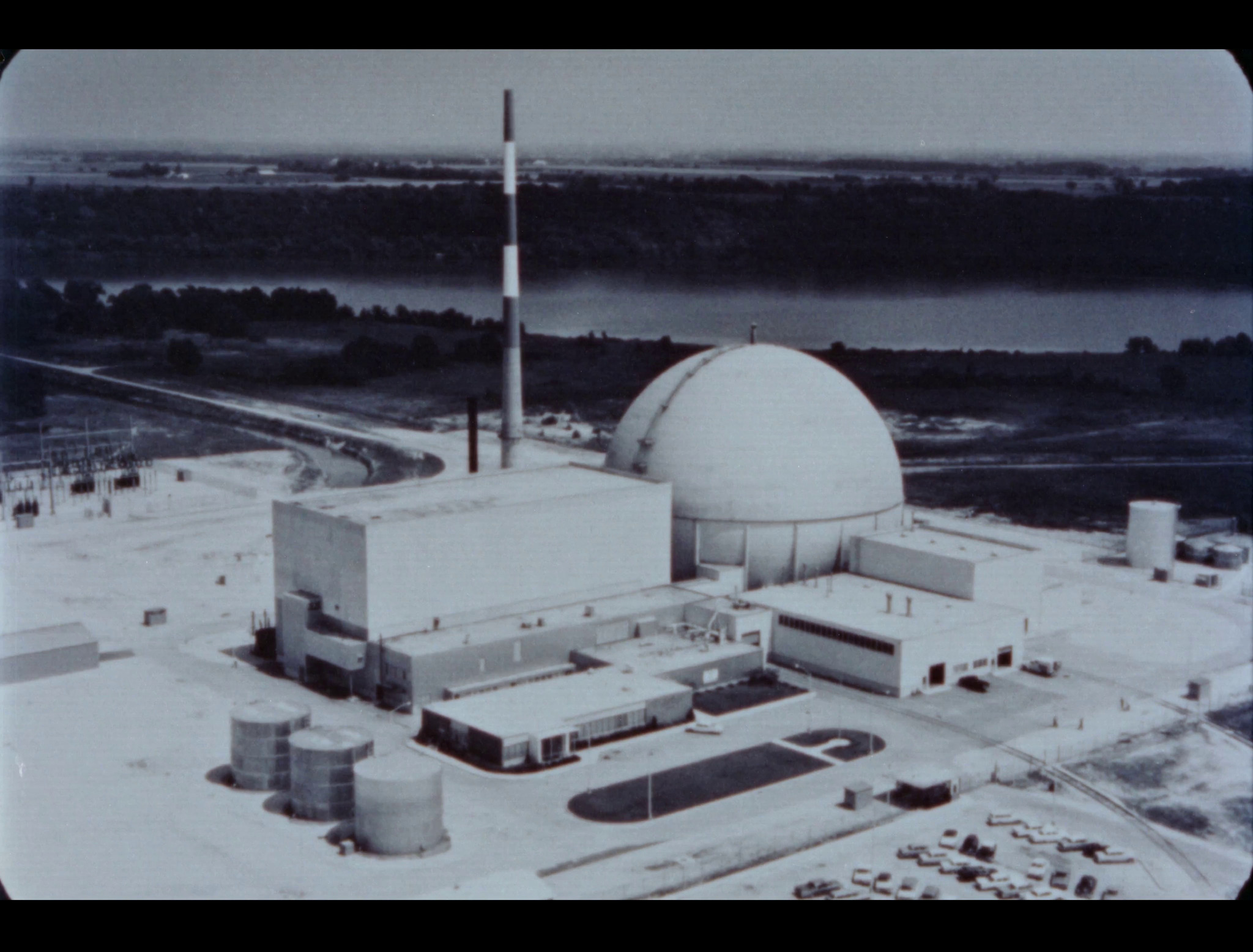
Announcing another digitized film, this time on the operating experience of Dresden, the first commercially financed BWR. This reactor was a very important step in the commercialization of BWRs, as GE put in a lot of their own money to get it built, at considerable risk.
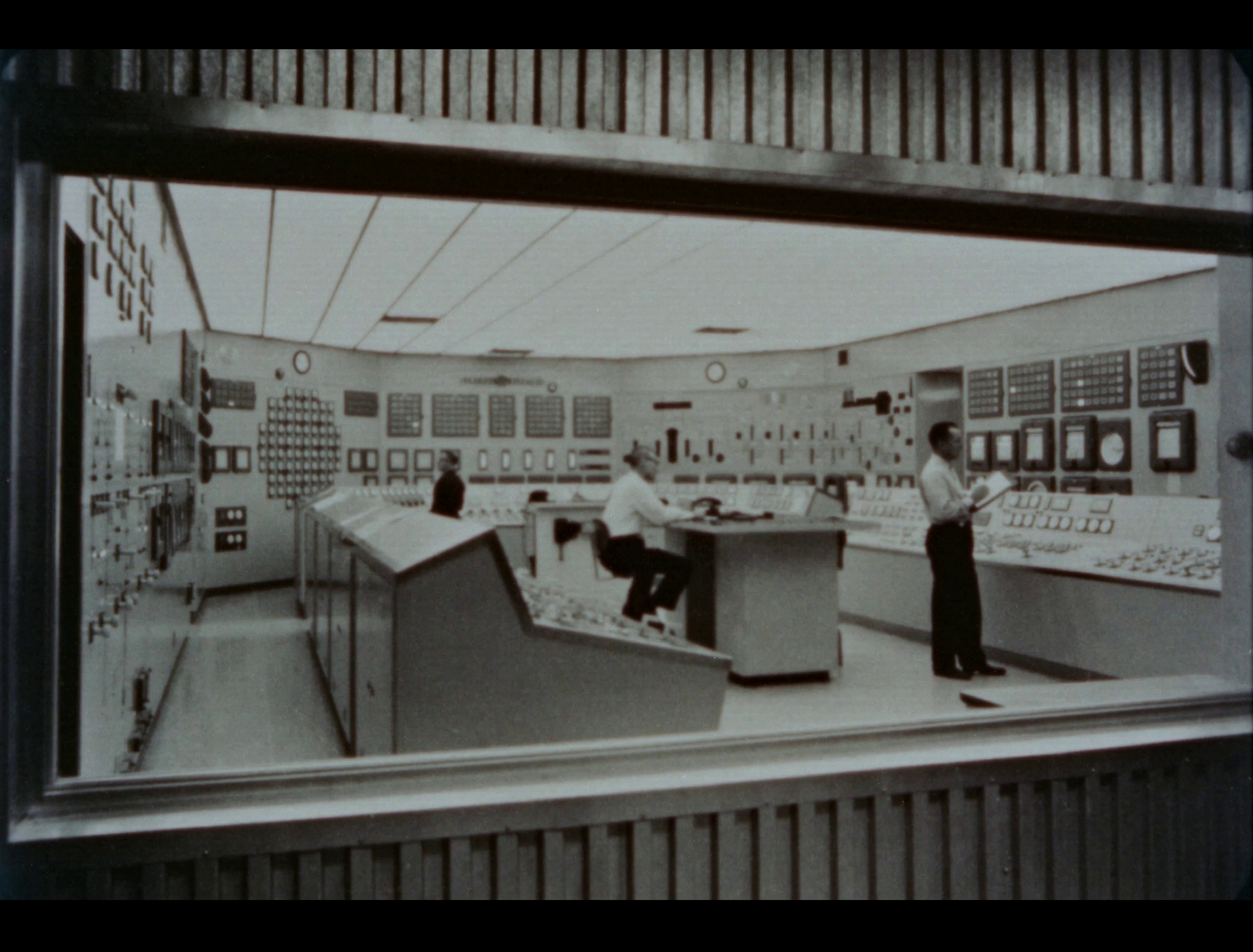
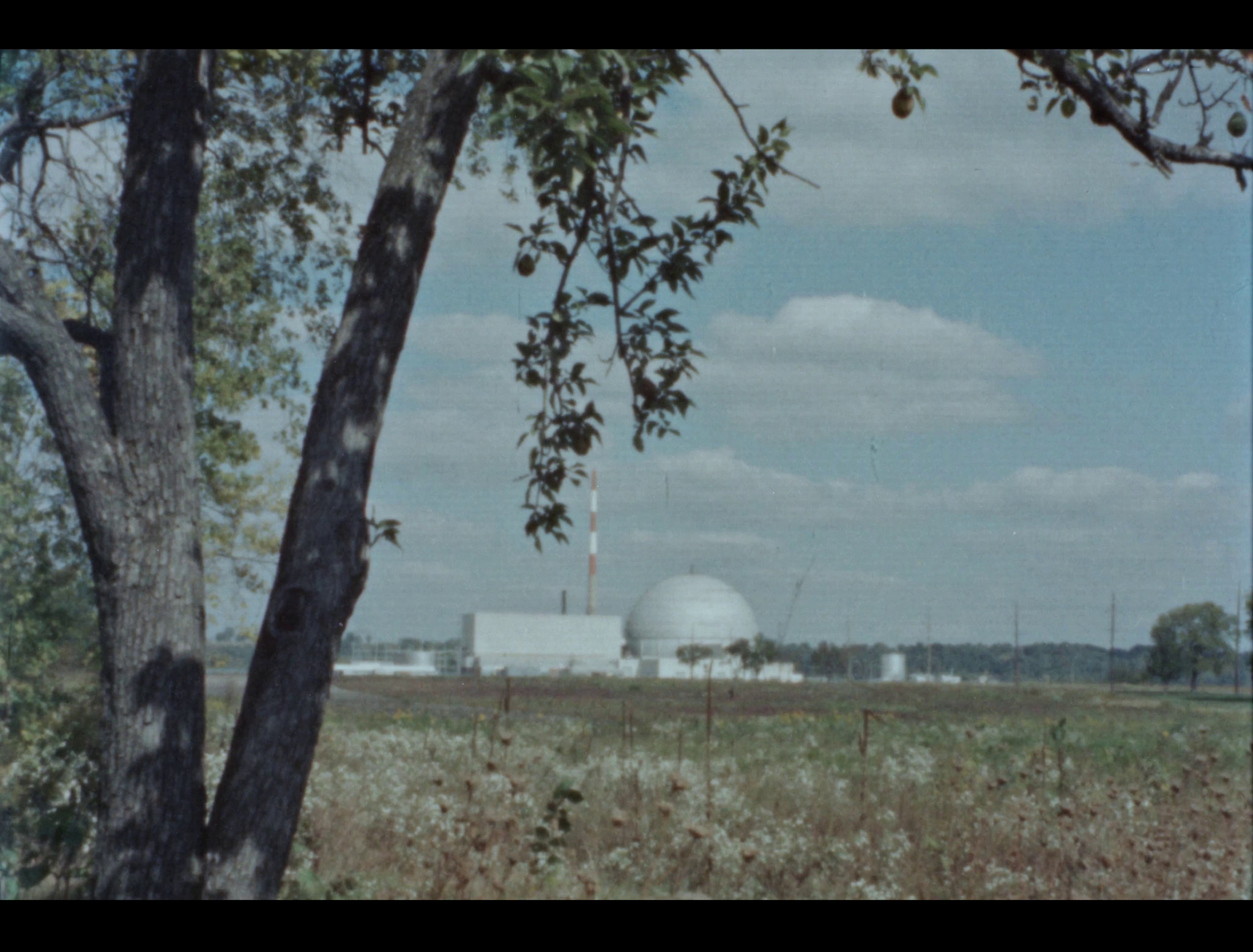
Catalog description: This technical film reports on the routine, day-to-day operation of the Dresden Nuclear Power Station and points up the success of the boiling water nuclear-electric power station. Dresden's four years of operating experience are reviewed, and the power station is examined in terms of dependability, safety, ease of operation, and ease of maintenance
This is film 88206 in our catalog.
Show transcript
| 00:00 | On October 15, 1959, the Dresden Nuclear Power Station of the Commonwealth Edison Company |
| 00:24 | sustained for the first time the atomic fission which would be Dresden's source of energy |
| 00:29 | for the generation of electric power. |
| 00:37 | This marked the beginning of proving the first full-scale boiling water reactor power station. |
| 00:44 | Now, accurate information could be compiled which would predict the path nuclear power must take |
| 00:50 | to provide electricity economically and to determine the procedures of nuclear power station operation. |
| 01:00 | In April of 1960, 64 tons of slightly enriched uranium oxide |
| 01:05 | started to do the work of 1 1⁄2 to 2 million tons of coal. |
| 01:10 | Dresden produced its first electric power. |
| 01:12 | In December of 1963, after four years of regular operation as a major plant of the |
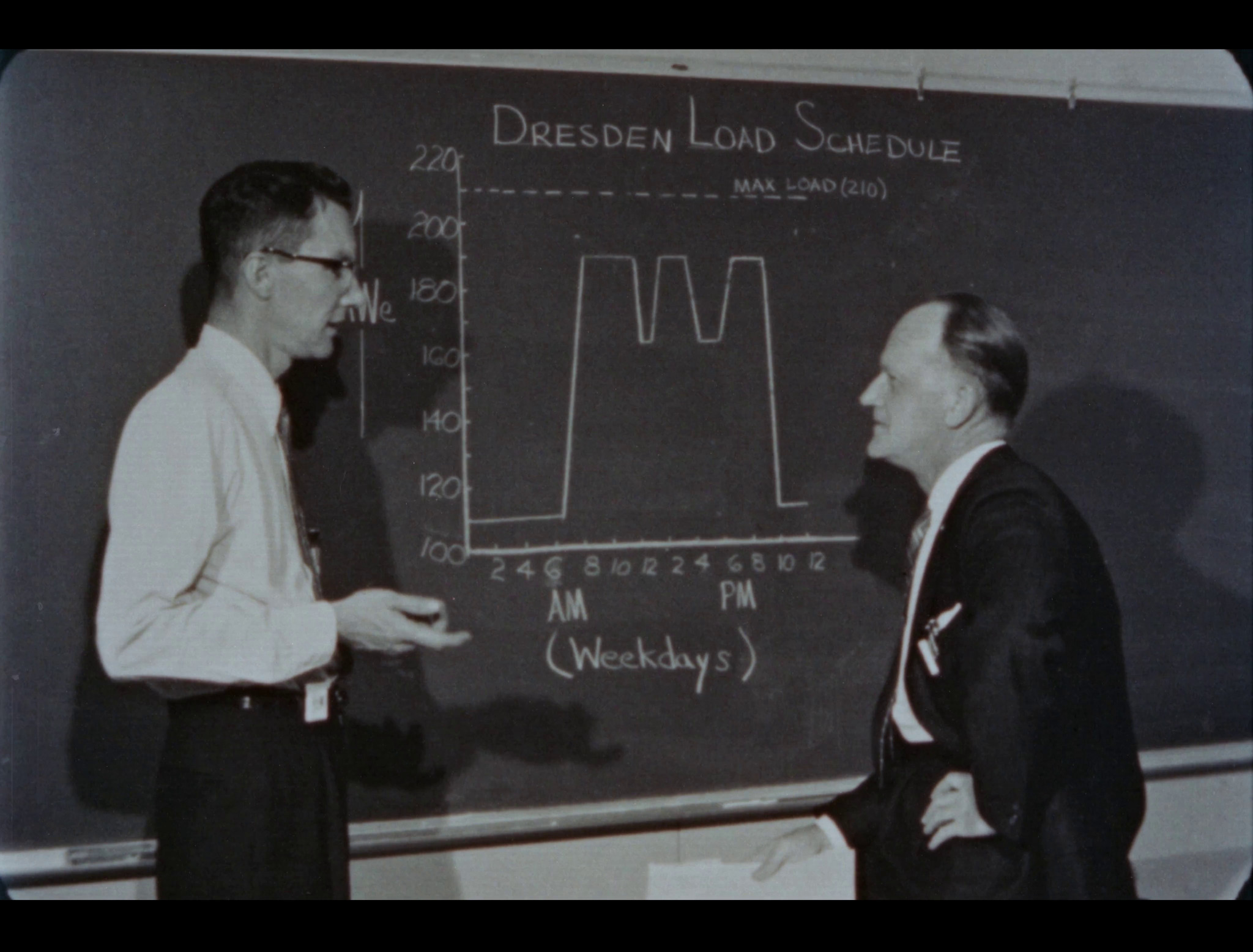
| 01:27 | Commonwealth Edison System, responding to the varying load demands day after day, |
| 01:32 | the net electric output passed the 3 billion kilowatt hour mark. |
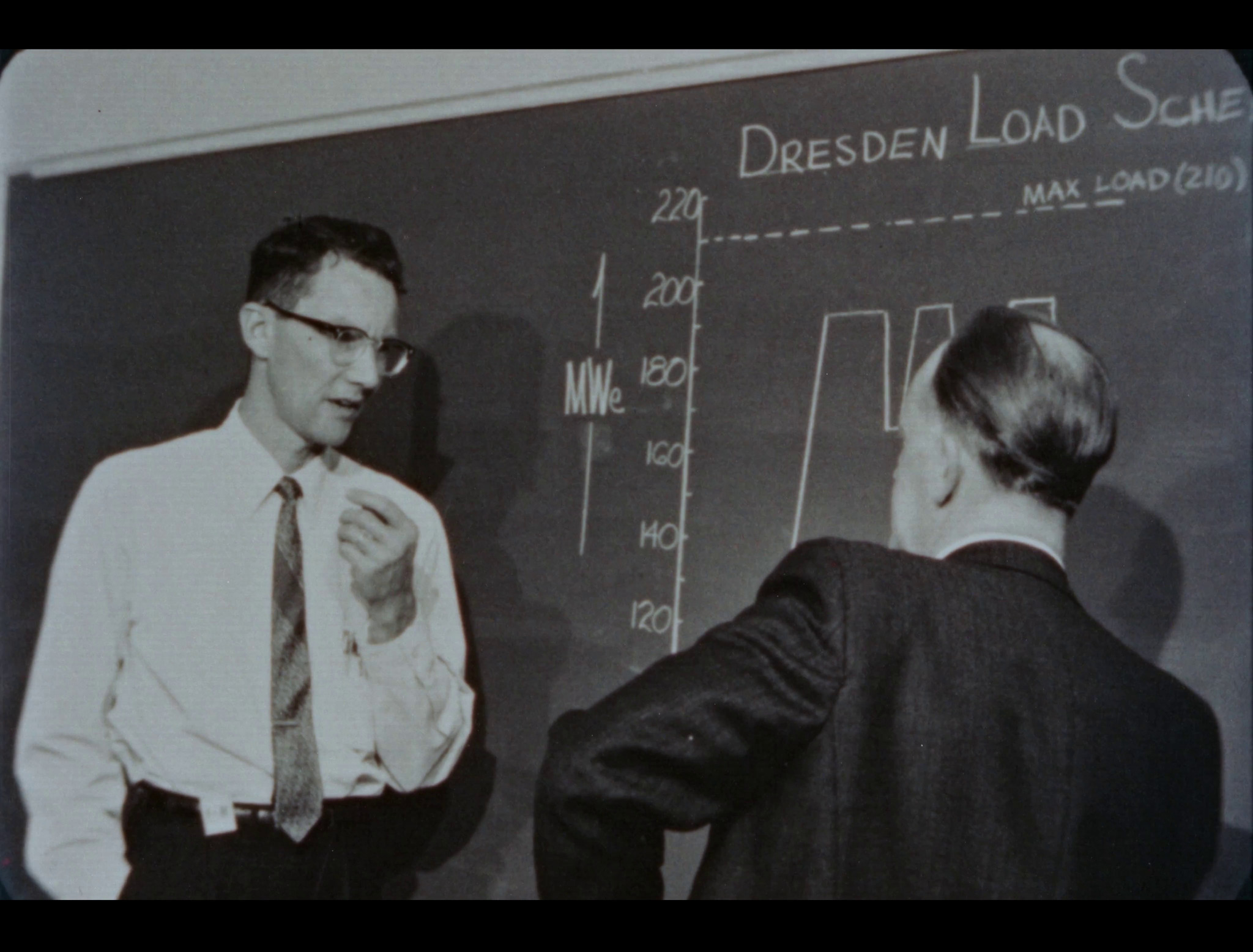
| 01:36 | typical load pick up is 1.75 megawatts per minute at low power levels and up to 10 megawatts per |
| 01:47 | minute at levels above 50% of rated power the station's capacity has been upgraded to 210,000 |
| 01:57 | kilowatts today Dresden's overall performance record is conclusive evidence of its success |
| 02:04 | Under standard electric utility operating conditions, this nuclear power station is performing with uniform excellence. |
| 02:16 | The simplicity of the boiling water reactor contributes to the station's high degree of availability to the utility system. |
| 02:24 | Dresden was designed for thirteen percent average steam void volume. |
| 02:29 | Experimental tests demonstrated voids as high as thirty percent. |
| 02:34 | This experience has led to designs for subsequent BWR cores at 28% voids. |
| 02:46 | In 1962, Dresden was available for the production of electric power 79.4% of the time |
| 02:53 | and 93.1% of the time over the 11-month period prior to plant shutdown on November 7, 1962. |
| 03:04 | Based on refueling and modification work during that shutdown, |
| 03:10 | availabilities of over 90% can be expected for boiling water reactor plants. |
| 03:17 | During 1962, the plant operated at an average of 73% of its capacity. |
| 03:24 | During the 11 months prior to plant shutdown, on November 7, 1962, |
| 03:30 | the capacity factor averaged 85.6%. |
| 03:34 | In comparison, the average availability of six large coal-fired plants on the same line |
| 03:43 | was 82.4%, with a capacity factor of 67% for the same period. |
| 03:54 | The capacity factor from start of commercial service to January 1, 1964 was about 50%. |
| 04:04 | Three major plant shutdowns have been experienced, one for blade and drive modification, one |
| 04:10 | for a required drive inspection, and the third for turbine and plant modification and refueling. |
| 04:21 | The refueling of 40% of Dresden's core required 33 days. |
| 04:28 | More routine refueling calls for replacement of 20% of the core. |
| 04:33 | As a direct result of this experience, boiling water reactor plants are being designed with |
| 04:38 | 15-day refueling periods. |
| 04:42 | Zirconium clad fuel exhibited high dependability at Dresden. |
| 04:47 | Not a single shutdown was due to fuel failure. |
| 04:50 | Out of 84,000 fuel segments, only five failed, with resulting off-gas activity one one-thousandth |
| 04:58 | of the license for continuous operation. |
| 05:05 | Average fuel exposure in Dresden Fuel Cycle 1 was 5,000 megawatt days per ton. |
| 05:13 | exposure of the bundles removed was 6,400 megawatt days per ton. The disposal of radioactive |
| 05:23 | waste presents no problem. Stack emission of radio gases averages 0.5 milirems per year |
| 05:29 | at the point of maximum exposure, about one 300th of the inescapable radiation from nature. |
| 05:39 | Measurements of water samples taken up and downstream of the plant indicate no measurable |
| 05:43 | increase in radioactivity due to plant operation. The reactor's bottom-mounted control rods and |
| 05:50 | drives, which shape the neutron flux for efficient fuel burn-up, operate extremely well. |
| 05:58 | These drives quickly shut down the reactor under potential emergency conditions. |
| 06:04 | Not one control rod drive has ever failed to operate when called on to scram. |
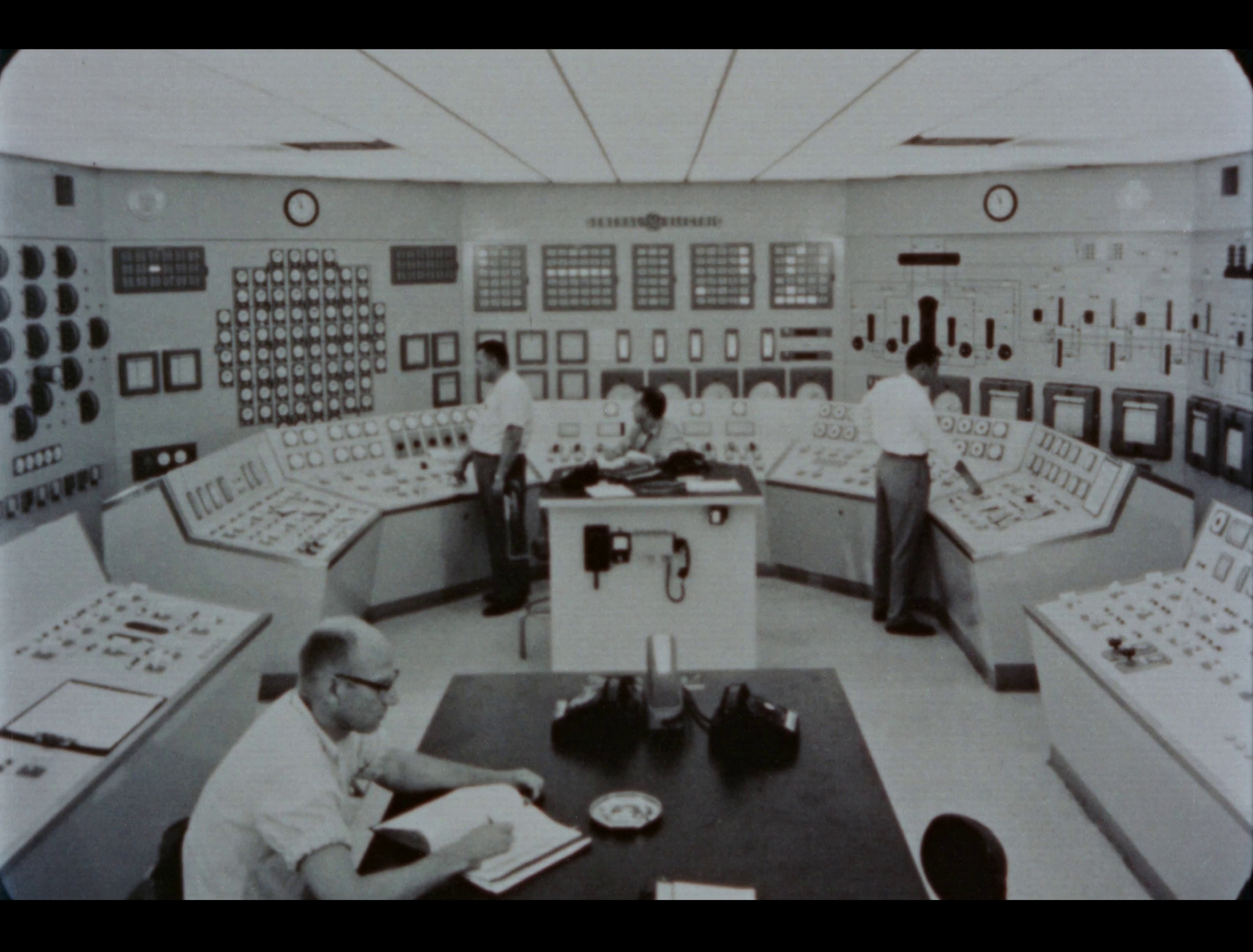
| 06:08 | Boarding water reactor plant operation is safe and easily controllable. The response to controls |
| 06:17 | is immediate and precise. Here startup and shutdown have been performed with less difficulty |
| 06:24 | and with greater safety than the starting and stopping of a coal-fired boiler. Plant operators |
| 06:31 | praise the plants cleanliness and ease of winter operation with freedom from problems of handling |
| 06:37 | frozen coal. Dresden has also exhibited excellent load-following characteristics |
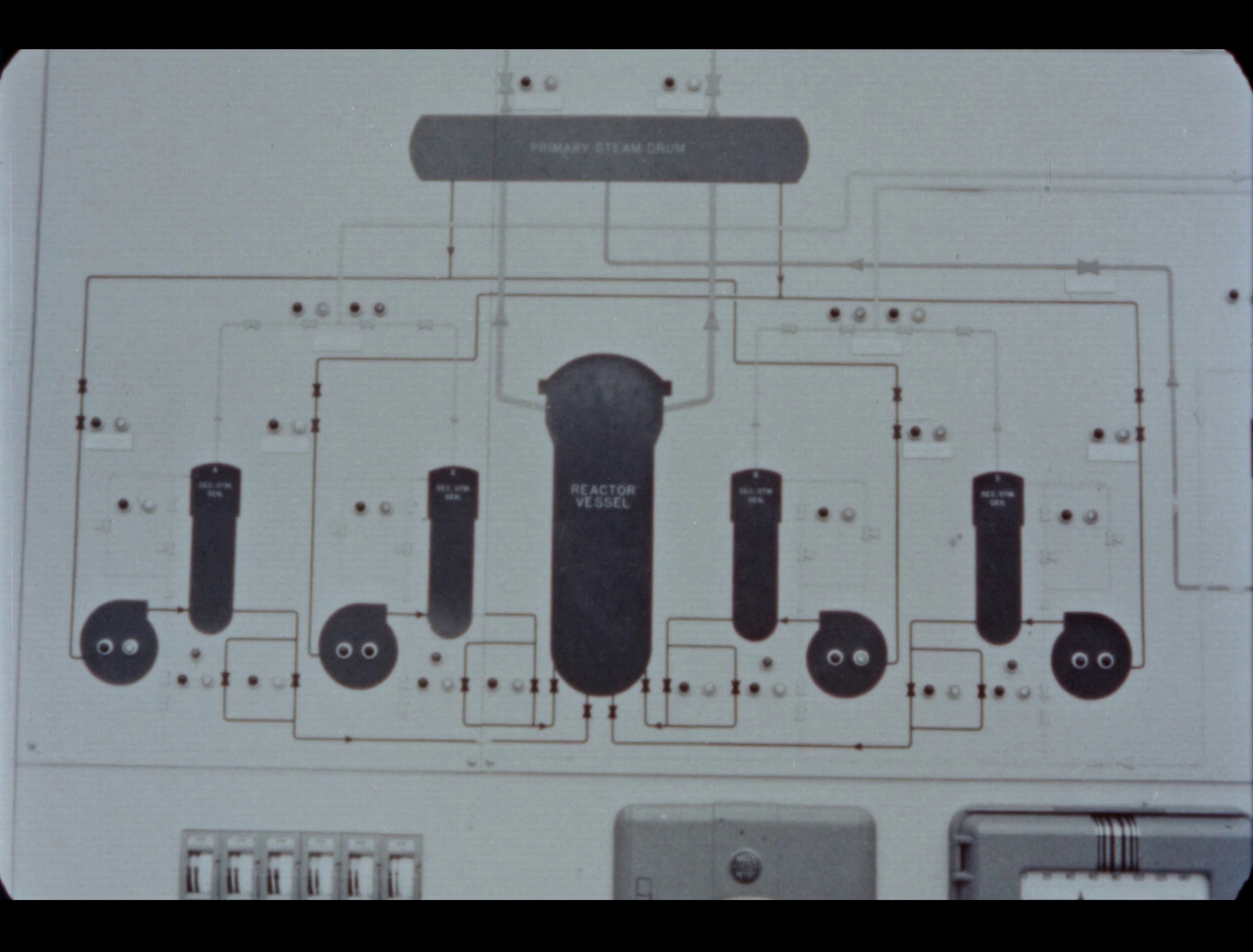
| 06:44 | under abnormal conditions. In April of 1962 a severe lightning storm knocked |
| 06:53 | out a transformer that fed two of the four reactor recirculating pumps. |
| 07:07 | Reactor power decreased automatically, almost to half of rated power. |
| 07:14 | The turbine generator followed. |
| 07:18 | Within nine minutes, the operator supplied auxiliary power to the pumps and returned them to service. |
| 07:26 | This was the only operator action needed or taken. |
| 07:30 | Quickly, the reactor and turbine generator recovered to full power. |
| 07:37 | conditions for contact maintenance at Dresden have been more than satisfactory even during |
| 07:49 | refueling and modification plant equipment could be inspected in a routine manner inspection of |
| 07:56 | the turbine revealed the entire unit to be an excellent condition with only light erosion |
| 08:01 | and corrosion on the internal parts. |
| 08:08 | The small amount of radiation that exists during operation |
| 08:11 | due to isotopes of oxygen and nitrogen is short-lived. |
| 08:20 | Working under practically normal conditions, maintenance crews experienced only 2 to 3 millirems |
| 08:25 | exposure during a 10-hour shift. |
| 08:28 | The experience and know-how gained from the operation of this first full-scale boiling |
| 08:34 | water reactor is helping utilities design and build more efficient power plants. |
| 08:42 | In its day-to-day operation, Dresden continues to demonstrate the dependability, safety, |
| 08:48 | and ease of operation and maintenance of the nuclear power station. |
| 08:53 | Dresden, one giant step forward in the use of nuclear energy. |
This digitization was sponsored by an anonymous donor.


Additional Dresden Links
- 1959 AEC Annual Reports — lots of good info on status of PDRP and Dresden and BWRs and stuff. 1700 pages.
- Dresden Atomic Power Station Construction Video (1958)
- Dresden BWR early in BWR development history
- Dresden Wikipedia page
See Also
- Our Digital Reactor History Museum
- Our Reactor Development History Page
- Our Old Videos page with a running list of the available and yet-to-be-scanned films out there.
If you’re interested in helping to get some of these scanned, check out our digitization GoFundMe and/or contact us!
About Dr. Nick Touran, Ph.D., P.E.
Nick Touran is a nuclear engineer with expertise in advanced nuclear reactor design, reactor development, and the history of nuclear power. After getting a Ph.D. at the University of Michigan, he spent 15 years at TerraPower in Seattle working on core design, business development, software development, and configuration management. He is now a consultant involved in advising and assisting numerous reactor development and deployment efforts. He is also a licensed professional engineer in Nuclear Engineering.
Nick has been active in public education around nuclear since 2006 as the founder of whatisnuclear.com. He has spoken at numerous institutions, schools, and public events, and was once featured on NPR’s Science Friday. Recently, he has coordinated the digitization of over 45 historical nuclear films.
Reader comments